Decoding the Brain’s Resilience
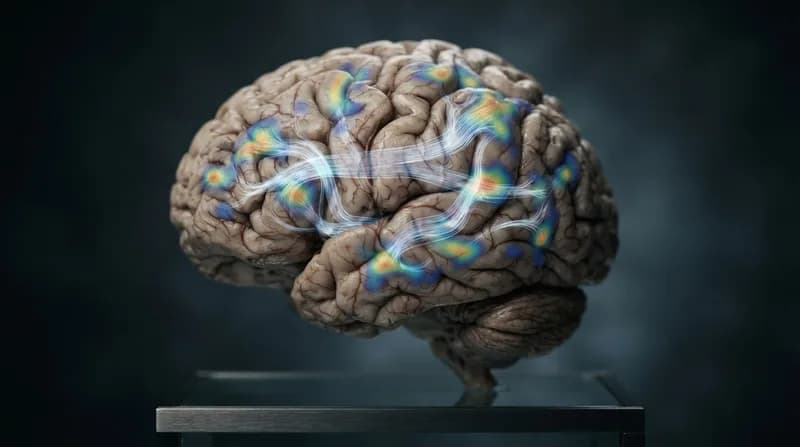
In a major leap forward for neurobiology, researchers at Stanford Medicine have identified subtle patterns of brain activity that could revolutionize how we predict the onset of Alzheimer’s disease. By analyzing the functional connectome—the complex web of communication between different brain regions—scientists have discovered a neurological signature that distinguishes individuals prone to cognitive decline from those who exhibit 'super-aging' characteristics, often years before a patient shows any outward symptoms or memory loss.
Traditional diagnostic approaches often rely on observing the accumulation of amyloid-beta plaques or tau proteins. However, by the time these physical biomarkers appear, the disease has often reached a more advanced stage. The new Stanford-led approach, published in Science Advances, offers a window into the brain’s functional health that is both earlier and potentially more dynamic than current standard medical testing.
The ARC Scoring System
To differentiate between vulnerable and resilient brains, the team developed the Alzheimer’s Resilience-Vulnerability Connectome, or ARC score. By utilizing resting-state functional MRI scans, the researchers mapped the communications between brain regions in two distinct cohorts: older individuals diagnosed with Alzheimer’s and 'super agers'—individuals over 75 who maintain cognitive functions comparable to people decades younger. The resulting algorithm, which measures the strength and nature of these neural connections, was able to categorize individuals with approximately 85% accuracy.
When applied to a broader group of over 1,300 cognitively healthy adults between the ages of 55 and 70, the ARC score served as a powerful predictor. Participants whose brain scans mirrored the patterns found in Alzheimer’s patients were statistically more likely to experience rapid cognitive decline over the following decade. Conversely, those with 'super-ager' signatures showed remarkable stability, even when compared against established genetic and biological risk factors.
From Prediction to Intervention
Perhaps the most compelling aspect of this research is the potential for future intervention. Unlike structural damage, which is often permanent, researchers believe that functional connectivity patterns may be malleable. If a patient’s brain can shift into a 'vulnerability' state, the team hypothesizes it may be possible to nudge it back toward a 'resilient' state using targeted therapies.
Future research is already being planned to test whether cognitive training or non-invasive techniques like transcranial magnetic stimulation (TMS) can effectively modify these connectivity signatures. By targeting specific brain regions identified by the ARC score, clinicians might one day be able to bolster cognitive resilience long before irreversible damage occurs. This shift toward proactive brain health represents a fundamental change in philosophy, moving away from late-stage diagnosis and toward early, actionable neurological maintenance.
Why It Matters
- Early Detection: Provides a window into cognitive health that predates current protein-based biomarkers.
- Predictive Accuracy: Offers a high-fidelity model that complements existing clinical tests for more robust risk assessment.
- Therapeutic Potential: The study suggests that brain activity patterns may be targetable via neuro-stimulation, opening the door for preventive medicine.
- Understanding Resilience: Moves beyond just studying disease by analyzing the biological mechanisms of 'super agers.'