A Long-Awaited Cosmic Debut
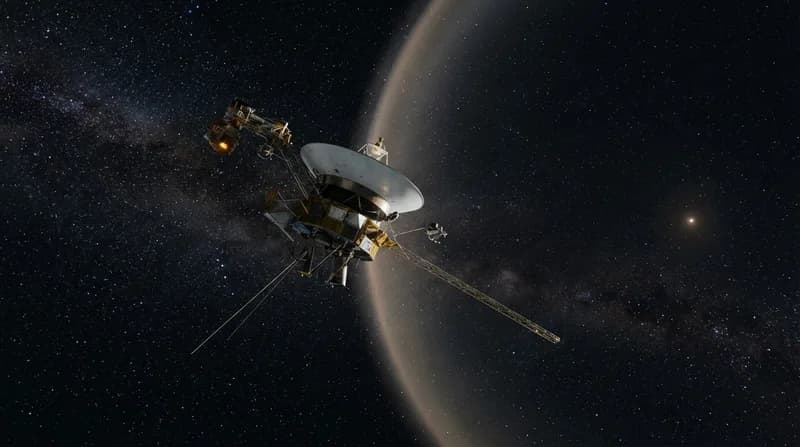
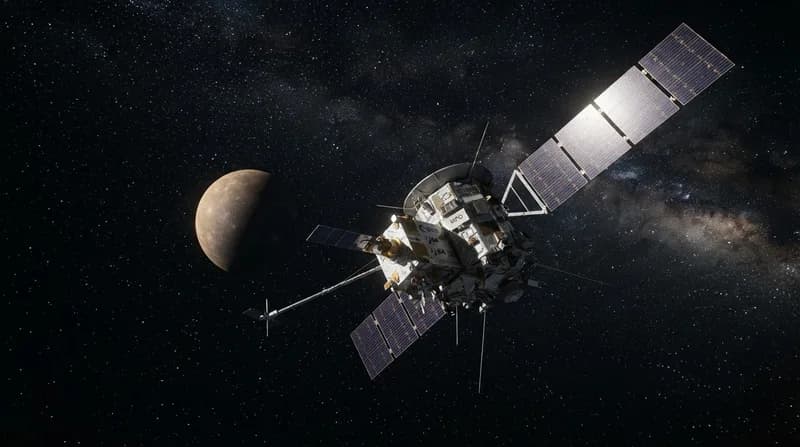
After nearly a decade traversing the harsh expanse of our solar system, the Mercury Imaging X-ray Spectrometer (MIXS)—a highly sophisticated telescope developed by a European consortium led by the University of Leicester—has finally "opened its eyes." Traveling aboard the joint ESA and JAXA BepiColombo mission, the instrument has successfully captured its first cosmic observation, proving that its complex hardware has survived the grueling 10-billion-kilometer journey to the innermost planet.
The successful test targeted the Crab Nebula, a stellar remnant located 6,500 light-years away known for its intense and predictable X-ray signature. This calibration exercise was vital; researchers needed to confirm that the instrument’s delicate optics remained perfectly aligned after eight years of deep-space travel. To the team's delight, the initial data revealed that the telescope’s angular resolution is actually sharper than it was during pre-launch tests conducted in 2015.
The Technology Behind the Vision
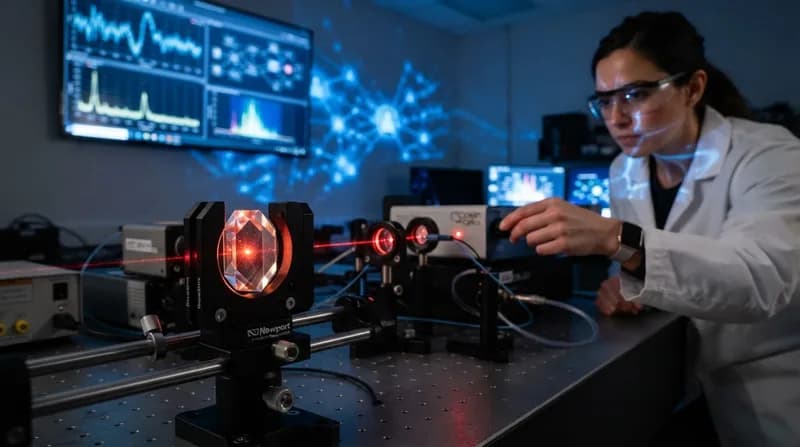
MIXS is a landmark piece of engineering. As the first imaging X-ray telescope ever deployed on a dedicated planetary science mission, it pushes the boundaries of space-borne hardware. Approximately 80% of the technology integrated into the instrument is entirely new, requiring precision that could withstand radiation and thermal extremes for years without direct maintenance. During the observation window, engineers successfully navigated 55 different orientations over 39 hours to stress-test the hardware, confirming that it remained free of "stray light" contamination and radiation-induced degradation.
The instrument’s primary function will be to map the chemical composition of Mercury’s surface. By detecting fluorescent X-rays emitted by surface rocks when bombarded by solar radiation, the telescope can effectively "read" the elemental makeup of the planet. This allows scientists to map Mercury’s surface chemistry in unprecedented detail, providing crucial data on how terrestrial planets form near the scorching heat of a star.
Why it Matters: Solving Planetary Riddles
Mercury remains one of the most mysterious bodies in our solar system. Its proximity to the Sun has made it historically difficult to study, yet its composition holds the key to understanding the early formation of the solar system. The data gathered by MIXS, working in tandem with other instruments on the Mercury Planetary Orbiter, will offer a forensic look at the planet's geological history.
- Precision Mapping: Capable of identifying atomic composition without the need for physical samples.
- Dual-Mode Detection: Can analyze the sunlit side via solar-induced fluorescence and the night side via interactions with charged particles in Mercury’s magnetic environment.
- Heritage and Innovation: Built upon two decades of research and honoring the legacy of its original lead, Professor George Fraser, the instrument represents a significant leap in space-based sensor technology.
Mission Outlook
As BepiColombo prepares for final orbital insertion around Mercury on November 21, the success of the MIXS instrument provides a much-needed morale boost for the international team. Following the separation of the mission's various modules, the primary science phase is set to commence in April 2027. While some fine-tuning of the telescope’s internal settings will continue during the commissioning phase, the preliminary results suggest that the hardware is primed to reveal the hidden chemical secrets of the solar system's smallest planet, finally answering questions that have persisted for generations.