E-BUZZ ME Logo
Electric VehiclesTechnical Deep Dive

Oslo Achieves Global Milestone: 48.8% of Passenger Cars Are Electric

Published
EElectricBuzz Editorial Team
Oslo Achieves Global Milestone: 48.8% of Passenger Cars Are Electric
2 min read313 wordsElectricBuzz Editorial Team

The Gist

Oslo has become the world's most electrified city with 48.8% of passenger cars electric, utilizing over 3,500 AC charging plugs as the primary infrastructure rather than fast chargers, enabled by 2020 legislation granting apartment residents the right to install home chargers.

Oslo has officially been crowned the world's most electrified city. As of the end of 2025, 48.8% of the city's 246,809 registered passenger cars are electric, totaling 120,469 battery-powered vehicles. This remarkable penetration cements the Norwegian capital's status as a global benchmark for the EV transition.

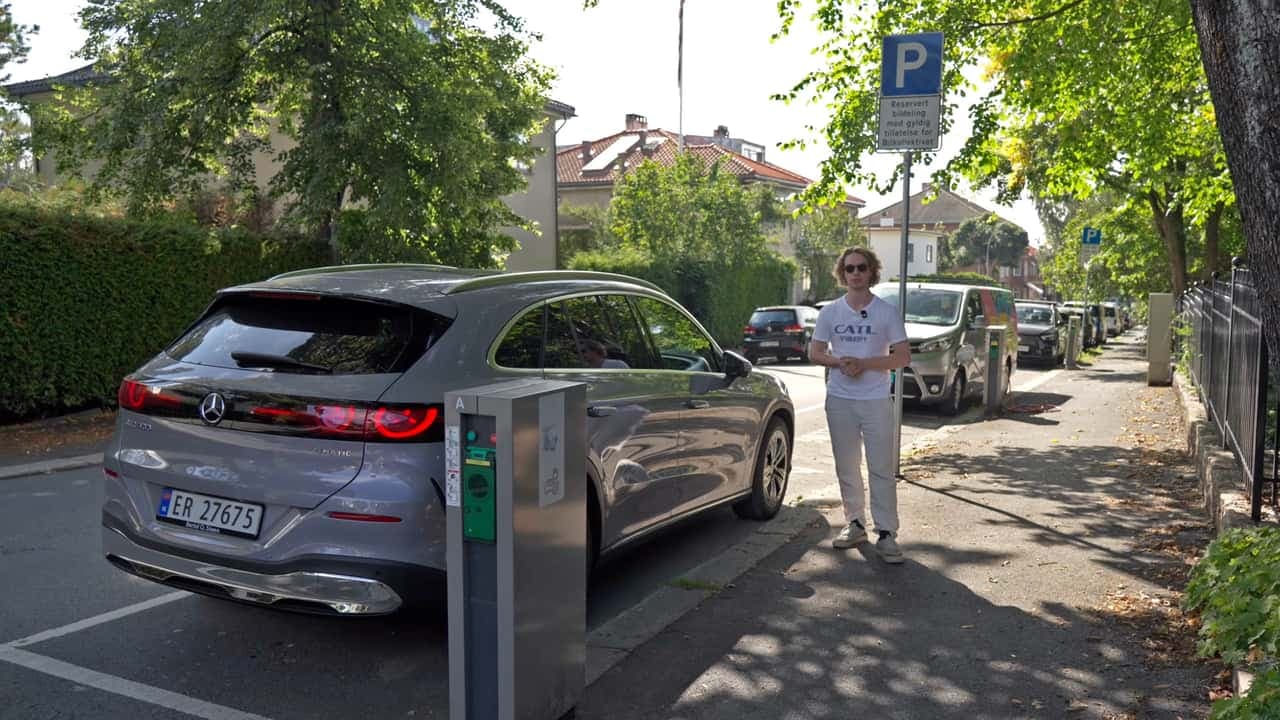
The secret to Oslo's success lies not in a reliance on expensive fast-charging networks, but in a widespread adoption of alternating current (AC) infrastructure. The city currently operates over 3,500 AC charging plugs, rated between 3.6 and 43 kW, which form 78% of its total 4,519 public charging points. This architecture allows drivers to integrate charging into their daily routines seamlessly.

Since 2020, a pivotal piece of legislation has enabled apartment residents the legal right to install charging plugs at their parking spaces. This policy has transformed overnight charging from a logistical hurdle into a standard convenience, eliminating the need for dedicated charging stops for the majority of owners. A modest 6-kW AC plug can add 36 kWh during a six-hour stay, providing over 100 miles of range for many EVs while drivers work, sleep, or run errands. Furthermore, Oslo has reduced public-charger parking fees at night, making overnight AC charging an attractive and unobtrusive daily activity.

While the city maintains a substantial fast-charging capability—with 611 plugs delivering 50-250 kW and 376 units above 300 kW—these are primarily utilized for taxis, commercial vehicles, and road trips. The widespread AC network handles the majority of daily charging needs, proving that high penetration is achievable through accessible, overnight home-style charging rather than constant fast-charging pit stops.

  • 48.8% of Oslo's 246,809 passenger cars are electric (120,469 vehicles).
  • Over 3,500 AC charging plugs (3.6–43 kW) serve as the primary infrastructure.
  • 2020 legislation granted apartment residents the right to install home chargers.
  • 6-kW AC plug adds 36 kWh/6 hours, providing 100+ miles of range.
  • Nighttime parking fee reductions incentivize overnight AC charging.
Related Stories

Semantically matched articles, ranked by topic overlap and freshness.

Thessaloniki Expands Green Transit Fleet with 50 New Yutong E-Buses
Electric Vehicles

Thessaloniki Expands Green Transit Fleet with 50 New Yutong E-Buses

The Greek city of Thessaloniki has officially integrated 50 new electric articulated buses from Yutong into its public transport network, marking a significant milestone in the city's sustainable mobility strategy.

UK EV Market Surges: Electric Powertrains Outpace Gas in Landmark August Shift
Electric Vehicles

UK EV Market Surges: Electric Powertrains Outpace Gas in Landmark August Shift

Electric vehicles have officially become the top-selling powertrain in the UK, capturing a significant 30% market share as policy mandates and shifting consumer preferences drive the transition away from fossil fuels.

Schneider Electric Challenges Tesla With New Smart Home EV Charger
Electric Vehicles

Schneider Electric Challenges Tesla With New Smart Home EV Charger

Schneider Electric has launched a powerful new home EV charger that simplifies energy management by including dynamic load-balancing hardware right out of the box.

Decoding EV Battery Health: How Tesla Models Age Over 100,000 Miles
Electric Vehicles

Decoding EV Battery Health: How Tesla Models Age Over 100,000 Miles

A comprehensive study of 500,000 battery tests reveals how Tesla's popular electric vehicles hold up after nearly 100,000 miles of real-world driving.

UltraTech Cement Accelerates Industrial Decarbonization with 600+ New Electric Trucks
Electric Vehicles

UltraTech Cement Accelerates Industrial Decarbonization with 600+ New Electric Trucks

Cement giant UltraTech is staging a massive shift in logistics, deploying over 600 heavy-duty electric vehicles to slash emissions across its Indian supply chain.

Tesla’s Cybercab Hits Public Roads: A Quiet Evolution in Autonomous Transport
Electric Vehicles

Tesla’s Cybercab Hits Public Roads: A Quiet Evolution in Autonomous Transport

Tesla's steering-wheel-free Cybercab has begun transporting passengers in Austin, marking a major milestone in the shift toward fully autonomous, pedal-free ride-hailing.

Tesla Cybercab Introduces Brake-By-Wire System Eliminating Traditional Hydraulics
Electric Vehicles

Tesla Cybercab Introduces Brake-By-Wire System Eliminating Traditional Hydraulics

Tesla's robotaxi eliminates brake lines and fluid, using individual electronic actuators at each caliper for the first time in mass production. The innovation reduces costs and enables independent wheel braking control.

Skoda Peaq 90 Sets New 582-Mile Range Record Using Hypermilers and AI Routing
Electric Vehicles

Skoda Peaq 90 Sets New 582-Mile Range Record Using Hypermilers and AI Routing

A production-spec Skoda Peaq 90 SUV traveled 582 miles on a single charge using AI-optimized secondary roads and hypermiling techniques, exceeding its official WLTP range by 45%. Two manufacturer employees drove the electric SUV from the Czech Republic to the Netherlands over two days.