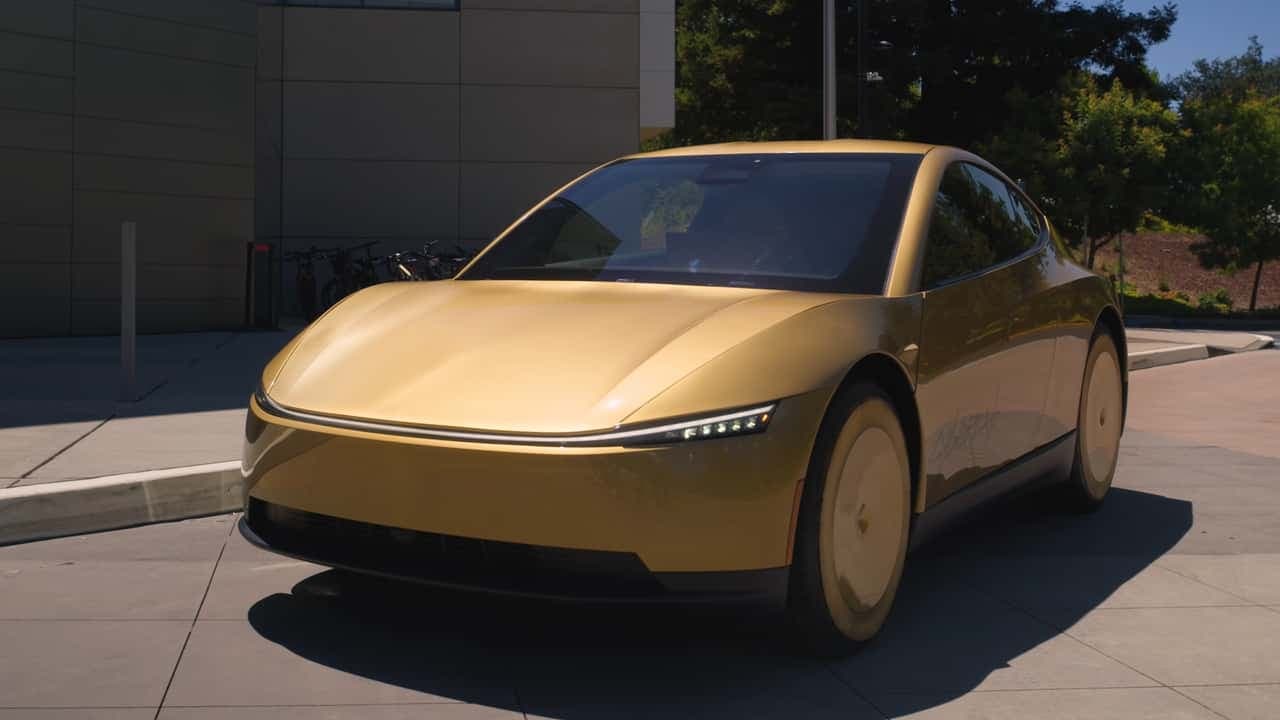
Tesla has officially confirmed that the much-anticipated Cybercab robotaxi will depart from more than a century of automotive braking tradition. In a move that underscores the vehicle's status as a purpose-built autonomous platform, the Cybercab features a brake-by-wire system that completely does away with brake lines, brake fluid, and a central master cylinder. This design shift represents a significant engineering pivot for the company, moving toward a fully electronic braking architecture.
Instead of relying on hydraulic pressure transmitted through steel lines, the Cybercab employs individual electronically controlled actuators positioned at each caliper. This dry brake-by-wire approach is one of the first implementations of its kind in a production passenger vehicle, following Chery's EX7, which debuted with a similar system back in April. By eliminating the complex plumbing associated with traditional brakes, Tesla claims the system reduces overall manufacturing costs, removing the need for fluid reservoirs and extensive line routing.
Perhaps the most significant functional advantage of this design is the computer's ability to apply different braking forces to each wheel independently. In a conventional hydraulic system, pressure is distributed equally; should one wheel lose grip, the system is limited by that constraint. With the Cybercab's electronic setup, the vehicle's computer can optimize braking for each individual tire, potentially improving stability and safety during emergency maneuvers. As Tesla CEO Elon Musk noted, the primary driver behind this choice was to avoid the inherent complexity and failure points associated with hydraulic systems.
Key Facts
- No brake lines, no brake fluid, and no central master cylinder.
- Individual electronic actuators at each caliper implement the braking function.
- Marks a first in mass-production vehicles, following Chery's EX7 debut in April.
- Reduces manufacturing costs by removing hydraulic plumbing requirements.
- Allows independent braking force control at each wheel.
Why It Matters
This braking architecture is more than a cost-cutting measure; it is a foundational shift for autonomous vehicle design. Removing hydraulics lightens the vehicle and frees up packaging space that would otherwise be dedicated to brake fluid reservoirs and master cylinders. More importantly, it paves the way for tighter integration between the braking system and the vehicle's AI driving stack. As the industry moves toward full autonomy, the ability for the car's computer to modulate brake pressure per wheel in real-time based on sensor data becomes a critical safety net, potentially reducing accidents caused by delayed hydraulic response.