A Milestone in Urban Mobility
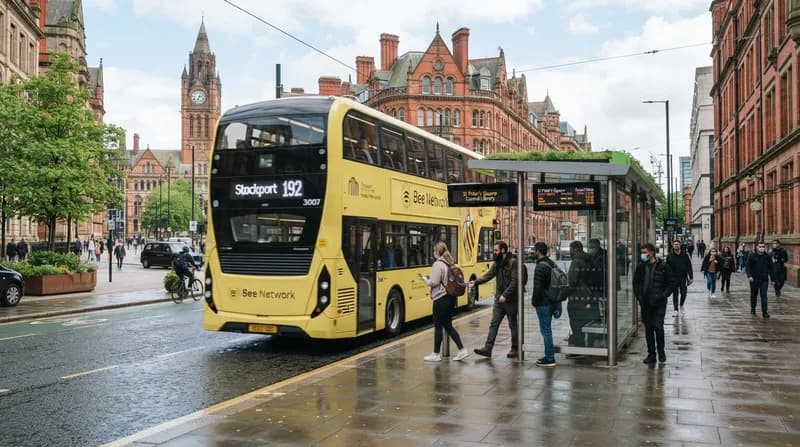
The Bee Network in Greater Manchester has officially crossed a major environmental threshold, celebrating the arrival and deployment of its 500th battery-electric bus. This achievement underscores the region’s aggressive push to modernize its transit infrastructure. The newly operational unit, supplied by the UK-based manufacturer Wrightbus, is part of a broader strategy to transition the city’s entire bus fleet to zero-emission power by 2030.
To put this progress into perspective, the scale of change is monumental: just three years ago, before public control of local bus services was established, the region operated only 35 electric buses. Today, those units represent nearly 30 percent of the total fleet, with 99 individual routes now exclusively serviced by electric vehicles.
Infrastructure and Future Expansion
A transition of this magnitude requires more than just replacing vehicles; it demands a massive overhaul of the city’s energy architecture. Transport for Greater Manchester (TfGM) has already completed the electrification of key depots at Hyde Road and Oldham. Furthermore, specialized charging infrastructure and renewable energy installations have been integrated into facilities in Ashton, Bolton, and Middleton.
Looking ahead, the momentum shows no signs of slowing down. TfGM has confirmed that an additional 160 electric buses are currently on order, further bolstering the fleet. The project is supported by a £59.1 million funding package secured in late 2025, which aims to facilitate the acquisition of 220 new units in total. Future plans include the electrification of remaining maintenance depots, with design phases already underway and construction slated to begin next year.
Why It Matters
- Environmental Impact: The full transition to an electric fleet is projected to prevent over 76,000 tonnes of CO2 emissions and 280 tonnes of nitrogen oxides annually.
- Energy Stability: To manage the fluctuating demands of such a large-scale charging network, TfGM has secured a long-term clean energy agreement that provides fixed-price renewable electricity, shielding the network from volatile market price spikes.
- Community Focus: Beyond sustainability, the Bee Network serves as a model for integrated transit, merging trams, buses, and cycling into a unified system that prioritizes both air quality and affordable fares for residents.
As Vernon Everitt, Transport Commissioner for Greater Manchester, noted, this initiative is about more than just technology; it is about significantly improving the daily experience for commuters while actively cleaning the city's air. By replacing aging, high-emission diesel vehicles with modern, quiet, and efficient alternatives, Manchester is setting a standard for large-scale metropolitan electrification in the United Kingdom.