E-BUZZ ME Logo
ScienceTechnical Deep Dive

New Giant Salamander Species Identified from 3.5-Million-Year-Old Japanese Fossils

Published
New Giant Salamander Species Identified from 3.5-Million-Year-Old Japanese Fossils
1 min read155 words

The Gist

Researchers have identified a new genus and species of giant salamander, Limnospondylus ajimuensis, from fossils originally discovered over two decades ago.

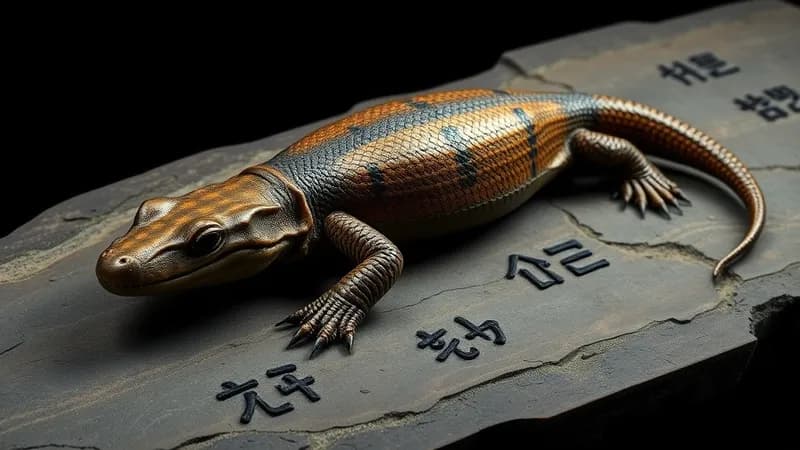
Paleontologists have officially identified a new genus and species of prehistoric giant salamander using fossils unearthed in Japan more than 20 years ago. Named Limnospondylus ajimuensis, the creature lived approximately 3.5 million years ago during the Pliocene epoch.

A Window into Ancient Kyushu

The fossils were found in the Oita Prefecture on the island of Kyushu. During the time this species thrived, the region was significantly warmer and wetter than it is today. Analysis suggests that Limnospondylus ajimuensis was a formidable aquatic predator, potentially reaching lengths of up to 1.1 meters.

Reevaluating the Fossil Record

This discovery is particularly significant for the field of herpetology and paleontology. Experts believe that the identification of this new genus suggests that other unknown giant salamander species may be hidden within existing fossil collections, possibly having been misclassified in the past. The find provides crucial data on the evolution and geographic distribution of giant salamanders in East Asia.

Related Stories

Semantically matched articles, ranked by topic overlap and freshness.

Ancient Egyptian Ape Fossil Challenges Established Human Evolutionary Timeline
Science70%

Ancient Egyptian Ape Fossil Challenges Established Human Evolutionary Timeline

A newly discovered fossil in northern Egypt suggests the ancestors of modern apes and humans may have emerged in North Africa rather than East Africa.

Sulfur-Based Compound Identified as Potential Breakthrough for Aging Muscle Repair
Science65%

Sulfur-Based Compound Identified as Potential Breakthrough for Aging Muscle Repair

Researchers have discovered a compound named LASSS that protects proteins essential for muscle recovery, offering hope for combating age-related muscle loss.

Sweden Explores Rare Earth Deposits to Challenge Global Supply Dominance
Science64%

Sweden Explores Rare Earth Deposits to Challenge Global Supply Dominance

Researchers are mapping Sweden's mineral wealth to create magnets from natural element combinations, aiming to reduce reliance on Chinese exports.

Unprecedented Warming: Earth's Current Climate Shift Outpaces Geological History
Science63%

Unprecedented Warming: Earth's Current Climate Shift Outpaces Geological History

New analysis of Earth's climate history reveals that the current rate of global warming is faster than any previously recorded geological event.

Self-Repairing Bio-Textiles: Scientists Create Clothing From Living Fungi
Science62%

Self-Repairing Bio-Textiles: Scientists Create Clothing From Living Fungi

Researchers have developed a revolutionary biodegradable textile using the parasitic fungus Cordyceps militaris that can clean and repair itself.

China’s Tianwen-1 Orbiter Captures Rare Footage of Interstellar Comet 3I/ATLAS
Science61%

China’s Tianwen-1 Orbiter Captures Rare Footage of Interstellar Comet 3I/ATLAS

The Tianwen-1 Mars orbiter has successfully imaged the interstellar visitor 3I/ATLAS, providing a rare look at material originating from outside our solar system.

New Experimental Antiviral Pill Shows Promise in Halting Measles Transmission
Science60%

New Experimental Antiviral Pill Shows Promise in Halting Measles Transmission

A breakthrough antiviral treatment has successfully prevented the spread of a measles-like virus in animal trials, offering a potential new tool to contain future outbreaks.

New Class of Magnons Exhibits Hundred-Fold Increase in Lifespan
Science60%

New Class of Magnons Exhibits Hundred-Fold Increase in Lifespan

A breakthrough discovery of long-lived magnons could pave the way for scalable, nanoscale quantum information technologies on-chip.