The Origins of a Scientific Revolution
In a discovery that highlights the unpredictable nature of scientific progress, the 2026 Nobel Prize in Physiology or Medicine has been awarded for the development of optogenetics—a field that began with a seemingly humble question: How does a tiny, single-celled alga called Chlamydomonas sense light to navigate its environment? Researchers Peter Hegemann, Georg Nagel, and Karl Deisseroth were honored for identifying the ingenious mechanisms that allow this organism to interact with its surroundings, a finding that has since transformed our understanding of the mammalian brain.
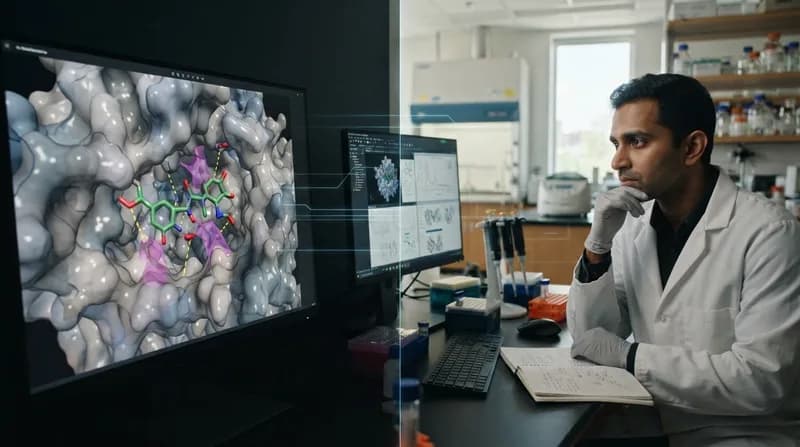
The breakthrough lies in a specific protein known as channelrhodopsin, which is embedded in the outer membrane of the algal cell. When light strikes a small molecule within this protein called retinaldehyde, it triggers a conformational change that opens a tiny pore in the cell membrane. This allows positively charged ions to flow into the cell, creating a signal that tells the alga to move toward the light. It is this fundamental biological 'switch' that researchers realized could be repurposed to command the electrical impulses of complex nerve cells in humans and animals.
The Mechanism of Optogenetics
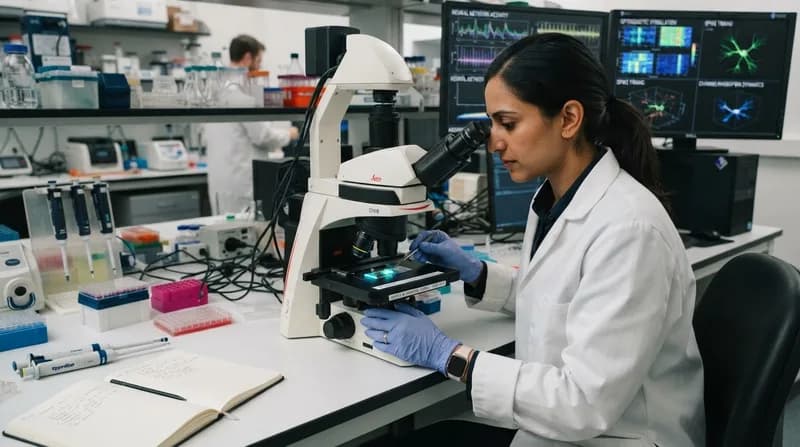
The transition from algae to neuroscience requires a sophisticated delivery system. Scientists typically use an inert, modified virus to introduce the gene responsible for channelrhodopsin into specific nerve cells. Once these neurons produce the light-sensitive protein, they can be activated or silenced with precise control by aiming a fiber-optic laser directly at targeted brain regions. Because only the cells containing the protein react to the light, researchers can manipulate individual circuits without interfering with the surrounding biological architecture.
The power of this technique lies in its temporal precision. Unlike traditional chemical methods that might flood a brain region with neurotransmitters, optogenetic light-switching occurs on a millisecond timescale. This allows scientists to map functional pathways in the brain, effectively 'writing' into neural circuits to observe behaviors in real-time, such as the reactivation of stored memories or the triggering of specific motor responses.
Why It Matters
- Decoding Memory: Optogenetics has allowed researchers to isolate specific ensembles of neurons associated with fear or memory, proving that memories can be artificially reactivated by shining light on the original engram cells.
- Restoring Sensation: The technology is currently in early-stage clinical trials for treating retinal degeneration, where light-sensitive proteins are introduced into the retina to replace lost rods and cones, potentially restoring vision.
- Neurological Interventions: Beyond basic research, scientists are exploring optogenetic therapies for chronic conditions like Parkinson’s disease and epilepsy, potentially replacing broad-spectrum medications with precise electrical modulation.
Implications for Future Research
The success of the Nobel-winning research underscores the profound importance of basic biological inquiry. What began as a question regarding the mobility of pond algae—a topic with no immediate commercial or medical application—has paved the way for the most significant tool in neurobiology of the 21st century. This trajectory serves as a reminder that fundamental research often provides the foundational building blocks for medical breakthroughs that were previously considered impossible.
As optogenetics moves from the lab bench toward clinical applications, the medical community is now looking at a future where neural disorders are not just managed through systemic drug treatments, but are instead re-calibrated at the cellular level. Whether it is through restoring lost senses or providing a map for the most complex organ in the human body, the legacy of Chlamydomonas will undoubtedly continue to shape the future of medical science for decades to come.