Expanding the Zero-Emission Fleet
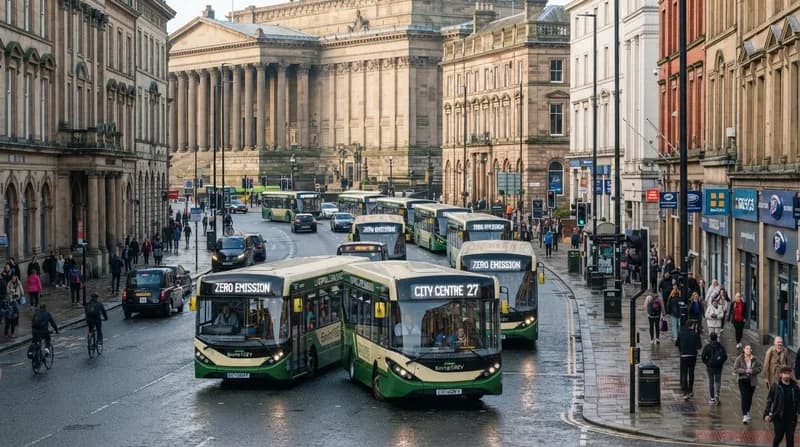
The Liverpool City Region Combined Authority has taken a significant step toward modernizing its public transportation network by ordering 30 new battery-electric Enviro100EV midibuses from British manufacturer Alexander Dennis. This order is part of a larger, £57 million procurement deal covering at least 207 vehicles, with deliveries expected to commence in 2027. This move reinforces the city’s commitment to sustainable urban mobility and integrates seamlessly into the broader transition toward a publicly owned franchising model for local bus services.
While the order includes a significant number of low-emission combustion models, these have been strategically designed to allow for future conversion to electric propulsion through Alexander Dennis’ in-house Repower service. All vehicles are set to be manufactured in the UK, supporting local facilities in northern England and Scotland. This latest acquisition brings the total number of Alexander Dennis vehicles in the regional network to roughly 400, solidifying a long-term partnership aimed at fleet decarbonization.
The Enviro100EV: Compact Efficiency
The Enviro100EV represents the most compact offering in the Alexander Dennis lineup, specifically engineered to navigate urban environments with ease. Measuring just 8.5 metres in length and 2.35 metres in width, the vehicle boasts an impressive 8.6-metre turning circle. Despite its modest footprint, the midibus is capable of transporting up to 45 passengers, including 25 seated.
The propulsion system utilizes the Voith Electrical Drive System in an MD configuration, delivering 250 kW of peak power. Energy is stored in a robust NMC battery pack, which supports charging speeds of up to 150 kW. Alexander Dennis has designed the platform with flexibility in mind, offering optional roof rails for pantograph charging to further streamline operational turnaround times at busy transit hubs. With range capabilities reaching up to 450 kilometres on a single charge, these buses provide the endurance necessary for diverse city routes.
Strategic Context and Future Outlook
This procurement is far from an isolated event; it arrives on the heels of previous investments, including the introduction of 58 Enviro400EV double-decker electric buses that began entering service in early 2026. The shift toward electrification is a central pillar of the Liverpool City Region’s move to a franchised bus model, which grants the local government control over routes, schedules, and fare structures.
- Total Fleet Growth: The deal includes options to expand to 357 buses, potentially increasing the total contract value to £95 million.
- Public Ownership: New electric assets will be owned directly by the Combined Authority rather than private operators.
- Regional Integration: The fleet overhaul is supported by the £1.6 billion Transport for City Region (TCR) programme, which also covers infrastructure upgrades like depot electrification and advanced ticketing systems.
By taking ownership of the vehicles, Liverpool is ensuring that its infrastructure investments remain locked into public assets. As the region continues to phase out older combustion engines, the combination of midibuses for tighter corridors and double-deckers for high-capacity routes positions Liverpool to be a leader in the UK’s transition to a fully electrified, public-led transit future by the end of 2027.