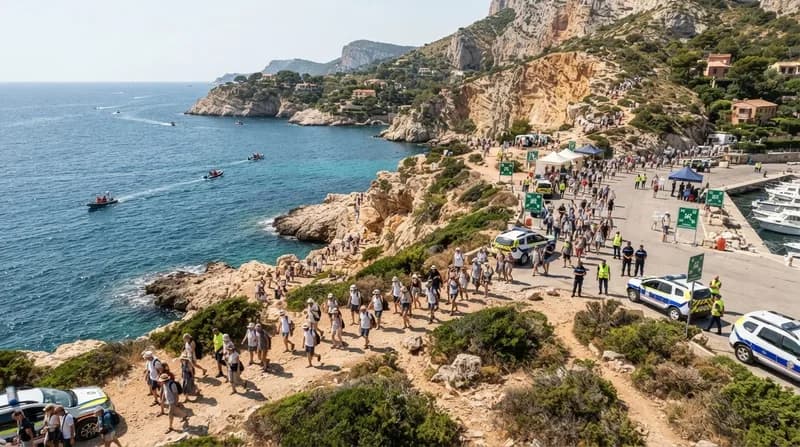
A Silent Threat in Popular Waters
The Mediterranean Sea is frequently viewed as a tranquil destination, but beneath the surface, complex geological activity tells a different story. UNESCO has issued a stark warning: the probability of a tsunami wave exceeding one meter in the Mediterranean basin before 2052 is essentially 100%. While this does not imply an immediate, region-wide catastrophe, it serves as a critical call to action for coastal regions like the French Riviera, where the margin for error is razor-thin.
Unlike the vast expanses of the Pacific, where early warning systems can provide hours of notice, the Mediterranean presents a unique geographical challenge. Earthquakes occurring along the Ligurian Sea or underwater landslides can trigger surges that reach the shore in less than 10 minutes. With national warning centers requiring roughly 15 minutes to process and distribute initial alerts, residents and tourists in high-risk zones may find themselves in a situation where they must act based on natural cues long before a formal notification arrives.
The Anatomy of a Mediterranean Tsunami
Tsunamis in this region are often triggered by the collision of tectonic plates—specifically the African and Eurasian plates—or by sudden underwater shifts near the French and Italian coasts. History confirms this danger is not theoretical. Between the 16th century and the early 2000s, the French Riviera recorded roughly 20 significant events. These include the 1887 Ligurian Sea earthquake, which caused the sea to retreat before surging back, and the 1979 Nice landslide, which resulted in fatal flooding and waves reaching 3.5 meters high.
Importantly, experts emphasize that the threat is not limited to "giant walls of water." Even a 50-centimeter surge can carry enough force to act as a dangerous torrent, capable of knocking people off their feet and damaging coastal structures. These events often manifest as rapid, unpredictable changes in sea levels, including sudden drains that leave harbor floors exposed, followed by powerful, sustained currents that can persist for hours.
Mapping Safety in High-Traffic Zones
To combat these risks, researchers from the University of Montpellier and local authorities have moved beyond simple awareness campaigns. They have developed granular evacuation models that identify specific "coastal evacuation zones," generally defined as land below five meters in elevation and within 200 to 500 meters of the shoreline. These zones account for a combined population of 164,000 residents, a number that swells significantly with hundreds of thousands of seasonal beachgoers.
Using advanced algorithms, these teams have mapped out walking routes that account for urban obstacles, slope steepness, and potential bottlenecks. By identifying nearly 100 dedicated refuge sites, they are ensuring that the population knows exactly where to go before an event occurs. This strategic work has led to the Nice Côte d’Azur metropolitan area receiving official 'Tsunami Ready' recognition from UNESCO, a milestone that requires rigorous adherence to 12 indicators of preparedness, including public drills and 24/7 monitoring capabilities.
Why it Matters: The Preparedness Gap
- Speed of Onset: Localized events can strike within 10 minutes, outpacing centralized alert systems.
- Behavioral Readiness: The 2011 Japan tsunami demonstrated that personal knowledge of evacuation routes significantly improves survival rates compared to waiting for instructions.
- Infrastructure Integration: The shift from reactive alerts to proactive urban planning (e.g., signage and designated refuge sites) is now considered the gold standard for coastal safety in Europe.
Ultimately, the goal is to shift the public's behavior. Instead of waiting to witness the sea acting strangely or waiting for an official notification, the new paradigm relies on an educated public that understands the dangers of the coast. By prioritizing off-beach evacuation routes and fostering a culture of preparedness, communities are working to ensure that when the next event occurs, the population is already moving toward safety.