A Prehistoric Heavyweight Emerges
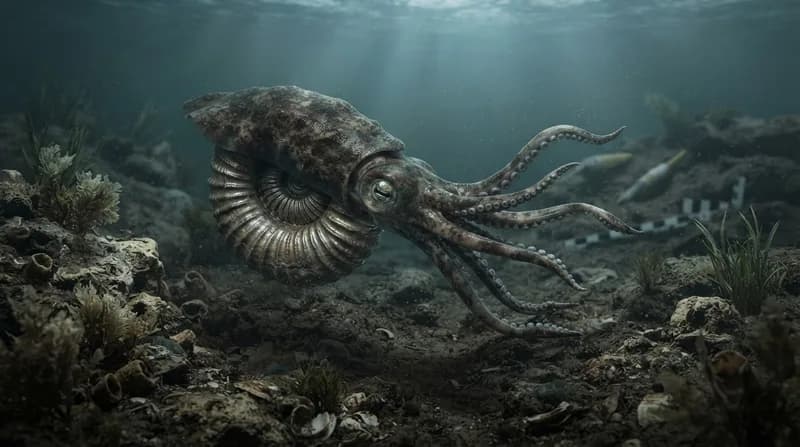
In the vast fossil archives of Wyoming’s Sundance Formation, researchers have unearthed a creature that defies the standard narrative of Jurassic marine life. Known for over two centuries, belemnites—the ancient, squid-like relatives of today’s octopuses—are usually identified by their slender, bullet-shaped internal skeletons. However, a new study published in Papers in Palaeontology describes a specimen so distinct it has been dubbed the “fattest” belemnite ever discovered. Formally named Wyoteuthis linsterorum, this barrel-shaped anomaly lived approximately 160 million years ago, challenging long-held assumptions about the diversity of its extinct group.
While most belemnites found in the region measure a mere 1 to 2 centimeters in width, Wyoteuthis linsterorum boasts a robust rostrum—the internal skeletal guard—reaching an astonishing 6 centimeters in width. Standing 10 centimeters long, the structure suggests an animal that, including its appendages, may have spanned two feet in length. This significant departure in morphology suggests that Wyoteuthis occupied a specialized niche, potentially serving as an apex predator of smaller, more common belemnite species that shared the same inland sea.
Technology Meets Taxonomy
The identification of this species was far from straightforward, involving a multi-decadal timeline and modern diagnostic imaging. The first specimen remained tucked away in a museum drawer for nearly thirty years after being unearthed in the 1990s by Dr. Burkhard Pohl, founder of the Wyoming Dinosaur Center. It wasn't until fossil collector Cliff Linster discovered a second, remarkably similar specimen near Ten Sleep, Wyoming, in 2019 that researchers had the necessary evidence to conduct a comparative analysis.
To confirm the animal's identity without compromising the integrity of the rare fossils, an international team—including experts from the University of Manchester and Victoria University of Wellington—employed high-resolution computed tomography (CT) scanning. The results were startling. The internal structural analysis revealed a connection to an ancient belemnite lineage previously believed to have gone extinct millions of years before Wyoteuthis existed. This discovery suggests a 'relict' population that survived far longer than fossil records had previously indicated, reminding researchers that even well-documented groups can harbor major evolutionary surprises.
Why It Matters
- Evolutionary Timeline: The discovery proves that certain ancient cephalopod lineages persisted much longer than previously theorized, bridging significant gaps in the paleontological timeline.
- Ecological Specialization: The "chunky" anatomy suggests a specialized evolutionary path, likely indicating a high-predation lifestyle in a crowded Jurassic ecosystem.
- Public Contribution: This breakthrough underscores the vital role that amateur fossil collectors and "rockhounds" play in scientific discovery, as the formal identification was made possible through donated finds.
A Legacy Etched in Stone
The naming of Wyoteuthis linsterorum serves as a posthumous tribute to the late Cliff Linster, whose commitment to paleontology was instrumental in the recovery of the second fossil. For the researchers involved, including Dr. Dean Lomax, the naming of the species is a deeply personal endeavor. Lomax, who spent years excavating alongside the Linster family, highlighted the bittersweet nature of the achievement: while Cliff Linster passed away shortly before the study's publication, his contribution has effectively immortalized his name within the annals of scientific history.
The two known specimens of this remarkable creature are now on public display at the Wyoming Dinosaur Center in Thermopolis. They serve as a physical testament to the ongoing discovery process in Wyoming's Sundance Formation, a site that continues to provide windows into an ancient, bustling marine world. As researchers continue to analyze these remains, Wyoteuthis stands as a singular reminder of how much of our planet’s biological history remains hidden, waiting for the right pair of eyes to notice that one fossil that looks just a little bit different from the rest.