The Challenge of Clinical Assessment
For individuals living with Parkinson’s disease, “freezing of gait”—a sudden, involuntary sensation of being glued to the floor—remains a debilitating hurdle to independence. Clinicians have long struggled to accurately assess this symptom because patient movement patterns in a sterile clinical setting rarely mirror the unpredictable demands of daily life. When a patient navigates a hallway, maneuvers through a doorway, or avoids an obstacle in their home, the underlying neurological triggers for freezing are often hidden from standard examination.
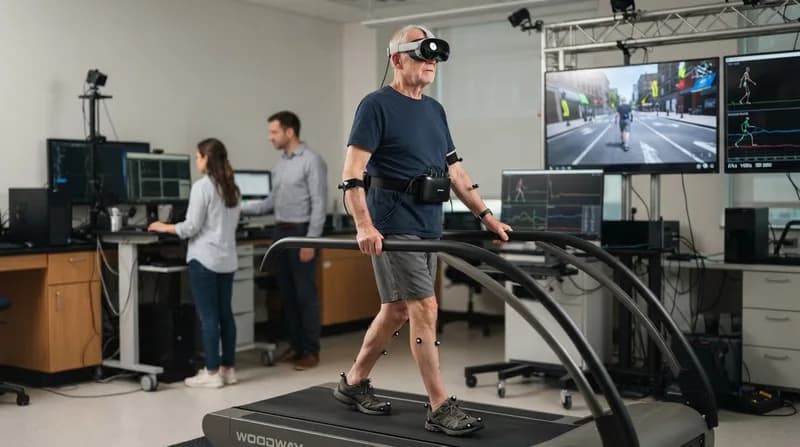
To solve this, the Smart Wearable Electronics and hEalth daTa (SWEET) Research Group at Lehigh University is pioneering a dual-pronged approach. Led by assistant professor Rui Hua, the team is integrating advanced wearable sensor technology with immersive virtual reality (VR) to create a standardized yet highly authentic testing environment. By mapping how patients move within simulated real-world contexts, researchers can finally obtain objective, quantifiable data that was previously out of reach.
The SWEET Research Approach
The core of the initiative involves using VR to bring the complexity of the outside world into the lab. By standardizing these environments, the team can isolate variables that lead to gait impairment. As patients navigate these virtual simulations, wearable sensors capture minute biometric data points, which are then analyzed to provide clinicians with actionable, personalized insights. This marriage of digital health hardware and sophisticated data modeling represents a significant shift from subjective observation to data-driven rehabilitation.
The team is also exploring the role of sensory cues in mitigating movement issues. By testing auditory signals like rhythmic music or metronomic beats alongside tactile vibrations delivered via wearable devices, the researchers hope to determine which triggers most effectively help patients synchronize their steps. Because Parkinson's manifests uniquely in every individual, the ultimate goal is not a one-size-fits-all therapy, but a highly personalized digital intervention that adapts to the specific needs of each patient.
Why It Matters
- Beyond the Clinic: Moves diagnostic testing from static, artificial settings to simulated real-world scenarios.
- Personalized Therapy: Utilizes data analytics to determine which sensory cues—auditory vs. tactile—work best for individual patients.
- Objective Quantifiability: Replaces qualitative observations with hard metrics regarding gait and movement freezing.
- Holistic Collaboration: Partners clinical expertise from Good Shepherd Rehabilitation with engineering and data science to ensure the tech is practical and patient-centered.
A Multidisciplinary Effort
The success of the SWEET lab’s project relies heavily on its multidisciplinary structure. The team is not merely building hardware; they are integrating clinical expertise directly into the product development cycle. By conducting regular interviews with physical therapists and clinicians, the researchers ensure that the virtual environments and sensory cues are physiologically relevant to the challenges patients face in daily life.
The project also serves as a hub for student involvement, spanning from graduate-level software development to undergraduate contributions in music customization and clinical research coordination. Through these diverse efforts, the researchers aim to advance disability health equity. By making rehabilitation more specific and responsive to the needs of those living with Parkinson’s, the SWEET team is setting a new standard for how wearable technology can directly improve quality of life and long-term mobility outcomes.