ScienceTechnical Deep Dive

Could Daily Vitamin C Supplements Combat Early-Stage Blood Cancer?

Published
EElectricBuzz Editorial Team
Could Daily Vitamin C Supplements Combat Early-Stage Blood Cancer?
3 min read501 wordsElectricBuzz Editorial Team

The Gist

“A groundbreaking clinical trial suggests that simple, daily vitamin C supplementation may significantly improve survival rates for patients with precancerous blood disorders.”

A New Frontier in Cancer Interception

For decades, vitamin C has been relegated to the realm of immune support and basic nutrition. However, recent research conducted by the Van Andel Institute-Stand Up To Cancer (SU2C) Epigenetics Dream Team suggests this humble nutrient may hold a much more powerful role in the fight against cancer. In a phase 2 clinical trial known as EVITA, researchers identified a potential link between daily oral vitamin C supplementation and improved survival outcomes in patients suffering from precancerous blood conditions.

The study, published in the American Cancer Society journal CANCER, focused on patients with clonal cytopenia of undetermined significance (CCUS) or myelodysplastic syndrome (MDS). These conditions, which often occur in older adults, frequently act as a precursor to acute myeloid leukemia (AML)—an aggressive and often untreatable form of blood cancer. By intervening during these early stages, researchers hope to intercept the development of full-blown malignancy, shifting the paradigm from reactive treatment to proactive disease management.

The EVITA Clinical Trial Methodology

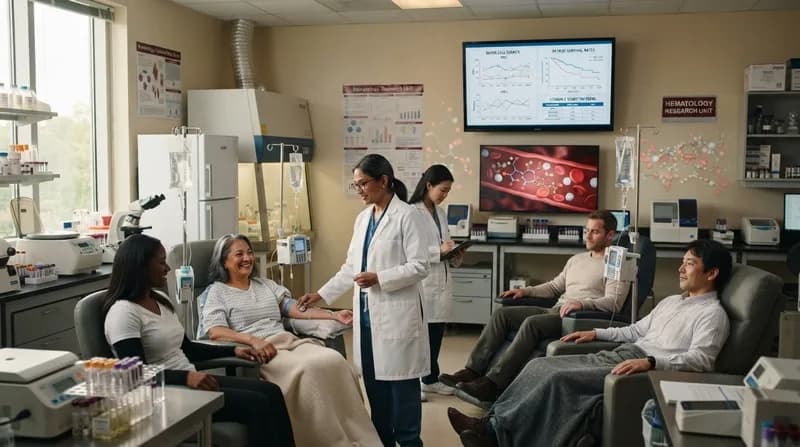
The EVITA trial represents a landmark effort in clinical research, serving as the first randomized, double-blind, placebo-controlled study to evaluate the effects of oral vitamin C on these specific blood disorders. Enrolling 109 patients, the researchers divided the participants into two groups: one receiving a daily 1,000 mg dose of vitamin C, and the other receiving a placebo designed to be identical in every sensory aspect. Neither the patients nor the clinical staff were aware of the distribution, ensuring the highest standards of data integrity.

Initial blood analysis revealed a stark reality: over half of the participants exhibited insufficient levels of vitamin C at the start of the study. Supplementation successfully corrected these deficiencies. While the vitamin did not prevent the expansion of abnormal blood cells, it exerted a notable influence on immune signaling molecules known as cytokines. Furthermore, an exploratory analysis demonstrated that patients who received the daily vitamin C regimen showed a statistically significant improvement in survival rates over a three-year follow-up period compared to the placebo group.

Understanding the Biological Mechanism

The interest in vitamin C stems from its influence on cellular epigenetics—the processes that dictate how genes are expressed within a cell. Central to this research is an enzyme called TET2, which acts as a molecular switch, regulating gene activity and preventing abnormal growth. Mutations in the TET2 gene are common in leukemia patients, leading to cellular instability.

Vitamin C is essential for the optimal activity of the TET2 enzyme. By providing sufficient concentrations of the vitamin, researchers believe it may be possible to restore normal gene regulation in cells that are at risk of becoming cancerous. This research suggests that while vitamin C is not a standalone cure, it may help stabilize blood cells and mitigate the inflammatory processes that facilitate the progression of pre-leukemia into life-threatening cancer. While these findings are promising, the research team emphasizes that the results are preliminary and must be validated through larger, phase 3 clinical trials before physicians can make definitive recommendations for clinical practice.

SPONSORED
The 5 Best Over-Ear ANC Headphones of 2026, Tested & Ranked
Editor's Pick Guide
92/100
Tech & Gadgets•12 min read

The 5 Best Over-Ear ANC Headphones of 2026, Tested & Ranked

We locked five over-ear ANC picks for 2026 — Sony WH-1000XM6, Bose QuietComfort Ultra 2, Soundcore Space One, Sennheiser Momentum 5, and Apple AirPods Max 2 — then stress-tested them on lab metrics, long-term owner truth, and live street prices.

Related Stories

Semantically matched articles, ranked by topic overlap and freshness.

Beyond Memory Loss: The Evolutionary Case for the 'Wise' Aging Brain
Science

Beyond Memory Loss: The Evolutionary Case for the 'Wise' Aging Brain

A groundbreaking new hypothesis suggests that as the brain ages, it purposefully shifts away from storing granular details to prioritize the extraction of wisdom and pattern recognition.

Nigeria Initiates Emergency Response After First Confirmed Ebola Case
Science

Nigeria Initiates Emergency Response After First Confirmed Ebola Case

Health authorities in Nigeria have launched aggressive contact tracing protocols after confirming the nation's first Ebola case linked to the ongoing regional outbreak.

Cosmic Time Capsules: Scientists Decode the Universe's First Five Minutes
Science

Cosmic Time Capsules: Scientists Decode the Universe's First Five Minutes

An international research team has achieved a 0.5% precision measurement of primordial helium, opening a new window into the physics of the Big Bang.

Molecular Mystery Solved: Why Statins Trigger Muscle Pain
Science

Molecular Mystery Solved: Why Statins Trigger Muscle Pain

Researchers have identified the exact atomic mechanism that causes statins to leak calcium in muscle cells, potentially paving the way for a new generation of side-effect-free heart medication.

Precision Oncology: New Liquid Biopsy Breakthrough Detects Lung Cancer Months Before Imaging
Science

Precision Oncology: New Liquid Biopsy Breakthrough Detects Lung Cancer Months Before Imaging

A groundbreaking blood test can now identify microscopic traces of lung cancer recurrence long before traditional scans, offering a new frontier in personalized cancer surveillance.

A Gentle Touch: Scientists Discover Radical New Way to Revive Dying Coral
Science

A Gentle Touch: Scientists Discover Radical New Way to Revive Dying Coral

New research from the Stanford Doerr School of Sustainability reveals that bleached corals can fully recover in just seven weeks through physical contact with healthy, genetically identical clones.

Cosmic Chameleon: Astronomers Identify the First Known Green Star
Science

Cosmic Chameleon: Astronomers Identify the First Known Green Star

New research from the University of Warwick reveals that dead stars can glow in an impossible spectrum of colors, including a rare, ghostly green.

Breakthrough Discovery Reveals Immune Pathway Behind Radiation-Induced Lung Damage
Science

Breakthrough Discovery Reveals Immune Pathway Behind Radiation-Induced Lung Damage

Researchers at City of Hope have identified a specific immune signaling protein that converts protective cells into agents of inflammation, opening the door for new preventative lung therapies.