The Molecular Culprit Behind Statin-Induced Pain
For decades, statins have stood as a frontline defense against cardiovascular disease, preventing countless heart attacks and strokes across the globe. However, this clinical success story has long been marred by a common and frustrating side effect: muscle pain, weakness, and, in rare instances, severe tissue damage. For the first time, researchers from the University of British Columbia (UBC) and the University of Wisconsin-Madison have uncovered the precise mechanism behind these symptoms, providing a breakthrough that could reshape how cholesterol-lowering drugs are engineered.
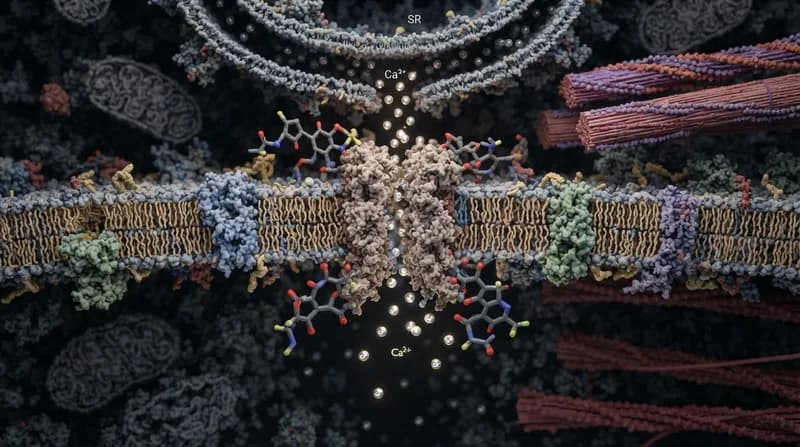
Published in Nature Communications, the study reveals that statins do not just act on liver cholesterol; they interact directly with a vital protein in muscle cells called the ryanodine receptor (RyR1). This protein is responsible for the controlled release of calcium, which triggers muscle contraction. When statins bind to this receptor, they force the calcium channel to remain open, leading to an unregulated, continuous leak of calcium into the muscle cell that causes inflammation, soreness, and tissue injury.
The Anatomy of an Atomic Leak
To pinpoint this interaction, the research team employed high-resolution cryo-electron microscopy, a sophisticated imaging technique that allows scientists to visualize protein structures at the atomic level. By examining the interaction between atorvastatin and the RyR1 protein, the researchers discovered a highly specific, triplet-molecule binding mechanism. The process begins with a single statin molecule binding to a pocket within the protein while the channel is closed, which effectively lowers the energy threshold required for the gate to open. Two additional statin molecules then latch onto the same pocket, effectively jamming the "gate" in the open position.
This discovery provides a clear, structural roadmap for pharmaceutical development. By identifying the exact pocket where these three molecules congregate, researchers now have a specific target for chemical modification. The goal is to design future statin variants that retain their potency in regulating cholesterol while losing the structural characteristics that allow them to bind with the RyR1 calcium channel. This would effectively decouple the drug's therapeutic heart benefits from its most common and debilitating side effects.
Why It Matters
- Adherence Issues: Many patients discontinue statin therapy due to muscle soreness, increasing their long-term risk of cardiac events.
- Broad Implications: With over 200 million users worldwide, even a minor reduction in side effects could significantly improve patient outcomes and medication adherence.
- New Design Paradigm: This is the first time scientists have visualized how a drug inadvertently "activates" a biological channel at an atomic level, providing a new blueprint for drug discovery.
As the scientific community shifts toward more personalized and precise pharmacology, this finding serves as a major milestone. While the transition from laboratory discovery to a finished clinical product remains a complex process, the ability to see exactly how these medications interact with muscle tissue provides the industry with the clarity needed to iterate on current designs. Future medications could soon offer the life-saving benefits of modern cardiology without the physiological cost that has plagued millions of patients for years.