A New Strategy Against Neurodegeneration
For decades, the standard approach to treating Alzheimer’s disease has been the aggressive pursuit of toxic protein removal—specifically amyloid plaques and, more recently, tau tangles. However, a groundbreaking study from the Washington University School of Medicine in St. Louis suggests that we may be overlooking a more potent therapeutic target: the brain's own immune response. By shifting focus away from protein clearance and toward protecting neurons from immune-driven damage, researchers have successfully preserved memory-related brain tissue in animal models.
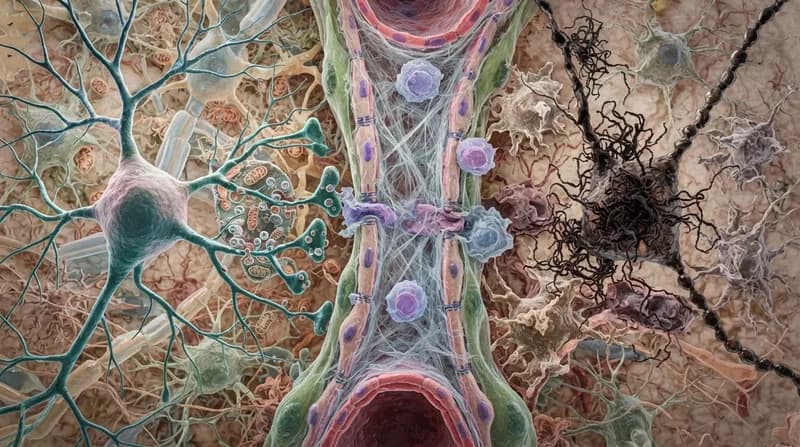
The study, published in the journal Neuron, highlights that while tau protein accumulation is a hallmark of Alzheimer’s and other tauopathies, the actual destruction of neurons might be an indirect consequence of an overactive immune system. In these conditions, immune cells known as T cells infiltrate the brain, guided by chemical signals, and contribute to the death of vital brain tissue.
The Role of the CXCR3-CXCL10 Pathway
The research team identified a critical chemical pathway, the CXCR3-CXCL10 axis, responsible for guiding T cells into the brain. Activated T cells carry a surface receptor called CXCR3, which effectively acts as a homing device to track the chemical signal CXCL10. In mice with tau-related brain damage, the researchers observed that these T cells were concentrating in the regions of the brain most impacted by neuronal loss.
By utilizing an antibody to block the CXCR3 receptor, the scientists were able to effectively intercept these T cells before they reached their destination. The results were compelling: the treatment reduced the number of T cells inside the brain by approximately 50%. Most significantly, this reduction in immune infiltration was enough to prevent roughly 40% of the neuronal damage typically seen in these models, even though the underlying tau tangles remained completely untouched.
Why It Matters
- Beyond Protein Removal: This approach proves that clinical benefits—such as tissue preservation and improved memory—can be achieved without requiring the total elimination of misfolded proteins.
- Bypassing the Blood-Brain Barrier: Many current neurological drugs struggle to penetrate the blood-brain barrier. Because this new treatment targets immune activity outside the brain or at its periphery, it circumvents this major logistical hurdle.
- Potential for Repurposing: Existing therapies used to manage T-cell activity in autoimmune diseases like multiple sclerosis could potentially be investigated as starting points for this new Alzheimer’s strategy.
An Outlook for Clinical Translation
The discovery represents a potential paradigm shift in neurology. Instead of treating Alzheimer’s solely as a protein-misfolding disorder, medical researchers may soon be able to treat it as a condition that benefits from immune regulation. While the study is currently limited to mice, the implications are profound. If the safety profile holds, the ability to protect brain cells from destruction without the Herculean task of clearing dense, stubborn protein deposits would be a monumental advancement in the treatment of dementia.
Senior author Dr. David M. Holtzman and his colleagues are optimistic that this discovery provides a clear path forward for future drug development. By shifting the clinical goal from "protein removal" to "neuro-protection," the medical community may find a more effective way to preserve cognition and independence for patients, offering hope where traditional amyloid-focused medications have hit limitations.