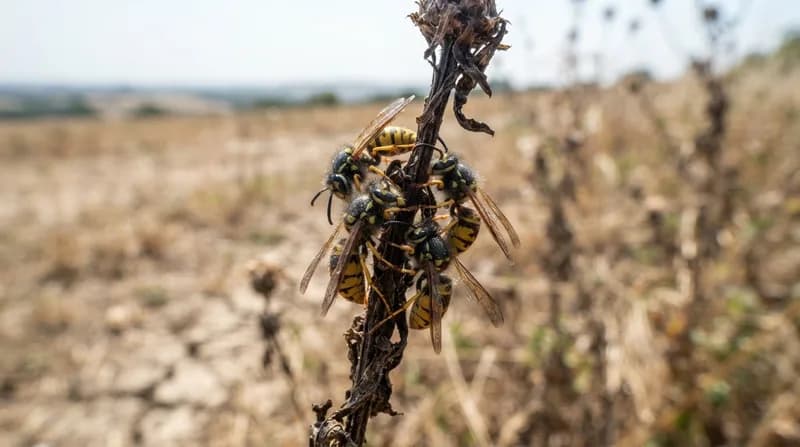
The Wasp Mystery of 2026
In a summer typically defined by the buzzing presence of common social wasps, the UK is experiencing a puzzling silence. For researchers and pest-control professionals alike, the scarcity of these insects is not just a welcome reprieve from garden pests, but a significant ecological red flag. While anecdotal, the absence of wasp-related media coverage and the difficulty in sourcing specimens for scientific study suggest that the population has dipped significantly compared to previous, similarly warm years.
Biologists are now pointing to the 2026 climate as the primary suspect. While insects often thrive in warmer conditions, the recent cycle of unprecedented heatwaves, interrupted by cold, damp days and frigid nights, has created a volatile environment. This instability has potentially compromised the foundational stages of colony development, forcing new queens to abandon nests or succumb to environmental stress before their populations could reach their usual seasonal peak.
The Thermal Limit and Physiological Stress
The impact of heat on insect survival is governed by a concept known as the critical thermal maximum (CTmax). While wasps are generally considered resilient, their thermal ceiling sits at approximately 45°C (113°F). During recent heatwaves, ground surface temperatures in the UK have frequently exceeded 50°C, pushing the limits of even the most hardy social insects. Even when temperatures remain below the absolute lethal threshold, chronic heat exposure can severely impair foraging efficiency and cognitive function, making it harder for colonies to secure the resources required to sustain their growth.
Furthermore, the physical size of the remaining wasps provides a troubling indicator of the current struggle. Typically, worker wasps grow significantly larger as the summer progresses and foraging capacity increases. However, field observations this year show a prevalence of 'spring-sized' wasps in late summer. Researchers theorize that this phenomenon is a direct result of nutritional deficiencies caused by limited prey or, more drastically, a heat-induced developmental acceleration that forces larvae to pupate prematurely at a smaller size.
Why It Matters
- Ecological Balance: Wasps serve as vital pest-controllers, pollinators, and decomposers. A sharp decline could trigger cascading effects throughout the local food web.
- Climate Indicators: The shrinking size of these insects may provide a real-time visualization of how global warming is physically altering insect morphology over time.
- Data Collection: Public participation, through initiatives like the 'Wasp Picnic Survey,' is crucial for transforming anecdotal observations into actionable scientific data.
Outlook and Public Involvement
While the long-term consequences of this decline remain to be seen, the scientific community is calling for a more nuanced understanding of our relationship with wasps. Instead of immediate eradication, researchers suggest that observing these insects at play—and even providing limited sources of protein or sugar during food-scarce periods—can help experts gather necessary data. As we move through the remainder of the summer, the focus will remain on whether these insect populations can recover from the climate-driven stresses of 2026 or if this year marks a permanent shift in seasonal biodiversity.