The Strategic Pivot to Range-Extended EVs
In a significant shift of its electrification strategy for the Chinese market, Toyota is reportedly preparing to introduce range-extender electric vehicles (REEVs) to its lineup. According to reports from Nikkei Asia, the Japanese automotive giant aims to begin production of these models as early as 2027. This move marks the company’s first venture into the REEV segment, a category that has seen explosive growth in China as consumers seek the benefits of electric drivetrains without the range anxiety often associated with purely battery-powered long-distance travel.
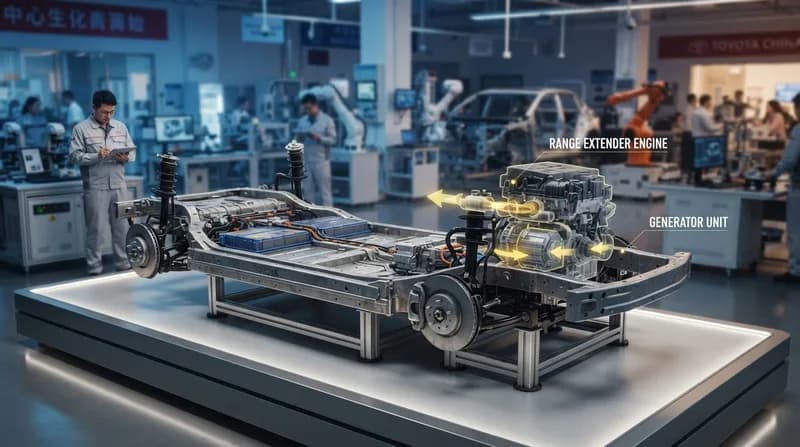
Unlike traditional plug-in hybrids, the range-extender architecture utilizes an internal combustion engine exclusively as an onboard generator. This engine does not provide direct torque to the wheels; instead, it supplies electricity to the battery pack and the electric motors, significantly extending the vehicle's operational range. This design is particularly well-suited for China's vast geography, where charging infrastructure in metropolitan centers is robust, but rural charging capabilities remain a hurdle for pure battery electric vehicle (BEV) owners.
Ambitious Production Timelines
Toyota's approach to the Chinese market has historically been measured, but this new initiative suggests an aggressive scaling strategy. Industry projections indicate that Toyota is planning a modest start in April 2027, with the production of several hundred units per month. However, the company intends to rapidly ramp up these figures to reach an annual production milestone of 200,000 units by the end of 2027. By 2028, the company aims to double that capacity to approximately 400,000 units annually.
This ramp-up is critical, as Toyota faces fierce competition from domestic manufacturers who have already solidified their presence in this niche. Brands such as Li Auto, which essentially pioneered the modern popularity of REEVs in the region, along with Aito, Leapmotor, and Xiaomi’s sub-brand SkyNomad, have successfully captured market share. Even international incumbents like Volkswagen have begun to localize their offerings to compete with these highly localized, feature-rich electric platforms.
Why It Matters
- Overcoming Range Anxiety: By adopting REEV technology, Toyota addresses the specific driving needs of Chinese consumers who frequently travel between urban hubs and rural provinces.
- Market Alignment: The shift demonstrates Toyota’s willingness to adapt its global strategy to meet the unique demands of the Chinese market, where domestic brands have set the standard for what consumers expect from a "New Energy Vehicle."
- Regulatory Response: As Chinese regulators tighten technical requirements and safety procedures for range-extender systems, Toyota’s entry will be closely monitored for compliance and engineering integration.
- Portfolio Diversification: This move complements Toyota's existing bZ-series BEVs, such as the bZ3 and bZ7, allowing the company to offer a more comprehensive spectrum of propulsion choices.
Toyota’s path to this point has included several collaborative efforts within China, including partnerships with FAW, GAC, and BYD. As the company transitions from these early bZ-series models to more complex, localized range-extender solutions, it faces the challenge of maintaining its reputation for reliability while integrating the highly digitized, consumer-focused features that characterize today's competitive Chinese EV landscape.