ScienceTechnical Deep Dive

Thirty Meter Telescope Rejects La Palma: The High-Stakes Path Back to Mauna Kea

Published
EElectricBuzz Editorial Team
Thirty Meter Telescope Rejects La Palma: The High-Stakes Path Back to Mauna Kea
3 min read479 wordsElectricBuzz Editorial Team

The Gist

The Thirty Meter Telescope project has officially declined a €1bn relocation offer to Spain, reaffirming its commitment to the Hawaiian summit of Mauna Kea.

A Pivotal Decision for Modern Astronomy

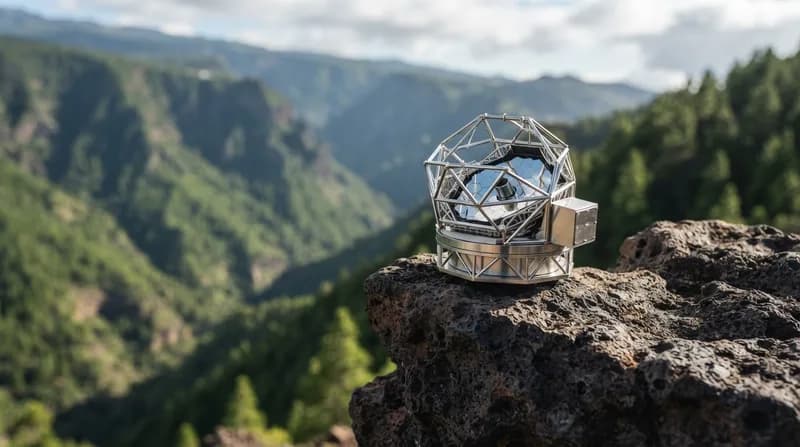
The Thirty Meter Telescope International Organization (TIO) has formally rejected a lucrative €1bn funding package from Spain, which would have facilitated the construction of the massive observatory at the Roque de los Muchachos Observatory in La Palma, Canary Islands. This decision marks a significant turning point for the project, effectively cementing Hawaii’s Mauna Kea as the primary and only viable destination for what promises to be one of the world's most powerful astronomical instruments.

While the financial offer was substantial—bolstered by backing from the European Investment Bank and Spain's Official Credit Institute—scientific considerations outweighed the capital injection. The TMT is designed to peer into the furthest reaches of the cosmos, requiring highly specific atmospheric conditions. Astronomers have long noted that Mauna Kea's elevation and climate are superior to the La Palma site, particularly for critical mid-infrared observations. The cooler, drier air at the Hawaiian peak is essential for detecting the faint signatures of the oldest, most distant galaxies, a capability that could be compromised by the warmer, lower-altitude environment of the Canary Islands.

The Weight of Legacy and Scientific Ambition

The TMT remains a marvel of engineering, headlined by its massive 30-meter primary mirror. This light-gathering surface is composed of 492 individual hexagonal segments made from specialized zero-expansion glass. The sheer complexity of this optical system is designed to provide resolution far beyond current terrestrial capabilities, creating a "time machine" for researchers to study the early stages of the universe.

Despite this technical prowess, the path to construction has been fraught with challenges. Selected as the original site in 2009, Mauna Kea became the center of a protracted conflict with indigenous Hawaiian communities who view the summit as sacred. These protests effectively halted construction in 2015, forcing the TIO to search for alternatives, leading to the brief consideration of La Palma. However, with the rejection of the Spanish offer, the organization is clearly signaling that the scientific necessity of the Hawaii site is worth navigating the profound social and political complexities that have delayed the project for over a decade.

Why it Matters

The rejection of the La Palma site brings the TMT into a direct, high-stakes collision with the shifting landscape of global astronomical funding. The United States National Science Foundation (NSF) recently declared that it cannot provide financial support for both the TMT and the competing Giant Magellan Telescope (GMT). With the NSF committing its resources to the GMT—which is currently under construction in Chile—the TMT must secure the remainder of its multi-billion dollar budget through international partnerships alone. By passing on the €1bn European aid package, the TIO is doubling down on its original vision, banking on the idea that the unique scientific output of the Mauna Kea site will remain a compelling investment for its consortium of members, which include Japan, India, Canada, and several major U.S. research institutions.


The 5 Best Over-Ear ANC Headphones of 2026, Tested & Ranked
Editor's Pick Guide
92/100
Tech & Gadgets12 min read

The 5 Best Over-Ear ANC Headphones of 2026, Tested & Ranked

We locked five over-ear ANC picks for 2026 — Sony WH-1000XM6, Bose QuietComfort Ultra 2, Soundcore Space One, Sennheiser Momentum 5, and Apple AirPods Max 2 — then stress-tested them on lab metrics, long-term owner truth, and live street prices.

Related Stories

Semantically matched articles, ranked by topic overlap and freshness.

Could 40Hz Sensory Stimulation Be the Missing Link in Sickle Cell Pain Management?
Science

Could 40Hz Sensory Stimulation Be the Missing Link in Sickle Cell Pain Management?

Researchers at Virginia Commonwealth University have discovered that non-invasive light and sound therapy can help clear brain waste, potentially alleviating chronic pain associated with sickle cell disease.

A Rare Glimpse Into Whale Grief: Humpback Mother’s Extended Vigil
Science

A Rare Glimpse Into Whale Grief: Humpback Mother’s Extended Vigil

Researchers have documented a rare, poignant display of maternal mourning in humpback whales, providing new insight into the complex emotional lives of marine giants.

Mapping the Mind: Researchers Identify Five Distinct Brain Profiles for Depression
Science

Mapping the Mind: Researchers Identify Five Distinct Brain Profiles for Depression

A landmark study from the University of Helsinki challenges the universal approach to depression, revealing five distinct biological phenotypes through high-precision brain imaging.

NASA's Roman Space Telescope: Transforming the Cosmos into a Massive Data Laboratory
Science

NASA's Roman Space Telescope: Transforming the Cosmos into a Massive Data Laboratory

NASA's newly launched Nancy Grace Roman Space Telescope represents a paradigm shift in astronomy, combining unprecedented panoramic scale with high-definition clarity to redefine how we analyze the universe.

Novel Peptide Discovery Offers Hope for Combating Neurodegeneration
Science

Novel Peptide Discovery Offers Hope for Combating Neurodegeneration

Researchers at UC San Diego have identified a naturally occurring peptide that shows potential in simultaneously targeting multiple pathways involved in Alzheimer’s and other brain disorders.

Solar System Origins: Evidence Suggests 'Fire' Prevailed Over 'Ice' From Day One
Science

Solar System Origins: Evidence Suggests 'Fire' Prevailed Over 'Ice' From Day One

New research from Yale University reveals that the earliest building blocks of our Solar System were forged from intense heat rather than icy dust.

Closing the Net: LHC Researchers Narrow Search for Elusive Quantum Black Holes
Science

Closing the Net: LHC Researchers Narrow Search for Elusive Quantum Black Holes

Physicists at the Large Hadron Collider have completed an extensive search for microscopic quantum black holes, providing new constraints on the existence of extra spatial dimensions and the mystery of quantum gravity.

New Umbrella Review Debunks Link Between Prenatal Acetaminophen and Neurodevelopmental Disorders
Science

New Umbrella Review Debunks Link Between Prenatal Acetaminophen and Neurodevelopmental Disorders

A massive meta-analysis of over 3 million participants finds that higher-quality research does not support a causal relationship between prenatal paracetamol use and conditions like autism or ADHD.