Beyond the City: The Renault 5's Mountain Test
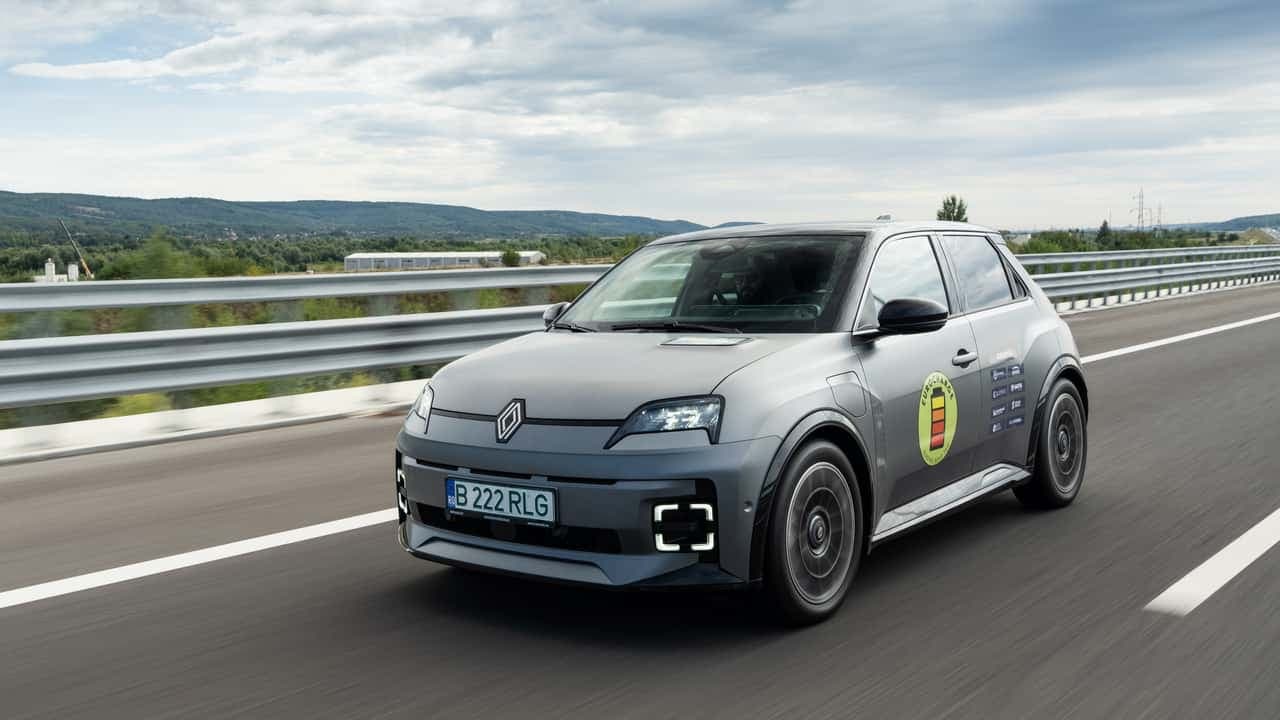
The Renault 5 has long been celebrated for its nostalgic design and agility within urban landscapes, but a recent endurance trial suggests its capabilities reach far beyond the city limits. During the 2026 edition of the Eurocharge road trip in Romania, a Renault 5 Roland Garros successfully traversed the treacherous Transalpina—one of the highest roads in the Carpathian Mountains—without requiring a single charging stop.
The vehicle covered a total distance of 192 miles (309 kilometers), navigating a challenging mix of high-altitude mountain passes, national roads, and highway segments. Despite the demanding terrain and elevation changes reaching over 7,000 feet, the compact hatchback maintained an average efficiency of 12.7 kWh/100 km, or approximately 4.9 miles per kWh. This performance indicates that the vehicle is capable of delivering its advertised range under varied driving conditions, challenging the notion that small, city-oriented electric vehicles are tethered to the metropolitan sprawl.
Understanding the Efficiency Metrics
The efficiency observed during this trip translates to a theoretical range of roughly 254 miles (409 km) on a single charge. This figure is particularly impressive as it aligns almost perfectly with the manufacturer’s official WLTP rating. It is important to note that this result was achieved through normal driving habits—not hypermiling—in mild weather conditions ranging from 50 to 77 degrees Fahrenheit. The route itself included a substantial 18% of highway driving at speeds of approximately 80 mph, further proving that the vehicle’s powertrain is optimized for real-world scenarios.
This efficiency is largely attributed to the vehicle's well-tuned powertrain paired with a 52 kWh usable net battery capacity. While some manufacturers chase market share through ever-larger battery packs, the Renault 5 demonstrates the efficacy of prioritizing weight management and software-driven energy consumption. By maximizing the utility of a relatively small battery, the vehicle provides a compelling argument for a more sustainable approach to EV design—one that favors intelligent energy usage over raw capacity.
Why It Matters
- Efficiency over Mass: The R5 proves that smaller, lighter EVs can be just as road-trip capable as their larger counterparts by optimizing power consumption.
- Expanding Use Cases: This result validates the Renault 5 as a primary vehicle for many users, dispelling the myth that small hatchbacks are limited to secondary, short-distance roles.
- Technological Validation: The close alignment between real-world mountain performance and WLTP ratings gives consumers greater confidence in manufacturer range claims.
The current iteration of the Renault 5 tested features a 148-horsepower motor, consistent with the models currently driving the brand’s electric renaissance. With additional battery options—including a smaller 40 kWh variant and an upcoming 36.5 kWh LFP configuration—Renault is positioning the "5" as a versatile platform that caters to different range requirements while maintaining the core efficiency that made this mountain excursion possible.