A New Frontier in Antimicrobial Defense
The global rise of antimicrobial resistance (AMR) has turned common bacterial infections into formidable health challenges. Among these, Streptococcus pneumoniae—a pathogen responsible for life-threatening conditions like pneumonia and meningitis—has increasingly evaded traditional antibiotic treatments. As these pathogens evolve, the medical community has faced a desperate need for new therapeutic avenues. A recent study published in Advanced Science demonstrates how artificial intelligence is transforming the landscape of drug repurposing, offering a faster, more cost-effective alternative to traditional de novo drug development.
Drug repurposing involves identifying new clinical uses for compounds that have already cleared safety and regulatory hurdles. By leveraging existing drugs, researchers can significantly reduce the time and capital required to bring a treatment to market. In this groundbreaking study, an international team led by Imperial College London employed a sophisticated AI pipeline to filter nearly 7,000 candidate molecules, narrowing the field down to a handful of highly promising candidates capable of tackling resistant bacterial strains.
The AI-Driven Screening Pipeline
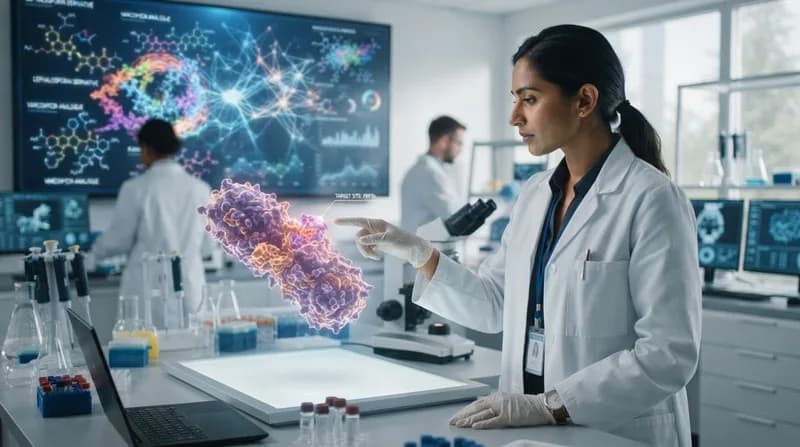
To identify viable candidates, the researchers utilized a trifecta of machine learning approaches. The team trained three distinct algorithms—ensembles of decision trees, graph neural networks, and sequence-based transformers—on extensive datasets. These models were specifically designed to recognize molecular patterns that inhibit the growth of S. pneumoniae. By utilizing a ensemble strategy where multiple AI models provide complementary insights, the researchers achieved a higher degree of predictive accuracy than any single model could provide alone.
The efficiency of this computational approach was validated through rigorous experimental testing. From the initial pool of 7,000 molecules, the AI predicted 11 candidates that showed the strongest potential for inhibiting bacterial growth. In subsequent laboratory validations, nine of these compounds successfully inhibited S. pneumoniae. Most significantly, one of the top candidates demonstrated robust activity even against highly resistant strains, offering a potential breakthrough in managing infections that have otherwise become impervious to standard clinical interventions.
Why it Matters
- Accelerated Discovery: AI-guided repurposing slashes the time-consuming process of screening thousands of molecules, allowing for rapid experimental validation.
- Combating AMR: By identifying existing drugs effective against resistant bacteria, this method provides immediate tools to fight pathogens that are currently outpacing conventional antibiotics.
- Synergistic AI: The study proves that combining diverse AI model architectures—such as graph neural networks and transformers—leads to more reliable and effective clinical candidates.
- Cost-Efficiency: Leveraging drugs with established safety profiles mitigates the risks and costs associated with bringing entirely new, untested chemical compounds through the pharmaceutical pipeline.
This success highlights a shift toward AI-centric drug discovery as a primary tool for public health. As senior author Pedro J. Ballester noted, the ability to fine-tune AI models using known active molecules as a training base provides a powerful, scalable framework that could be applied to a wide array of high-priority pathogens currently threatening global health security.