The Challenge of Early Detection
Pancreatic cancer has long been considered one of the most formidable challenges in modern oncology. With a five-year survival rate of only 14%, the disease is notoriously difficult to catch before it spreads. Historically, nearly 90% of patients are diagnosed only after the malignancy has reached an advanced stage, leaving few viable treatment options. The window for a potential cure is often closed by the time a patient presents with symptoms, making early detection the holy grail of pancreatic cancer research.
A recent breakthrough, spearheaded by researchers at the City of Hope National Medical Center, aims to fundamentally shift this narrative. By leveraging advanced liquid biopsy technology, a new investigational test called PANXEON is showing remarkable promise in identifying both stage 1 and stage 2 cancers. By moving the detection timeline significantly earlier, this technology offers hope for shifting outcomes from palliative care to curative intervention.
How PANXEON Works: The Multi-Marker Approach
The innovation behind PANXEON lies in its comprehensive diagnostic strategy. Rather than relying on a single indicator, the test evaluates three distinct biological markers in a patient's blood sample: circulating microRNAs, exosomal microRNAs, and the CA19-9 protein. By analyzing these three signals simultaneously, the test generates a unified risk score, providing a more robust and granular picture of the patient's pancreatic health.
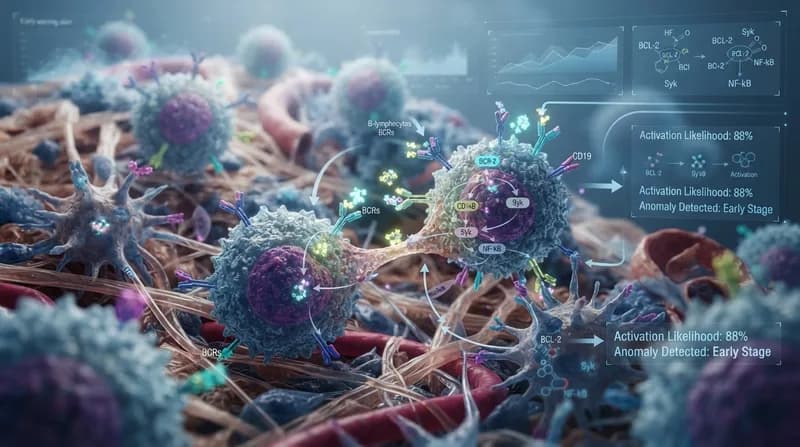
The integration of artificial intelligence is critical to this process. The AI platform synthesizes the data from these three biomarkers, allowing for a level of accuracy that individual markers cannot achieve on their own. This algorithmic approach minimizes diagnostic noise, helping to distinguish between benign issues and genuine malignant developments with greater precision than previously possible.
Why It Matters
- High Sensitivity: The study found an 87% accuracy rate in correctly identifying early-stage (1 and 2) pancreatic cancers.
- Preventative Potential: Beyond cancer itself, the test identified high-grade dysplasia—an advanced precancerous condition—more than 64% of the time, providing a vital opportunity for preemptive medical care.
- Diverse Validation: The findings were verified through a massive international study involving nearly 1,800 participants across the United States, Europe, and Asia, confirming the test's efficacy in varied clinical environments.
- Risk-Group Targeting: The test is specifically designed to assist those at higher risk, including individuals with chronic pancreatitis, pancreatic cysts, or strong family histories of the disease, providing a non-invasive tool to decide who requires more aggressive diagnostic follow-up.
A Future Focused on Proactive Care
The implications of this technology extend far beyond simple diagnosis. Currently, patients at high risk for pancreatic cancer are often subjected to repeated, invasive, and costly imaging procedures that struggle to identify early-stage tumors. PANXEON acts as an intelligent gatekeeper, enabling physicians to better manage high-risk patient populations. If the test returns a positive result, it provides a clear roadmap for more targeted diagnostic evaluations, such as specialized imaging, to confirm the presence of early-stage tumors.
While further clinical integration is required, the successful trial results published in Nature Medicine represent a landmark moment in oncological diagnostics. By providing a reliable blood-based method to identify the disease before it becomes symptomatic, the medical community is moving closer to an era where pancreatic cancer can be treated before it becomes an existential threat to the patient.