The Challenge to Einstein's Equivalence Principle
For centuries, the scientific understanding of gravity has rested on the foundation that all objects, regardless of their composition, fall at the same rate in a vacuum. Albert Einstein formalized this concept within his theory of general relativity, cementing the equivalence principle as a cornerstone of modern physics. However, while this principle has been rigorously tested using ordinary matter and first-generation antimatter, it remains unverified for more exotic particles. Researchers at ETH Zurich and the Paul Scherrer Institute (PSI) are now poised to change that by testing how gravity affects the muon, a heavier cousin of the electron.
The muon belongs to the second generation of matter, and its existence—along with the third generation—remains one of the great mysteries of the Standard Model. Physicists do not yet fully understand why these heavier generations exist or if they interact with gravity in the exact same way as the particles that make up our daily reality. By isolating the muon, researchers hope to see if these elusive particles obey the same gravitational laws as everything else in the universe.
The "Atomic Cannon" Breakthrough
Testing gravity on muons is an engineering nightmare because they are charged particles, making them susceptible to interference from stray electromagnetic fields that are trillions of times stronger than gravity. To bypass this, the team focused on muonium—a neutral atom consisting of a positively charged antimuon and a negatively charged electron. Because muonium is neutral, it is theoretically ideal for gravity experiments, but until now, it has been notoriously difficult to work with due to its fleeting 2.2-microsecond lifespan and chaotic, high-speed movement.
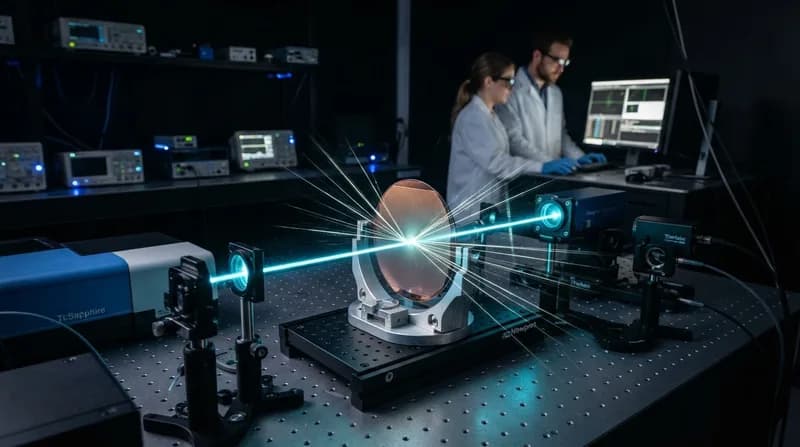
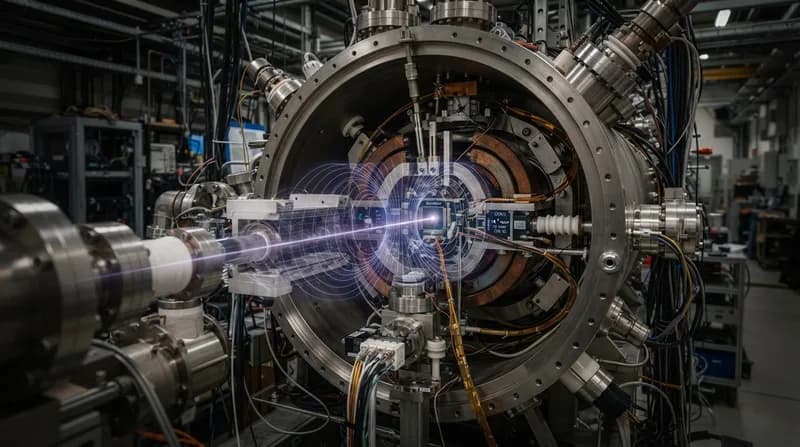
The research team successfully engineered a breakthrough by utilizing superfluid helium cooled to near absolute zero. By injecting antimuons into this quantum fluid, they are able to slow the particles down. When an antimuon captures an electron to form a muonium atom, the chemical potential of the system acts like an atomic cannon, ejecting the atom from the surface of the liquid in a controlled, vertical beam. This "cold" state provides the uniformity required to conduct high-precision measurements before the atoms decay.
Why it Matters
- Fundamental Physics: A deviation from predicted gravitational behavior could point to a fifth force of nature.
- Standard Model Expansion: Understanding how second-generation particles behave could solve the mystery of why nature requires three generations of matter.
- Precision Spectroscopy: The new, high-intensity muonium beam enables more accurate laser spectroscopy, leading to refined calculations of fundamental physical constants.
The Path Toward New Physics
The next phase of this endeavor involves passing this newly created muonium beam through an interferometer. This device leverages the wave properties of atoms to generate an interference pattern; Earth's gravity should technically induce a microscopic shift in this pattern. If the observed shift differs from the prediction of general relativity, it would represent a monumental discovery. While the researchers are currently focused on testing the methodology this year, a full-scale gravity experiment is expected to commence within the next few years.
The possibility of uncovering a fifth fundamental force is an enticing prospect, though the team remains cautiously optimistic and objective. Even if the results align perfectly with Einstein’s predictions, the study will provide the first-ever empirical verification of gravitational equivalence for second-generation matter. This work represents a significant leap in experimental physics, pushing the boundaries of what we can measure at the intersection of quantum mechanics and general relativity.