ScienceTechnical Deep Dive

NASA's Roman Space Telescope Set for Two Decades of Cosmic Discovery

Published
EElectricBuzz Editorial Team
NASA's Roman Space Telescope Set for Two Decades of Cosmic Discovery
3 min read504 wordsElectricBuzz Editorial Team

The Gist

Thanks to exceptional launch precision and significant fuel savings, the Nancy Grace Roman Space Telescope is poised to more than double its mission life, potentially operating for over 22 years.

A New Era of Extended Exploration

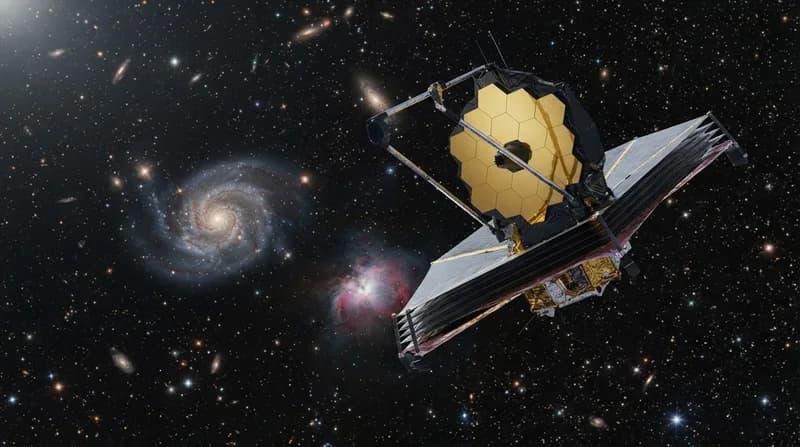
In a monumental win for astrophysical research, NASA has announced that the Nancy Grace Roman Space Telescope will likely operate for at least 22 years—more than double its original 10-year design life. This unexpected longevity is the result of a masterclass in orbital dynamics, precision engineering, and the efficiency of modern commercial launch capabilities.

The observatory, which was initially envisioned with a primary mission of five years and a five-year extension, relies heavily on its finite onboard propellant for station-keeping. By maximizing every kilogram of fuel, the mission team has effectively secured over a decade of bonus time to investigate dark energy, exoplanets, and the formation of the early universe.

The Factors Behind the Fuel Surplus

The telescope's extended lifespan can be attributed to three specific areas of operational efficiency:

  • Precision First Maneuver: The inaugural course correction burn, executed on August 31, was achieved with over 99% accuracy. Remarkably, the craft utilized only 40 pounds (18 kilograms) of fuel, compared to the 441-pound (200-kilogram) allocation planned for the maneuver. This single event effectively bought the mission an additional four years of operational life.
  • Launch Mass Optimization: During the integration phase, Roman was calculated to have a maximum weight of 21,605 pounds, but it actually weighed in at just 17,760 pounds at launch. This lighter mass meant less propellant was consumed during initial adjustments, allowing the team to fill the propellant tanks to their absolute maximum capacity rather than just the amount required for a 10-year mission.
  • Strategic Orbital Insertion: Because the first maneuver was so successful, the second correction and final orbital insertion are now projected to require significantly less energy than anticipated. Mission planners expect this to further pad the fuel reserves, ensuring years of additional station-keeping capacity once the telescope reaches its permanent position at the L2 Lagrange point.

Why It Matters

For astronomers, the doubling of the Roman Space Telescope's lifespan is akin to receiving a major mission upgrade without a hardware change. Every year the telescope remains active, it gains the ability to conduct more comprehensive deep-space surveys. This longevity allows for longer exposure times and broader statistical sampling of cosmic events, such as supernova explosions and gravitational lensing, which are critical to understanding the nature of dark energy and the evolution of the galaxy. By operating well into the late 2040s, the mission will provide a multi-decadal data set that will be analyzed for generations to come.

Outlook and Implications

As Roman travels toward its final orbit around L2, expected in early December, the focus shifts to the routine station-keeping phase. Once settled, the telescope will only require small, periodic burns every 28 days to maintain its position. This routine, combined with the current fuel efficiency trends, creates a highly stable environment for long-term scientific observation. As NASA continues to track the spacecraft's health, the prospect of future maneuvers or mission extensions looks brighter than at any point during the pre-launch phase, solidifying Roman's role as a cornerstone of space exploration for decades.

Best Deals for Portable Power Stations
Editor's Pick Guide
85/100
All8 min read

Best Deals for Portable Power Stations

Top power station sales, seasonal discounts, and bundle offers for emergency power and off-grid travel.

Related Stories

Semantically matched articles, ranked by topic overlap and freshness.

Unlocking Predictive Markers: How B Cells Could Forecast Immunotherapy-Induced Colitis
Science

Unlocking Predictive Markers: How B Cells Could Forecast Immunotherapy-Induced Colitis

New research from MD Anderson Cancer Center suggests that B cell activity acts as a crucial early-warning system for identifying patients at risk of developing severe colitis during cancer treatment.

Could a Tiny Brain Protein Be the Master Switch for Aging?
Science

Could a Tiny Brain Protein Be the Master Switch for Aging?

Researchers have identified that declining levels of a brain protein called Menin may drive systemic aging, offering a potential new target for age-related health interventions.

Challenging Einstein: Scientists Pioneer Gravity Tests Using Exotic Muonium Atoms
Science

Challenging Einstein: Scientists Pioneer Gravity Tests Using Exotic Muonium Atoms

Researchers at ETH Zurich have developed a method to create controlled beams of muonium, potentially enabling the first-ever gravitational tests on second-generation particles.

Unlocking the Narrative: AI System Transforms Physician Notes into Actionable Medical Data
Science

Unlocking the Narrative: AI System Transforms Physician Notes into Actionable Medical Data

A groundbreaking study reveals how a new AI system can parse clinical prose at scale, converting hidden patient insights into verifiable, computer-readable data.

Caltech’s Femtosecond Breakthrough: Steering Light with Light
Science

Caltech’s Femtosecond Breakthrough: Steering Light with Light

Researchers have engineered a nanoscale silicon metasurface capable of redirecting light beams in just 74 quadrillionths of a second, shattering traditional speed barriers in photonic computing.

Beyond the Starch: Why Black and Green Rice Are Emerging as Metabolic Superfoods
Science

Beyond the Starch: Why Black and Green Rice Are Emerging as Metabolic Superfoods

New research from Hokkaido University reveals that pigmented rice varieties contain unique, beneficial fats that could revolutionize dietary approaches to blood sugar management.

Biological Breakthrough: Scientists 3D-Print a Functional Human Gut-on-a-Chip
Science

Biological Breakthrough: Scientists 3D-Print a Functional Human Gut-on-a-Chip

Researchers at Lawrence Livermore National Laboratory have successfully replicated the complex 3D architecture of the human small intestine on a compact, microfluidic device.

Hidden Cellular Antennas: A New Frontier in Understanding Congenital Heart Disease
Science

Hidden Cellular Antennas: A New Frontier in Understanding Congenital Heart Disease

Researchers have discovered a microscopic signaling hub within cells that acts as a blueprint for heart development, potentially explaining the roots of complex congenital defects.