A Stabilizing Shift in the North
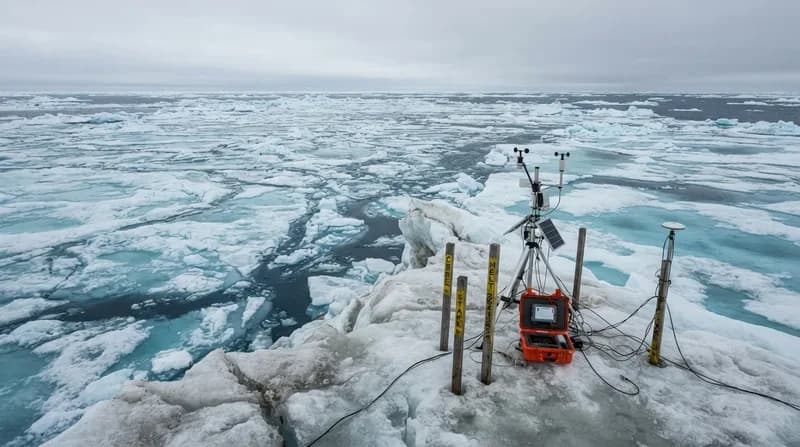
For decades, the story of Arctic sea ice was one of relentless, linear decline. Satellite records consistently showed that as temperatures rose, the annual window for ice melt grew wider, with spring thawing starting earlier and autumn freezing occurring much later. However, a comprehensive new study led by NASA researchers has identified a surprising shift in this trajectory: since approximately 2010, the rapid lengthening of the melt season has hit a plateau.
By analyzing data spanning from 1979 to 2023, the research team found that while the Arctic melt season is now roughly 40 days longer than it was at the start of the satellite record, the majority of this change occurred in the decades leading up to 2010. In the years since, the duration of the melt season has remained relatively stable on average, even though individual years continue to exhibit significant variability.
The Role of Changing Atmospheric Conditions
The stabilization of the melt season is not a sign that Arctic warming has ceased, but rather an indication that the region has transitioned into a more complex, volatile state. During the early 2000s, the loss of reflective, thick sea ice exposed dark ocean water, which absorbed more solar radiation and accelerated the melt process. This created a feedback loop where warming begets further warming. Today, however, the remaining ice is significantly thinner and younger, making it far more sensitive to short-term fluctuations in weather patterns, such as shifts in wind, storms, and cloud cover.
Researchers suggest that changes in cloud patterns over the Arctic since 2010 may be playing a protective role, reflecting more sunlight away from the ocean surface and keeping the melt season duration from expanding further. Because the ice is thinner, it is essentially more "fragile," meaning it reacts more aggressively to annual atmospheric anomalies rather than following the long-term, predictable decline observed in the late 20th century.
Why it Matters
- Increased Sensitivity: With less multiyear ice remaining, the Arctic is now more susceptible to year-to-year weather variations rather than just long-term climatic trends.
- Energy Balance: The shift demonstrates that the interaction between atmospheric heat and oceanic energy absorption is the primary driver of the current "stabilization."
- Future Risks: The remaining thick ice near Greenland and the Canadian Arctic Archipelago acts as a last line of defense. Should this ice continue to thin, the region could be primed for another cycle of rapid, accelerated melt.
An Uncertain Outlook
While the leveling off of the melt season provides a moment of reprieve, experts warn against interpreting this data as a recovery. The Arctic continues to warm at nearly four times the global average. The current plateau may represent a temporary shift before the system crosses another critical threshold. If the remaining thick ice reserves continue to diminish, the stabilizing influence of current atmospheric conditions may be overwhelmed, potentially triggering another phase of rapid sea ice decline. Continued, high-resolution satellite monitoring remains essential to distinguish whether this stabilization is a long-term change or merely a brief pause in a much larger, ongoing environmental transformation.