Scaling the Green Fleet
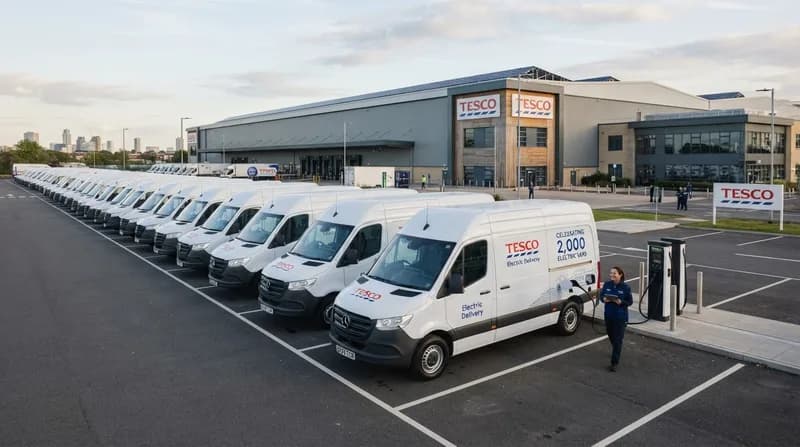
Tesco has reached a significant milestone in its logistics operations, deploying its 2,000th electric home delivery van. The achievement underscores the supermarket chain’s rapid commitment to sustainable transportation, with the company successfully doubling its electric fleet size in less than a year. With this latest addition, over 30% of Tesco’s total home delivery fleet is now comprised of fully electric, battery-powered vehicles, a massive jump from the 720 units that were in service as recently as March 2025.
The 2,000th vehicle, a specialized model designed for temperature-controlled deliveries, was put into service at the Tesco supermarket in Hemsworth, West Yorkshire. This location already supports six electric vehicles, reflecting a localized deployment strategy that emphasizes high-density urban and suburban delivery corridors. For the supermarket giant, this ramp-up is not just a PR milestone but a key component of its broader corporate objective to transition its entire UK-wide delivery fleet to electric power by the end of 2030.
The Backbone: Maxus eDeliver 9
Central to Tesco's aggressive transition is the Maxus eDeliver 9, a workhorse that has become a familiar sight for online grocery shoppers across the UK. Following a massive order of 750 units placed in late 2025, these vehicles are being outfitted with specific refrigeration units from industry leaders Thermo King and GAH to ensure perishable goods are kept at optimal temperatures during the final mile.
The technical capabilities of these vans make them well-suited for the demanding requirements of grocery delivery. Key specifications for the deployed models include:
- Powertrain: 150 kW electric motor paired with a 100-kWh high-capacity battery.
- Range: Up to 352 kilometers (approx. 219 miles) on a single charge.
- Charging: Supports up to 120 kW DC fast charging, achieving an 80% state of charge in 45 minutes.
- Capacity: A gross vehicle weight of 4.25 tonnes, offering a substantial payload capacity of up to 1.9 tonnes.
Why it Matters: The Road to 2030
Tesco’s transition highlights the logistical complexity of decarbonizing last-mile delivery at scale. By replacing internal combustion engine vehicles with these electric transporters, Tesco estimates it is effectively removing the carbon equivalent of roughly 22,000 standard passenger cars from UK roads annually. While the progress is rapid, the company still faces the monumental task of electrifying the remaining 70% of its 6,000-van fleet within the next four years. The success of this transition will depend largely on the continued availability of high-output charging infrastructure and the sustained reliability of commercial EV hardware as the fleet reaches full capacity.