The Arrival of the 'Box on Wheels'
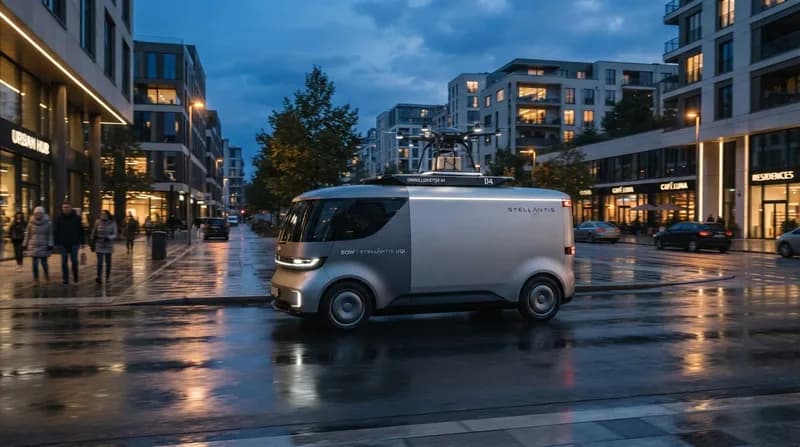
At this year’s IAA Transportation event in Hannover, Stellantis Pro One pulled the curtain back on a bold new vision for urban logistics: the BOW, or 'Box on Wheels.' This fully electric, autonomous concept vehicle represents a strategic pivot toward the future of last-mile delivery, aiming to solve the increasingly complex challenges of dense city environments and high-frequency commercial transport.
Developed in close collaboration with UQI Robotics—a joint venture between UBTECH and Miracle Automation—the BOW is more than just a delivery van. It is designed as an integrated platform meant to serve as a cornerstone of an autonomous ecosystem. While the vehicle is optimized for urban parcel delivery, its utility extends to controlled environments such as airports, large-scale industrial complexes, and hospitals where traditional traffic patterns may be restricted or localized.
A Strategic Synergy for Urban Mobility
The partnership leverages two distinct strengths: Stellantis Pro One brings decades of deep experience in commercial vehicle manufacturing and the nuanced operational needs of professional logistics fleets, while UQI Robotics provides the advanced AI and autonomous systems necessary to navigate modern city streets. Having already deployed autonomous solutions across dozens of cities globally, the partnership is now focusing its validation efforts on the European market, with plans to scale internationally as the regulatory and technological landscape evolves.
By transforming the vehicle from a simple transport tool into a connected logistics platform, Stellantis aims to address the urgent need for operational efficiency and sustainability. The project is a primary component of the company's ambitious FaSTLAne 2030 strategy, which emphasizes the integration of customer-centric technology and strategic industry partnerships to future-proof its commercial portfolio.
Why It Matters
- Scalability: By moving beyond standard delivery roles, the platform can be adapted for specialized zones, such as eco-restricted city centers or private industrial campuses.
- Strategic Roadmap: The project directly advances the 'FaSTLAne 2030' initiative, positioning Stellantis to compete with global autonomous logistics standards currently being pioneered in Asian markets.
- Integrated Ecosystem: Rather than selling a standalone vehicle, Stellantis is aiming to offer a complete hardware-plus-software stack, including fleet integration and maintenance services to maximize uptime for business customers.
Although specific technical specifications—such as battery range, payload capacity, and precise sensor configurations—have yet to be disclosed, the BOW signals a clear intent. Stellantis is no longer viewing light commercial vehicles as mere equipment, but as intelligent, autonomous components of a broader, hyper-efficient, and sustainable logistics chain.