Scaling Up Urban Infrastructure
New York City is preparing for a significant shift in its electric vehicle infrastructure, recently announcing a partnership with Brooklyn-based startup It’s Electric to install 700 curbside charging units across the five boroughs over the next three years. This initiative aims to bridge the gap for apartment dwellers and city residents who lack access to private garages, effectively addressing one of the most persistent hurdles to mass EV adoption in dense, urban environments.
While the United States has largely focused on residential charging solutions for homeowners, this rollout mirrors successful models seen across Europe. By placing hardware directly on the street, the city is moving beyond the standard reliance on DC fast-charging stations, which often require long waits and significant detours. For New York City, this represents a calculated effort to modernize its transit landscape and align with the ambitious goal of transitioning the city's entire rideshare fleet to electric by 2030.
The It’s Electric Hardware Approach
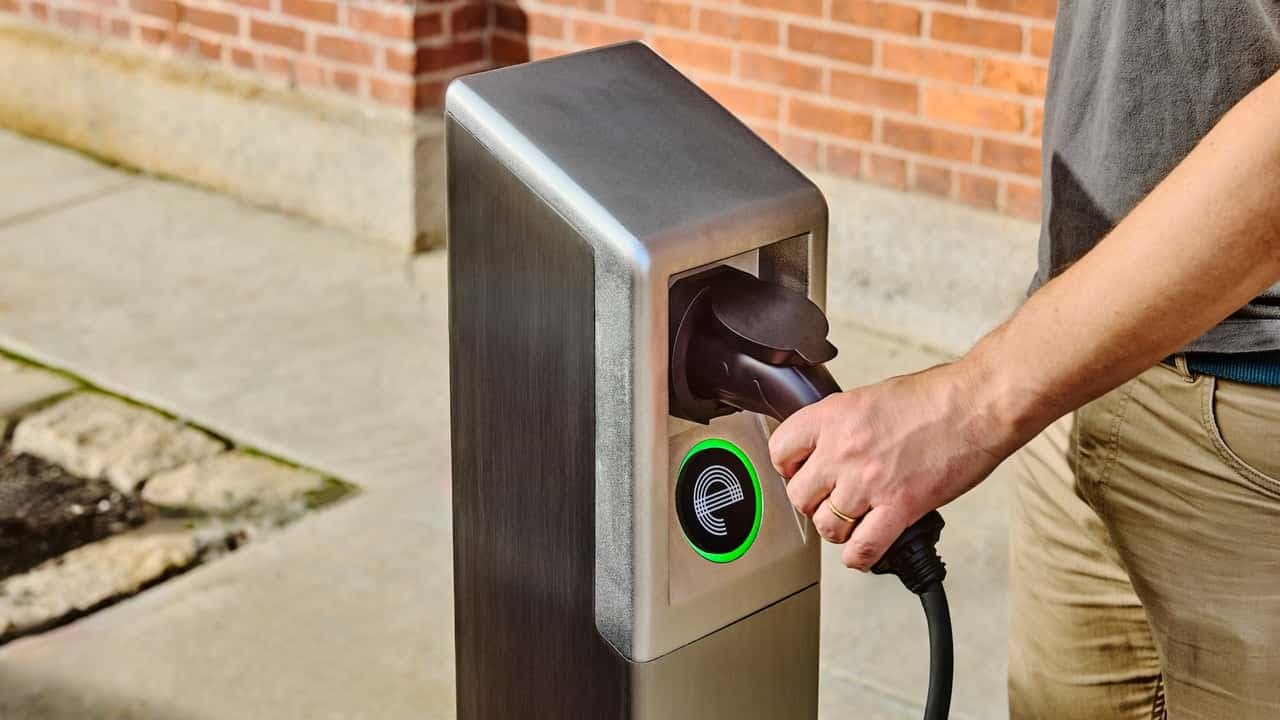
The hardware being deployed is uniquely tailored to the complex requirements of New York’s streetscape. Designed in collaboration with the city's Public Design Commission, the chargers feature a minimalist, stainless steel post design. Unlike traditional charging units, these stations eschew bulky integrated cables, screens, and credit card readers to reduce sidewalk clutter and prevent the type of aesthetic degradation often associated with modern street furniture.
This design choice forces a change in user behavior, as drivers are expected to provide their own charging cables. By removing unnecessary hardware, the units remain compact and weather-resistant while being far less prone to the mechanical failures that frequently plague complex public charging infrastructure. Furthermore, the units are notably efficient in their installation: they draw power directly from nearby apartment buildings rather than requiring massive grid overhauls, allowing for a quicker, more distributed deployment pattern.
Why It Matters
- Targeting Rideshare Drivers: The installation strategy prioritizes neighborhoods with high concentrations of rideshare and taxi operators, such as Flushing, Jackson Heights, and the Bronx, allowing drivers to charge overnight at their homes.
- Sustainability and Efficiency: Previous pilot programs for similar chargers in the city demonstrated extremely high utilization rates, with some stations seeing vehicles parked and drawing power up to 85% of the time they were occupied.
- Urban Scalability: By utilizing existing power infrastructure from surrounding buildings, the project avoids the high costs and logistical nightmares of excavating deep for massive, high-voltage transformers.
- Economic Impact: With a fresh $15 million in funding, It’s Electric is rapidly expanding its footprint, proving that domestic manufacturing—conducted in Queens—can scale effectively to meet the demands of major metropolitan centers.
A Future-Facing Outlook
The project represents a crucial pivot in how American cities conceptualize charging networks. Instead of expecting drivers to adapt their lives to current charging constraints, this initiative adapts the city's infrastructure to meet drivers where they naturally park. As the company expands its footprint to other major urban centers including Boston, Los Angeles, and Philadelphia, the success of the New York rollout will likely serve as the definitive blueprint for cities aiming to decarbonize their transport sectors while simultaneously managing the realities of limited off-street parking.