Revolutionizing Neuroimaging with SORDINO
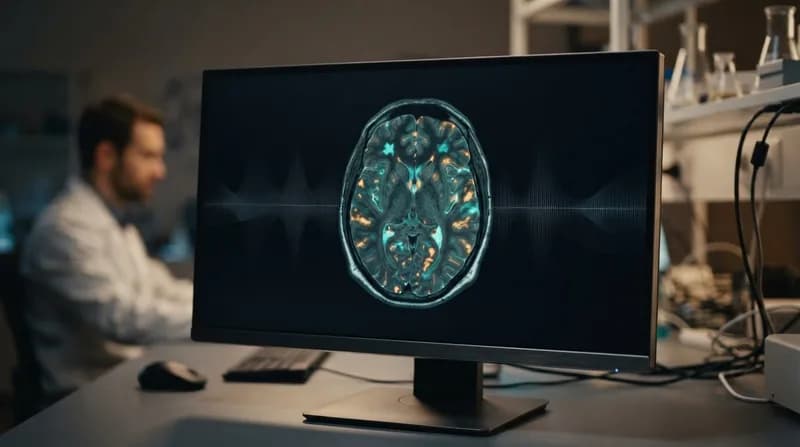
Functional magnetic resonance imaging (fMRI) has long been a cornerstone of neuroscience, allowing researchers to peer into the complexities of brain activity. However, the technology has been plagued by a significant drawback: extreme acoustic noise. Traditional scanners can generate sound levels reaching 120 to 138 decibels—a volume comparable to a jackhammer—which creates stress in subjects, triggers involuntary movement, and introduces electromagnetic interference that can compromise data integrity. A team at the University of North Carolina School of Medicine is changing that paradigm with a new technique called SORDINO.
Standing for Steady-state On-the-Ramp Detection of INduction-decay with Oversampling, SORDINO acts as a refined set of instructions for the MRI scanner. By fundamentally changing how the scanner collects data on blood flow and oxygen levels, the method allows for a near-silent acquisition process. This development is not merely a comfort upgrade; it is a significant leap forward in the fidelity of neuroscientific research, enabling scientists to observe behaviors that were previously obscured by the harsh environment of a conventional scan.
Why it Matters
- Reduced Stress Response: By eliminating the intense acoustic barrage, researchers have observed a marked decrease in stress-related hormones in animal models, leading to more naturalistic brain activity data.
- Enhanced Data Clarity: The technique significantly minimizes electromagnetic interference and motion-related artifacts, resulting in sharper, more accurate diagnostic images.
- Complex Behavioral Mapping: SORDINO allows for the study of high-level activities, such as voluntary skilled movements and complex social interactions, which were previously difficult to capture due to the noise-induced movement of subjects.
- Broad Clinical Potential: While current applications focus on small-animal models, the patented technology holds significant promise for future integration into human-scale clinical MRI hardware.
The implications of this breakthrough are far-reaching. By allowing researchers to study neural responses during natural social behaviors and complex movements, SORDINO effectively lowers the technical barriers that have limited the scope of fMRI experiments for decades. As the technology matures, the prospect of quiet, high-resolution human MRI could transform how clinicians diagnose and understand neurological disorders, making the scanning process less daunting for patients and more revealing for medical professionals.
Dr. Yen-Yu Ian Shih and his team have already secured a U.S. patent for the method, and their findings, published in Nature Neuroscience, confirm that SORDINO is not just a theoretical improvement, but a functional tool ready for rigorous scientific application. As the field looks toward the next generation of diagnostics, this leap in imaging efficiency sets a new standard for sensitivity and precision in the brain-imaging sciences.