The Future of Regenerative Liver Therapy
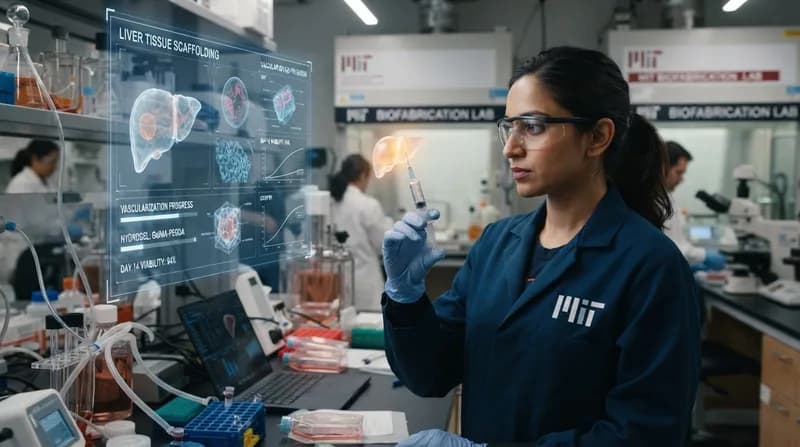
Researchers at the Massachusetts Institute of Technology (MIT) have reached a significant milestone in regenerative medicine by developing injectable "mini livers." Designed to assist patients whose livers are failing, these synthetic grafts offer a potential alternative to the high-risk, scarce availability of traditional organ transplantation. By injecting specialized cells alongside supportive structures, the team has successfully created functional "satellite" liver tissue within the body that connects to the host's bloodstream.
The study, published in Cell Biomaterials, highlights a shift away from invasive surgery. Instead of replacing a damaged organ, this technique delivers a "booster" of liver function, allowing the patient's own organs to remain in place while the supplemental tissue assumes critical metabolic responsibilities. This approach is particularly transformative for patients who are currently too ill to endure a major organ transplant operation.
The Technology: Hydrogel Microspheres
The core of this innovation lies in a sophisticated, injectable mixture of hepatocytes—the primary functional cells of the liver—and supportive fibroblasts, all encapsulated within hydrogel microspheres. These microspheres serve a dual purpose: they act as a scaffold to keep the transplanted cells organized and localized, and they provide a nurturing environment that encourages the rapid integration of blood vessels.
What makes this material unique is its shear-thinning property. In the syringe, the mixture behaves like a liquid, allowing for easy, minimally invasive delivery through a needle. Once injected into the target tissue, the material stabilizes back into a solid structure. This "engineered niche" ensures that the hepatocytes remain anchored and healthy, enabling them to produce essential enzymes and proteins just as they would in a natural liver. The entire procedure is guided by ultrasound, which also allows clinicians to monitor the graft's stability over the long term.
Implications and Future Outlook
In successful mouse models, these mini livers remained functional for at least eight weeks, consistently releasing specialized proteins into the circulation. The researchers observed that the grafts effectively recruited blood vessels to supply vital nutrients, demonstrating a sustainable model for long-term cell survival. Looking ahead, this technology could serve as a vital "bridge" for patients awaiting a donor organ, or potentially as a permanent therapy for chronic liver disease.
Why it Matters
- Reduced Surgical Risk: Eliminates the need for full-scale transplant surgery, opening treatment options for high-risk patients.
- Bridge to Transplant: Provides a temporary, manageable solution for those on long waiting lists.
- Anatomical Flexibility: Unlike the primary liver, these grafts can be placed in various locations such as fatty abdominal tissue or near the kidneys.
- Scalability: Future iterations could use "stealth" cells or localized drug delivery to bypass the need for systemic immunosuppressive medication.
As the team moves forward, they are investigating methods to prevent immune system rejection, including the potential for "stealth" hepatocytes or the use of microspheres to deliver immunosuppressants directly to the site of the implant. While human trials remain on the horizon, the successful integration of these satellite grafts marks a pivotal advancement in tissue engineering and clinical care for organ failure.