E-BUZZ ME Logo
ScienceTechnical Deep Dive

Solar Eclipse 2026: Why Ground-Based Science Remains Vital in the Age of Probes

Published
Solar Eclipse 2026: Why Ground-Based Science Remains Vital in the Age of Probes
1 min read192 words

The Gist

Despite advanced solar spacecraft, the upcoming August eclipse offers a unique, low-cost opportunity to study the Sun's corona and its impact on Earth's atmosphere.

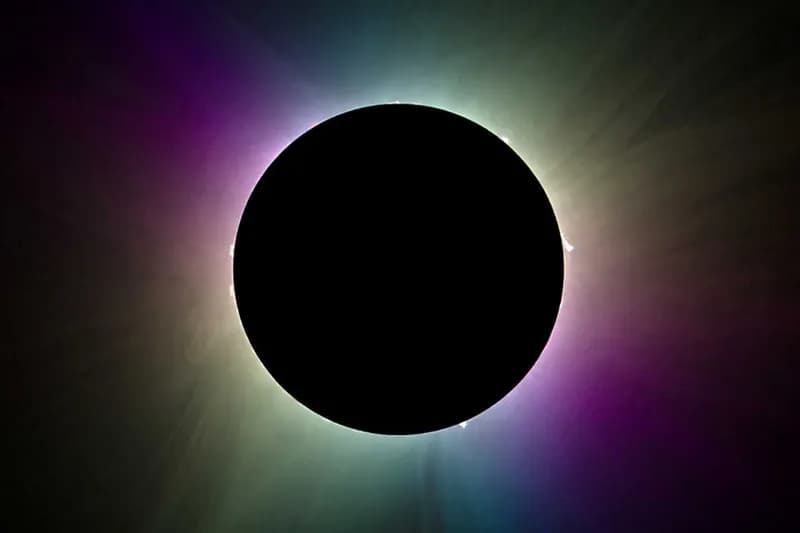
As the scientific community prepares for the solar eclipse in August, experts emphasize that these celestial events remain critical for solar research, even with advanced probes like the Parker Solar Probe in orbit. While spacecraft provide unprecedented proximity to the Sun, ground-based eclipse observations offer a unique perspective on the solar corona and the Earth's ionospheric response at a fraction of the cost of deep-space missions.

The Advantage of Earth-Based Observations

During a total solar eclipse, the Moon acts as a natural occulter, blocking the Sun's intense photosphere and allowing researchers to study the lower corona—the Sun's outer atmosphere—with high-resolution ground equipment. These regions are often difficult for space-based coronagraphs to capture with the same level of detail due to light diffraction issues inherent in smaller satellite optics.

Low-Cost Atmospheric Science

Beyond solar physics, the upcoming eclipse serves as a massive natural experiment for Earth's atmosphere. Scientists plan to deploy various sensors to monitor how the sudden loss of solar radiation affects the ionosphere. These experiments are vital for understanding GPS signal propagation and satellite communications, proving that eclipses are more than just a visual spectacle—they are essential tools for modern science.

Related Stories

Semantically matched articles, ranked by topic overlap and freshness.

NASA Astronaut Chris Williams and Crew Return to Earth After Eight-Month Mission
Science61%

NASA Astronaut Chris Williams and Crew Return to Earth After Eight-Month Mission

NASA astronaut Chris Williams and two Roscosmos cosmonauts safely landed in Kazakhstan on Sunday, concluding a 240-day science mission aboard the International Space Station.

Amazon Seeks FCC Approval for Satellite-to-Phone Service
Tech & Gadgets60%

Amazon Seeks FCC Approval for Satellite-to-Phone Service

Amazon has filed a request with the FCC to launch a 5,000-satellite constellation designed to provide direct-to-device mobile connectivity from space.

Shift in Climate Strategy: Why Ending Fossil Fuel Consumption Outweighs Production Limits
Science60%

Shift in Climate Strategy: Why Ending Fossil Fuel Consumption Outweighs Production Limits

While UK government plans for new North Sea drilling have sparked outrage among activists, experts argue that targeting global demand is more critical for the climate than restricting local supply.

Astronomers Detect Massive Wandering Black Hole via Stellar Destruction
Science59%

Astronomers Detect Massive Wandering Black Hole via Stellar Destruction

A supermassive black hole has been identified straying far from its galactic center after it was caught consuming a nearby star.

Genetic Factors Determine Cancer Outcomes Following DNA Damage
Science58%

Genetic Factors Determine Cancer Outcomes Following DNA Damage

New research suggests that inherited genetics play a critical role in whether DNA damage leads to cancer development.

Massachusetts to Launch Program Paying EV Owners for Grid Support
Electric Vehicles58%

Massachusetts to Launch Program Paying EV Owners for Grid Support

A new initiative in Massachusetts will allow electric vehicle owners to earn incentives by discharging battery power back into the grid during peak demand.

Innovative Eye Implant and High-Tech Glasses Approved to Combat Vision Loss
Science58%

Innovative Eye Implant and High-Tech Glasses Approved to Combat Vision Loss

A breakthrough eye implant and smart glasses system has received European regulatory approval, offering hope to those suffering from severe age-related vision loss.

GE Aerospace Achieves Historic Hybrid-Electric Flight at 30,000 Feet
Electric Vehicles58%

GE Aerospace Achieves Historic Hybrid-Electric Flight at 30,000 Feet

GE Aerospace, in collaboration with NASA and Boeing, has successfully tested a hybrid aircraft at altitudes matching traditional commercial jets.