Closing the Loop on Electric Mobility
As the automotive industry pivots toward mass electrification, the question of long-term component sustainability has become paramount. At this year's Automechanika trade fair in Frankfurt, The Future is Neutral—a circular economy venture formed by Renault and environmental firm Suez—is demonstrating that the future of EV maintenance isn't just about replacing parts; it is about extending their lifecycle through industrial-grade remanufacturing.
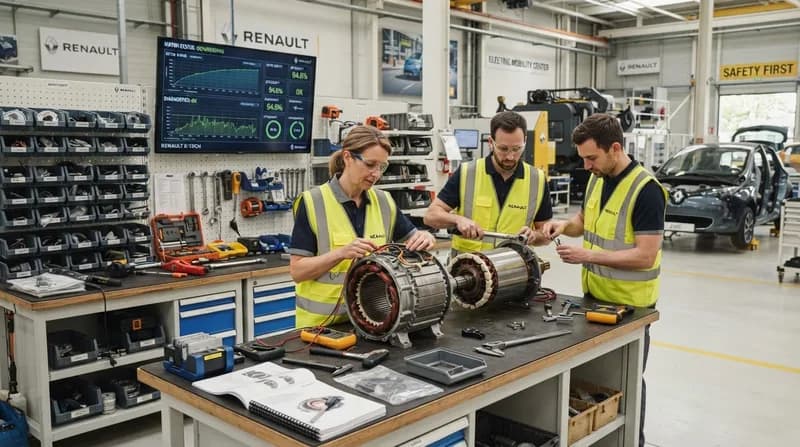
Through its specialized division, The Remakers, the company is unveiling a high-efficiency refurbishment program for the 6AM electric motor. This motor, an electrically excited synchronous machine (SSM) notable for its magnet-free design, powers popular models including the Renault Mégane E-Tech and the Scenic E-Tech. By returning these units to factory-standard performance levels, Renault is proving that circularity can offer a viable, high-quality alternative to traditional manufacturing.
The Economic and Ecological Edge
The business case for remanufacturing is compelling. Renault reports that these refurbished 6AM motors hit the market at approximately 30 percent lower cost than their brand-new counterparts. By integrating these units into their after-sales network, the company provides vehicle owners with a more affordable repair path without sacrificing reliability. This initiative complements existing programs for the 5A motor found in the Renault Zoe and Kangoo Z.E., as well as various power electronic controllers.
Beyond the price tag, the environmental dividends are substantial. A recent lifecycle assessment conducted by the consulting firm Quantis confirms that electric vehicle components are the primary beneficiaries of this circular approach. Refurbished electric motors demonstrated at least a 67 percent reduction in environmental impact across key metrics—including resource depletion and photochemical ozone formation—compared to new production. Power electronics saw a similarly impressive reduction of 47 percent.
Why it Matters
- Resource Conservation: High reuse rates for critical materials like copper and advanced electronics minimize the need for virgin raw material extraction.
- Sustainability Metrics: The Quantis study provides scientific validation that remanufacturing is a high-impact strategy for meeting corporate carbon neutrality goals by 2030.
- Market Accessibility: By lowering repair costs by roughly 30%, Renault is effectively extending the affordable lifespan of the current fleet of electric vehicles on the road today.
As Renault continues to scale these services, the automotive aftermarket is poised to shift from a 'disposable' model to one where the longevity of a vehicle’s powertrain is viewed as a renewable asset. With the company's eyes set on becoming Europe's circular economy leader, the successful integration of motor refurbishment marks a critical milestone for sustainable, cost-effective EV ownership.