Revolutionizing Bio-Sensing with DNA
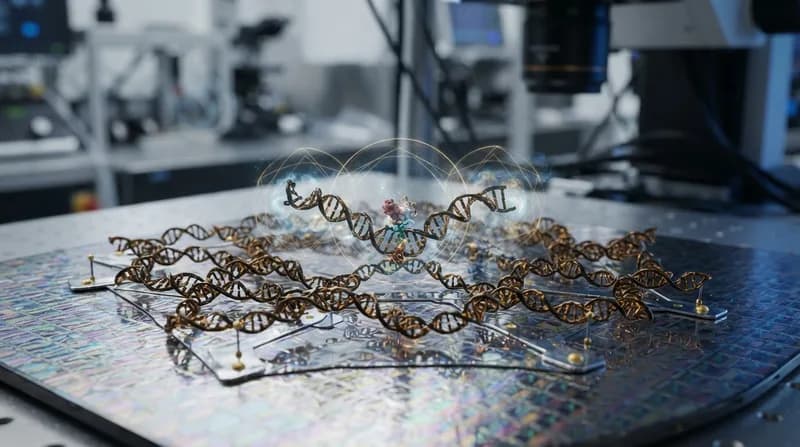
In a major leap for molecular diagnostics, scientists at the Technical University of Munich have developed a novel quantum sensing platform grounded in DNA nanotechnology. By merging the principles of quantum physics with the structural versatility of DNA, the team, led by Dominik Bucher and Kun Meng, has created a system capable of imaging biological processes within tissues and organs using radio waves. This breakthrough bypasses many of the traditional limitations found in current biosensing technologies.
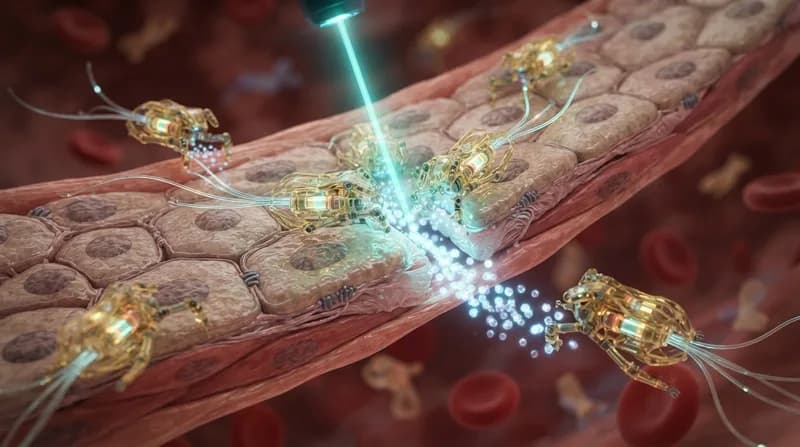
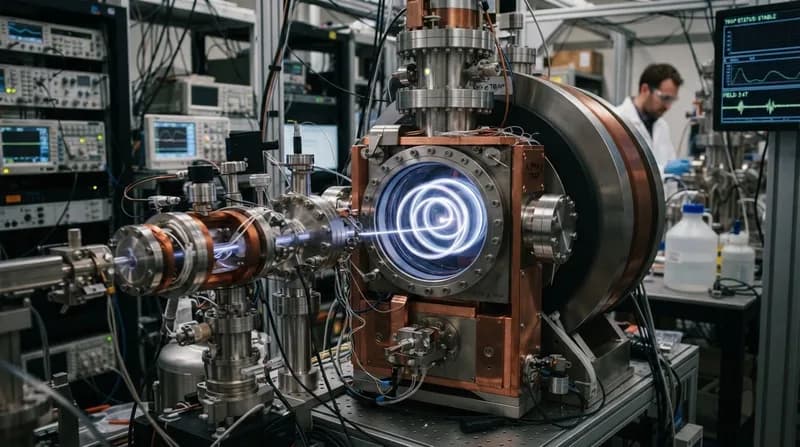
At the core of these sensors are flavin fluorophores, which act as the active signaling component. When these sensors are exposed to a 447 nm blue laser, the flavins undergo photoexcitation, forming spin-correlated radical pairs. The fluorescence emitted by these molecules is highly sensitive to local magnetic fields and magnetic resonance, allowing researchers to monitor molecular interactions with unprecedented accuracy. By applying external radio frequency (RF) signals and controlled magnetic fields, the team can effectively read out the state of these sensors, turning DNA strands into sophisticated quantum probes.
Why it Matters
- Atomic Precision: Unlike diamond-based quantum sensors where sensing centers are randomly distributed, DNA nanotechnology allows for the precise, three-dimensional positioning of sensing elements.
- Programmable Versatility: Because these sensors are constructed from synthetic DNA, they can be designed and ordered from commercial suppliers, removing the need for complex, lab-grown protein engineering.
- Active Control: Beyond passive imaging, the research suggests that external RF excitation could be used to influence chemical states within the body, potentially enabling remotely triggered drug delivery systems.
The Molecular Switch Mechanism
To demonstrate the practical application of this technology, the researchers designed a unique hairpin-shaped “switch.” This structure incorporates a flavin fluorophore alongside a molecular quencher. In its native “closed” state, the quencher prevents the formation of the spin-correlated radical pairs, rendering the sensor inactive. However, when the DNA switch encounters and binds to a specific target sequence, the hairpin structure unfolds. This physical opening separates the flavin from the quencher, successfully enabling the spin-enhanced sensing functionality.
This mechanism opens the door to highly selective diagnostics. Future iterations could involve “nanocages” made of specifically encoded DNA that remain inert until they reach a target site within the body. Once the target is identified, the cage could open, performing its sensing task or releasing a therapeutic payload. This approach holds massive potential for precision medicine, where targeted therapy and real-time biological observation are prioritized over systemic treatments.
Outlook and Future Implications
The integration of optically detected magnetic resonance (ODMR) into DNA-based systems provides a scalable platform for biological research. By leveraging the ease of commercial DNA synthesis, the research team envisions a future where complex quantum sensors can be customized for specific metabolic or genetic markers. While the research is currently in the experimental stage, the ability to control biological processes via magnetic and radio frequency fields represents a fundamental shift in how we might interact with the cellular environment, moving us closer to the realization of truly remote-controlled, nanoscale bio-diagnostics.