ScienceTechnical Deep Dive

Ancient Roman Shipwreck Reveals Sophisticated 2,200-Year-Old Waterproofing Tech

Published
EElectricBuzz Editorial Team
Ancient Roman Shipwreck Reveals Sophisticated 2,200-Year-Old Waterproofing Tech
3 min read506 wordsElectricBuzz Editorial Team

The Gist

“A study of a sunken Roman vessel has unveiled advanced maritime engineering, revealing how ancient builders utilized specialized organic coatings to survive the rigors of the Mediterranean.”

The Engineering Secrets of Ilovik-Paržine 1

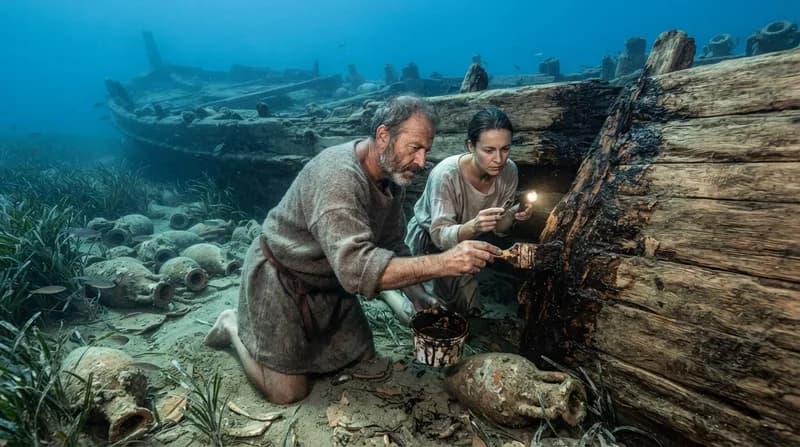
Archaeologists and material scientists have uncovered a treasure trove of maritime engineering data from the Ilovik-Paržine 1, a Roman Republic-era shipwreck resting off the coast of Croatia. Sunk over 2,200 years ago, the vessel has become a focal point for researchers aiming to understand how ancient shipbuilders managed to maintain structural integrity against the relentless decay caused by saltwater, microorganisms, and wood-boring shipworms. While historical studies have long prioritized the study of wooden hulls, this new research shifts the spotlight onto the chemical armor that kept these ships afloat.

By utilizing mass spectrometry, the research team identified two primary waterproofing methodologies employed on the vessel. The first, and most common, involved the application of pitch—a viscous substance derived from heated pine resin. When applied hot, this pitch seeped into the crevices of the timber, creating a durable barrier. The second technique was a more sophisticated blend of pine tar and beeswax. Known to ancient Greek shipbuilders as 'zopissa,' this mixture offered superior flexibility, a critical trait for a vessel’s hull, which needed to withstand the constant torsion and shifting pressures exerted by ocean waves.

The Role of Botanical Forensics

Perhaps the most fascinating aspect of the study is the use of trapped pollen to reconstruct the ship's operational history. Because the pine tar used for waterproofing was inherently sticky, it acted as a natural trap for airborne pollen grains present at the time and location of the ship's construction or repair. These microscopic indicators allowed the researchers to pinpoint specific ecological signatures, effectively creating a 'map' of the vessel's journey across the Mediterranean.

The pollen analysis revealed a diverse range of plant life, from coastal Mediterranean shrubland—including olive and hazel trees—to mountainous fir and beech forests characteristic of the Istria and Dalmatia regions. This indicates that the ship did not rely on a single source for its maintenance. Instead, the data suggests that as the vessel traveled between major maritime hubs, it underwent multiple maintenance events, likely incorporating materials from local forests near where the repairs were carried out.

Implications for Maritime History

The discovery of distinct chemical 'batches' on the hull provides clear evidence of long-term operational maintenance. Specifically, the researchers found that while the stern and center of the ship shared consistent coating signatures, the bow featured three unique layers of material, suggesting localized repairs necessitated by the ship's forward exposure to environmental stressors. This confirms that maritime trade routes were supported by a complex network of shipyards and supply chains capable of performing sophisticated structural repairs.

Beyond the immediate findings, this research serves as a testament to the utility of palynology (the study of pollen) in archaeology. It demonstrates that even when molecular profiles of materials appear identical, biological markers like pollen can differentiate repair events that occurred years or hundreds of miles apart. As scholars continue to analyze the remains of the Ilovik-Paržine 1, they are gaining a clearer picture of the technological and logistical capabilities that defined the Roman Republic's dominance over the ancient seas.


SPONSORED
The 5 Best Over-Ear ANC Headphones of 2026, Tested & Ranked
Editor's Pick Guide
92/100
Tech & Gadgets•12 min read

The 5 Best Over-Ear ANC Headphones of 2026, Tested & Ranked

We locked five over-ear ANC picks for 2026 — Sony WH-1000XM6, Bose QuietComfort Ultra 2, Soundcore Space One, Sennheiser Momentum 5, and Apple AirPods Max 2 — then stress-tested them on lab metrics, long-term owner truth, and live street prices.

Related Stories

Semantically matched articles, ranked by topic overlap and freshness.

Hidden Magnetism: Why Simple Europium Silicide Is Shaking Up Quantum Physics
Science

Hidden Magnetism: Why Simple Europium Silicide Is Shaking Up Quantum Physics

Researchers have uncovered a rare form of 'p-wave' magnetism in an unassuming metal, potentially unlocking the future of spintronics and quantum computing.

FDA Approves First New Hormone Therapy for Early-Stage Breast Cancer in Two Decades
Science

FDA Approves First New Hormone Therapy for Early-Stage Breast Cancer in Two Decades

A major breakthrough in oncology as the FDA clears giredestrant, a once-daily pill offering improved efficacy and fewer side effects for ER+ breast cancer patients.

Sky-High First Aid: Drones Transforming Emergency Medical Response
Science

Sky-High First Aid: Drones Transforming Emergency Medical Response

A pioneering initiative in Florida is set to revolutionize trauma care by utilizing autonomous drones to deliver life-saving blood and medical equipment in minutes.

Frozen in Time: Evidence Suggests Humanity Halted an Ice Age
Science

Frozen in Time: Evidence Suggests Humanity Halted an Ice Age

New research from the Canadian Arctic reveals that Earth was on the cusp of a new glacial period 2,000 years ago before rising temperatures derailed the cycle.

Circadian Depression: The Breakthrough Discovery Challenging Standard Mental Health Treatment
Science

Circadian Depression: The Breakthrough Discovery Challenging Standard Mental Health Treatment

Researchers have identified a distinct biological subtype of depression linked to the body's internal clock, offering a new path for personalized treatment.

Cosmic Fossil: ALMA Telescope Captures a Star’s Final Nuclear Heartbeat
Science

Cosmic Fossil: ALMA Telescope Captures a Star’s Final Nuclear Heartbeat

Astronomers have used the ALMA radio telescope to snap a 'frozen' image of a dying star's last explosive moments, upending conventional theories about stellar evolution.

Quantum Leap: IBM Shatters Computing Barriers in 15 Minutes
Science

Quantum Leap: IBM Shatters Computing Barriers in 15 Minutes

IBM and University of Chicago researchers have achieved a landmark 'quantum advantage' milestone, completing a complex calculation that remains out of reach for classical supercomputers.

Why Modern Fertility Tech Isn't the Silver Bullet for Global Population Trends
Science

Why Modern Fertility Tech Isn't the Silver Bullet for Global Population Trends

A new international study suggests that while medical breakthroughs in IVF and reproductive science are life-changing for individuals, they cannot solve the systemic socioeconomic and environmental causes behind falling fertility rates.