ScienceTechnical Deep Dive

Cosmic Fossil: ALMA Telescope Captures a Star’s Final Nuclear Heartbeat

Published
EElectricBuzz Editorial Team
Cosmic Fossil: ALMA Telescope Captures a Star’s Final Nuclear Heartbeat
3 min read545 wordsElectricBuzz Editorial Team

The Gist

“Astronomers have used the ALMA radio telescope to snap a 'frozen' image of a dying star's last explosive moments, upending conventional theories about stellar evolution.”

A New Window into Stellar Demise

For decades, astronomers have relied on theoretical models to understand the quiet, albeit dramatic, death of sun-like stars. While massive stars typically exit the cosmic stage in violent supernova explosions, stars similar to our own follow a more gradual path. They expand into red giants before shedding their outer layers to form beautiful planetary nebulae, eventually leaving behind a dense white dwarf. However, a groundbreaking discovery using the Atacama Large Millimeter/submillimeter Array (ALMA) in Chile has provided the first direct, observational evidence of this transition, captured mid-action.

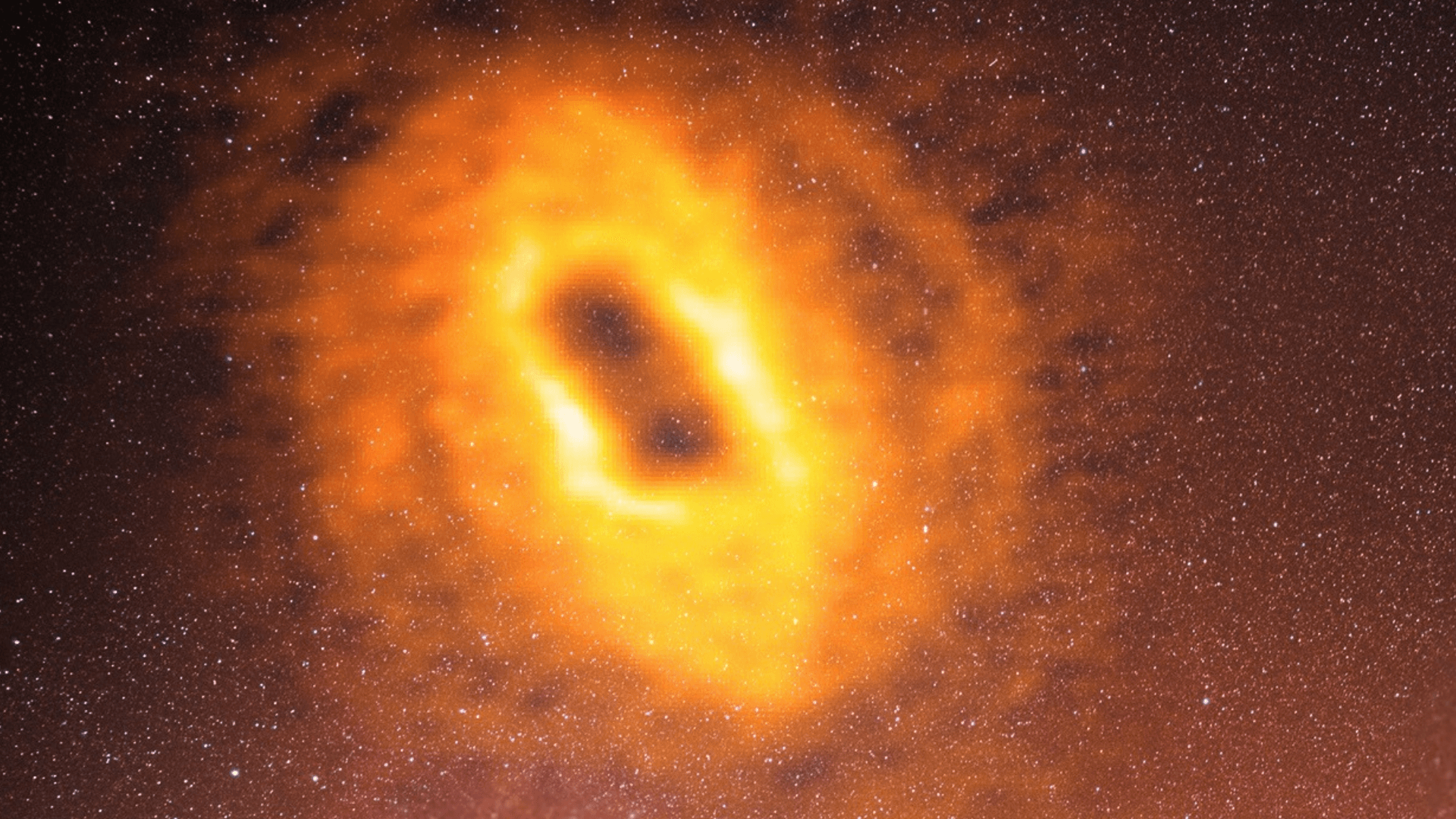
The target of this celestial study was IRAS 06530-0213, a star located 12,000 light-years away. By analyzing the surrounding gas, researchers identified a massive, ring-like structure that serves as a literal 'fossil' of the star's final thermonuclear flare-up. This snapshot offers a rare glimpse into a phase of stellar evolution that has historically been inferred rather than observed, effectively serving as a 'final nuclear heartbeat' of the dying sun.

Understanding the Fossilized Data

The research, led by NASA Jet Propulsion Lab scientist Raghvendra Sahai, suggests that the stellar transition is far more complex than previously assumed. The identified ring of molecular gas, which spans roughly half a light-year in width, was ejected approximately 6,500 years ago. According to the team's analysis, the star experienced a relatively quiet period of mass loss for 2,000 years following this pulse, followed by a sudden, violent increase in mass shedding. This created a complex web of filaments that now surrounds the star.

The observations also highlight an unexpected chemical composition. The region surrounding IRAS 06530-0213 exhibits an abundance of heavy isotopes, including carbon, nitrogen, and oxygen, that does not align with standard stellar evolution models. This suggests that the processes of element synthesis and distribution during a star's final stages involve more intense bursts of nuclear fusion than scientists had factored into their simulations.

Why It Matters

  • Redefining Sun-like Death: Current models of our sun's eventual death may require revision based on the unexpected complexity and chemical signatures observed.
  • Direct Observation vs. Theory: This marks the first time a 'thermal pulse'—the event that triggers the end of a star's red giant phase—has been directly mapped in such detail.
  • Challenging Simple Models: The absence of expected dust disks suggests that the mechanisms shaping these nebulae, such as high-speed jets, may be transient or more elusive than previously thought.

The Mystery of the Missing Disk

One of the most intriguing aspects of the study was what the researchers didn't find. Astronomers have long associated the hourglass shapes seen in dying stars with the presence of compact dust disks, which are usually formed by material dragged from a close-orbiting companion star. These disks are believed to fuel the jets that sculpt the nebula's shape. Yet, ALMA’s high-precision imaging failed to detect such a disk around IRAS 06530-0213.

The team postulates that a disk may have existed briefly to power the initial high-speed jets that sculpted the hourglass, only to dissipate rapidly thereafter. This implies that the 'tidy' explanations used to describe planetary nebulae are incomplete. As Sahai noted, the presence of these complex forms likely points to hidden stellar companions and dynamic, short-lived events that defy our current, simplified understanding of how stars transition into their final, glowing remains.

SPONSORED
The 5 Best Over-Ear ANC Headphones of 2026, Tested & Ranked
Editor's Pick Guide
92/100
Tech & Gadgets•12 min read

The 5 Best Over-Ear ANC Headphones of 2026, Tested & Ranked

We locked five over-ear ANC picks for 2026 — Sony WH-1000XM6, Bose QuietComfort Ultra 2, Soundcore Space One, Sennheiser Momentum 5, and Apple AirPods Max 2 — then stress-tested them on lab metrics, long-term owner truth, and live street prices.

Related Stories

Semantically matched articles, ranked by topic overlap and freshness.

Circadian Depression: The Breakthrough Discovery Challenging Standard Mental Health Treatment
Science

Circadian Depression: The Breakthrough Discovery Challenging Standard Mental Health Treatment

Researchers have identified a distinct biological subtype of depression linked to the body's internal clock, offering a new path for personalized treatment.

Quantum Leap: IBM Shatters Computing Barriers in 15 Minutes
Science

Quantum Leap: IBM Shatters Computing Barriers in 15 Minutes

IBM and University of Chicago researchers have achieved a landmark 'quantum advantage' milestone, completing a complex calculation that remains out of reach for classical supercomputers.

Why Modern Fertility Tech Isn't the Silver Bullet for Global Population Trends
Science

Why Modern Fertility Tech Isn't the Silver Bullet for Global Population Trends

A new international study suggests that while medical breakthroughs in IVF and reproductive science are life-changing for individuals, they cannot solve the systemic socioeconomic and environmental causes behind falling fertility rates.

Quantum Diamonds: The New Frontier in Semiconductor Inspection
Science

Quantum Diamonds: The New Frontier in Semiconductor Inspection

A breakthrough in quantum sensor technology is enabling manufacturers to see deep inside 3D semiconductor architectures with unprecedented magnetic precision.

Rewriting History: Was a Powerful Iron Age King Actually a Queen?
Science

Rewriting History: Was a Powerful Iron Age King Actually a Queen?

New archaeological research from Bournemouth University suggests that Verica, the leader who triggered the Roman invasion of Britain, was a woman, challenging centuries of gender assumptions.

Natural Bacterial Defense: New Mosquito Intervention Curbs Arboviral Spread in Brazil
Science

Natural Bacterial Defense: New Mosquito Intervention Curbs Arboviral Spread in Brazil

A major clinical trial reveals that introducing Wolbachia-infected mosquitoes can reduce infection rates of dengue, Zika, and chikungunya by nearly 70% in high-transmission zones.

Brain Circuit Breakthrough: Scientists Unlock The Neural Switch for Sleep
Science

Brain Circuit Breakthrough: Scientists Unlock The Neural Switch for Sleep

Researchers at the University of Basel have identified specific brain cells that dictate the 'urge' to sleep, allowing mice to function with 70% less rest.

Lunar Farming Breakthrough: Potatoes Successfully Grown in Simulated Moon Soil
Science

Lunar Farming Breakthrough: Potatoes Successfully Grown in Simulated Moon Soil

Researchers have unlocked a critical milestone for long-term space colonization by successfully cultivating potatoes in simulated lunar regolith.