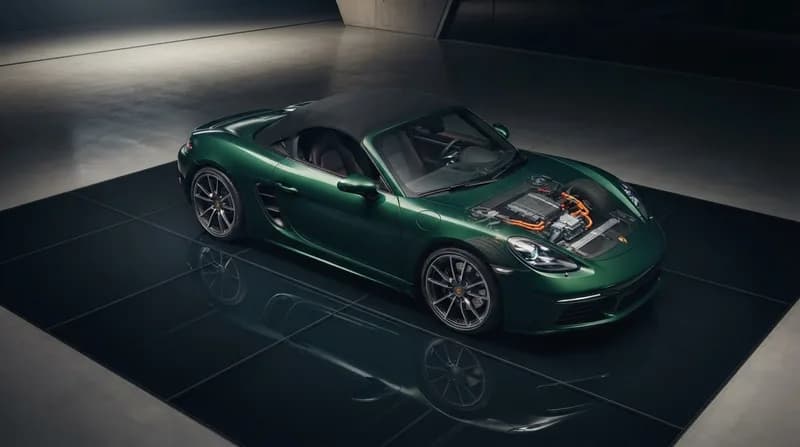
The Evolution of a Sports Car Icon
The automotive landscape is on the cusp of a major transformation as Porsche officially prepares its highly anticipated all-electric 718 Boxster for series production. Emerging from the brand's main plant in Zuffenhausen, this 983-generation roadster aims to prove that electrification does not necessitate a sacrifice in the visceral, engaging driving experience that enthusiasts associate with the Porsche badge. With a world premiere scheduled for early 2027, the project represents a multi-year effort to overcome complex supply chain challenges and engineering hurdles, resulting in what the manufacturer claims will be the most powerful 718 model to date.
To ensure the vehicle meets the rigorous standards of the brand, Porsche subjected prototypes to an extensive endurance testing program. Over four million kilometers were covered across 20 countries, pushing the electric drivetrain to its limits in environments ranging from the sweltering heat of desert sands to the brutal, sub-zero temperatures of arctic climates. This exhaustive process was aimed at refining the handling and reliability of the platform, ensuring the electric iteration retains the soul of its combustion-engined predecessors.
Engineering the 'E-Core' Architecture
At the heart of the new 718 Boxster is the proprietary 'E-Core' architecture, a bespoke design philosophy that prioritizes the traditional mid-engined feel of the classic roadster. By positioning the 800-volt battery pack directly behind the seats—occupying the space once reserved for the flat-six engine—engineers have achieved a low seating position and a 40:60 weight distribution. This configuration ensures that the vehicle maintains the agility and center of gravity that have long defined the 718 lineage, with the rear-biased weight aiding in traction and handling dynamics.
Weight management remains a critical pillar of this development. By leveraging advanced lightweight construction techniques, Porsche aims to keep the kerb weight of the E-Boxster competitive, targeting a figure under 2,000 kilograms. The chassis itself borrows heavily from the legendary 911, incorporating sophisticated technologies such as rear-axle steering, an electronically controlled limited-slip differential (PTV+), and steering geometry derived from the Carrera GTS. This fusion of electric power and established performance hardware aims to deliver a driving experience that feels unmistakably like a Porsche.
Performance Specs and Driver Engagement
While definitive pricing and technical data are forthcoming, early glimpses of the vehicle’s capabilities are striking. The flagship trim is expected to clock a 0-100 km/h sprint in under three seconds, with a top speed exceeding 250 km/h. To bridge the gap between pure electric performance and traditional sports car engagement, Porsche has introduced the 'E-Shift' feature. This system provides a simulated gear-change experience, mimicking the sensations of a PDK seven-speed transmission. When paired with the digitally synthesized sound of a flat-six boxer engine, the system aims to provide the acoustic and tactile feedback that purists demand, all controllable via steering wheel-mounted paddle shifters.
Why It Matters
- Iconic Transition: Moving the 718 to a fully electric platform signals the final stage of Porsche's shift toward high-performance EVs.
- 800V Architecture: Adoption of high-voltage systems ensures rapid charging, a necessity for luxury sports car owners.
- Driving Dynamics: The 'E-Core' layout proves that battery-electric vehicles can emulate the weight distribution of traditional mid-engine sports cars.
- Emotional Engagement: Through 'E-Shift' and simulated engine audio, Porsche is explicitly addressing the 'enthusiast gap' often present in the transition to electric motors.