ScienceTechnical Deep Dive

Deep-Sea Discovery: Mysterious Brine Pools Found Beneath the Red Sea

Published
EElectricBuzz Editorial Team
Deep-Sea Discovery: Mysterious Brine Pools Found Beneath the Red Sea
3 min read495 wordsElectricBuzz Editorial Team

The Gist

“Researchers have uncovered rare, oxygen-free underwater lakes over a mile beneath the Red Sea, offering new insights into the limits of life on Earth and the search for extraterrestrial organisms.”

An Alien Environment on Earth

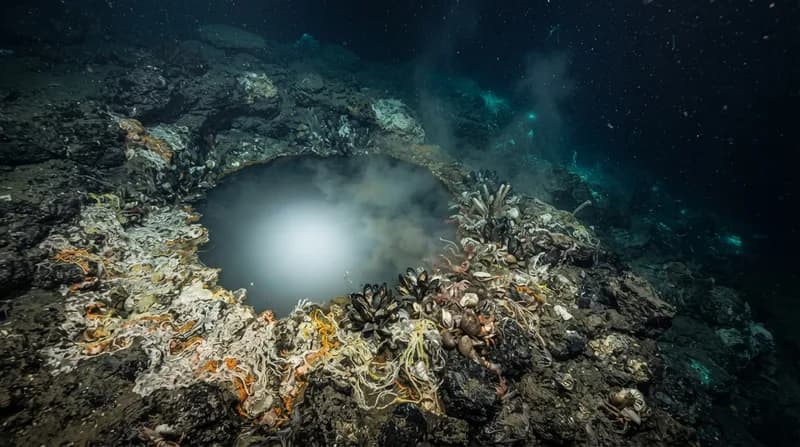
In a groundbreaking expedition to the Gulf of Aqaba, a northern extension of the Red Sea, scientists have identified a series of rare deep-sea brine pools. These formations, situated more than a mile (1,770 meters) below the ocean surface, function as isolated, hyper-saline lakes trapped within the seabed. The discovery was made by a team from the University of Miami Rosenstiel School of Marine, Atmospheric, and Earth Science, working in collaboration with the exploration vessel OceanXplorer.

These brine pools are among the most inhospitable environments on the planet. They are completely devoid of oxygen and possess an exotic chemical composition that would be lethal to most marine life. However, the researchers found that these pools are far from sterile. Instead, they are teeming with dense microbial communities that have evolved to thrive in extreme conditions. This discovery serves as a vital case study for astrobiologists, who believe that understanding the survival limits of these Earth-bound microbes could provide a blueprint for identifying life on other planets or moons within our solar system.

The Narrow Margin of Discovery

The mission was a high-stakes endeavor that relied heavily on advanced robotics. Researchers utilized a remotely operated underwater vehicle (ROV) launched from the OceanXplorer to traverse the deep-sea floor. The find was almost missed entirely; the pools were spotted during the final five minutes of a ten-hour dive. This last-minute success underscores the difficulty of exploring the deepest parts of our oceans, which remain some of the least accessible regions on Earth.

Beyond their biological importance, these pools act as a geological time capsule. Because the surrounding water is so dense and devoid of oxygen, the sediment within and around the pools is exceptionally well-preserved. These underwater lakes capture a history of the region’s seismic activity, including data on ancient tsunamis, flash floods, and massive underwater landslides that have occurred over thousands of years. By analyzing these layers, scientists can better understand the tectonic history of the Gulf of Aqaba, providing critical information for coastal development in neighboring Saudi Arabia and Egypt.

Why It Matters

  • Astrobiology Potential: By mapping how life persists in oxygen-free, hyper-saline environments, researchers are refining the criteria for detecting life on icy moons and distant exoplanets.
  • Geological Archiving: The unique chemistry of these pools preserves records of historical natural disasters, offering a clearer picture of the region's seismic and environmental volatility.
  • Medical Frontiers: Previous studies on similar Red Sea brine pools have uncovered unique microbial life forms that produce bioactive molecules, some of which demonstrate potential anticancer properties.

The research, which was documented in the journal Communications Earth & Environment, involved a multi-institutional team of experts. Funding and support for the expedition were facilitated by NEOM, reflecting an increasing interest in the hidden geological and biological assets of the Red Sea coastline. As exploration continues, these deep-sea brine pools are expected to remain a focal point for scientists looking to bridge the gap between marine biology and planetary science.

SPONSORED
The 5 Best Over-Ear ANC Headphones of 2026, Tested & Ranked
Editor's Pick Guide
92/100
Tech & Gadgets•12 min read

The 5 Best Over-Ear ANC Headphones of 2026, Tested & Ranked

We locked five over-ear ANC picks for 2026 — Sony WH-1000XM6, Bose QuietComfort Ultra 2, Soundcore Space One, Sennheiser Momentum 5, and Apple AirPods Max 2 — then stress-tested them on lab metrics, long-term owner truth, and live street prices.

Related Stories

Semantically matched articles, ranked by topic overlap and freshness.

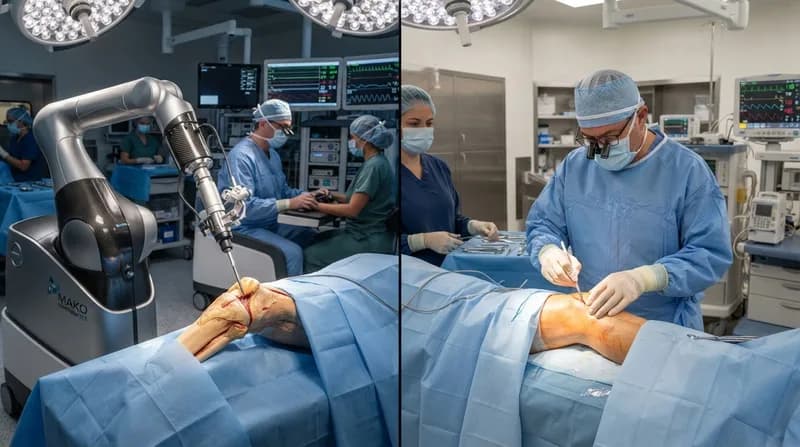
Robotic Knee Surgery Trial Reveals Precision Doesn't Equal Faster Recovery
Science

Robotic Knee Surgery Trial Reveals Precision Doesn't Equal Faster Recovery

A landmark clinical study has found that while robot-assisted knee surgery offers superior technical precision, it fails to improve patient recovery outcomes compared to traditional methods.

BrainBots: Caltech’s Light-Activated Nanorobots Breach the Blood-Brain Barrier
Science

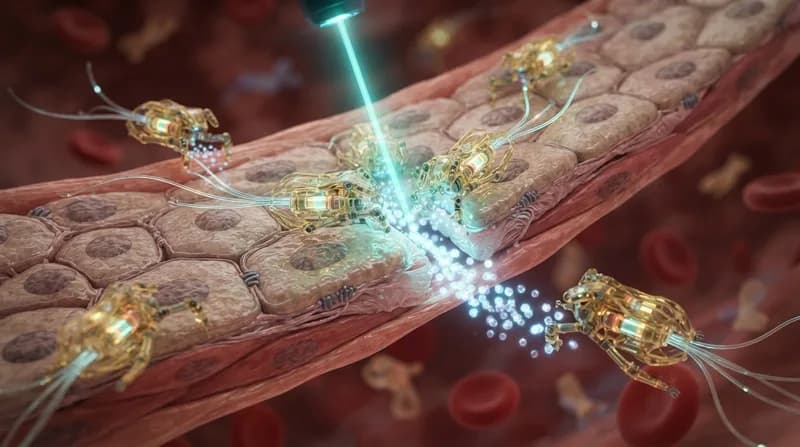
BrainBots: Caltech’s Light-Activated Nanorobots Breach the Blood-Brain Barrier

Researchers have engineered tiny, light-propelled nanobots capable of ferrying chemotherapy drugs directly across the body's most stubborn biological shield.

Euclid’s Cosmic Pivot: Dark Matter Telescope Spots Mysterious New Comet
Science

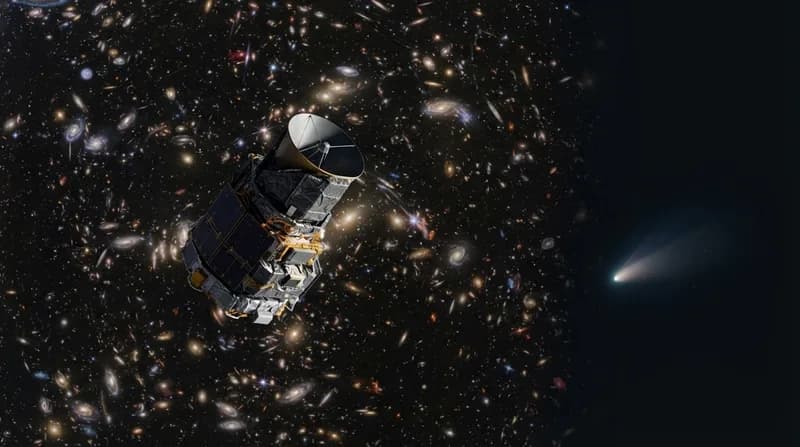
Euclid’s Cosmic Pivot: Dark Matter Telescope Spots Mysterious New Comet

Designed to map the dark universe, the European Space Agency’s Euclid telescope has defied its programming by identifying an icy wanderer from the outer solar system.

Quantum Breakthrough: Physicists Capture Antimatter to Solve Cosmic Mystery
Science

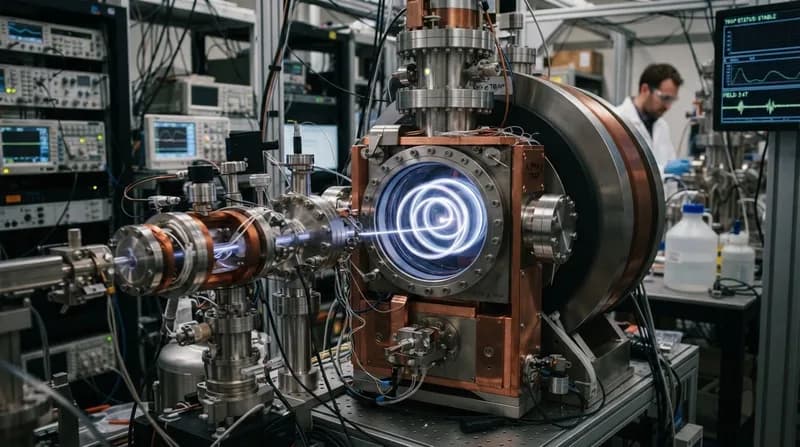
Quantum Breakthrough: Physicists Capture Antimatter to Solve Cosmic Mystery

Researchers at Northwestern University have successfully trapped a single positron in a 'quantum cyclotron,' opening a new door to understanding the universe's matter-antimatter imbalance.

Ancient Roman Shipwreck Reveals Sophisticated 2,200-Year-Old Waterproofing Tech
Science

Ancient Roman Shipwreck Reveals Sophisticated 2,200-Year-Old Waterproofing Tech

A study of a sunken Roman vessel has unveiled advanced maritime engineering, revealing how ancient builders utilized specialized organic coatings to survive the rigors of the Mediterranean.

Hidden Magnetism: Why Simple Europium Silicide Is Shaking Up Quantum Physics
Science

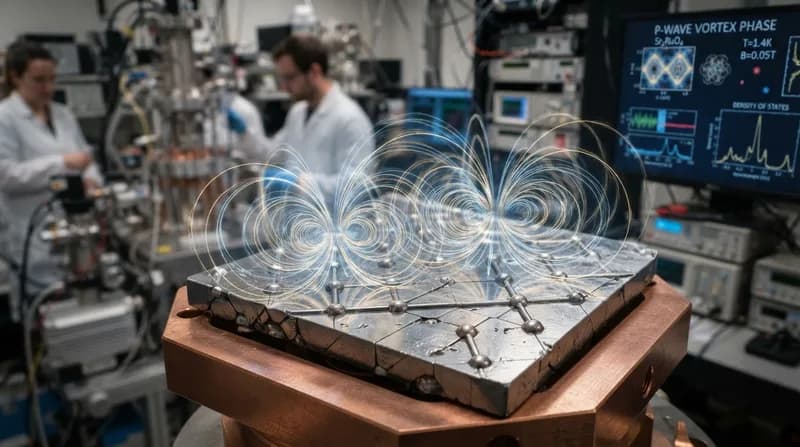
Hidden Magnetism: Why Simple Europium Silicide Is Shaking Up Quantum Physics

Researchers have uncovered a rare form of 'p-wave' magnetism in an unassuming metal, potentially unlocking the future of spintronics and quantum computing.

FDA Approves First New Hormone Therapy for Early-Stage Breast Cancer in Two Decades
Science

FDA Approves First New Hormone Therapy for Early-Stage Breast Cancer in Two Decades

A major breakthrough in oncology as the FDA clears giredestrant, a once-daily pill offering improved efficacy and fewer side effects for ER+ breast cancer patients.

Sky-High First Aid: Drones Transforming Emergency Medical Response
Science

Sky-High First Aid: Drones Transforming Emergency Medical Response

A pioneering initiative in Florida is set to revolutionize trauma care by utilizing autonomous drones to deliver life-saving blood and medical equipment in minutes.