The Challenge of Quantum Fragility
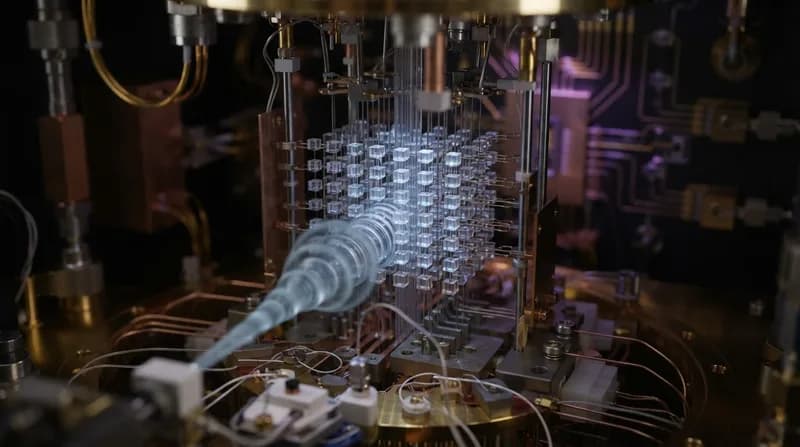
Quantum computing holds the promise of solving problems that are currently impossible for classical silicon-based systems, but the technology faces a significant hurdle: fragility. Qubits, the basic units of quantum information, are notoriously sensitive to their environment. Even the slightest interference from surrounding noise causes them to lose their quantum state, a phenomenon that forces researchers to constantly search for better ways to protect these sensitive bits. Traditionally, scientists have relied on microwave pulses to isolate qubits from noise, but this approach runs into major roadblocks when qubits are housed within phononic cavities, which are specialized structures designed to manipulate mechanical vibrations.
The Breakthrough: All-Mechanical Coherence Protection
Researchers at the Harvard John A. Paulson School of Engineering and Applied Sciences (SEAS) have unveiled a clever solution to this decoherence problem by employing microscopic sound waves—known as phonons—to protect quantum information. By continuously surrounding a diamond-based silicon-vacancy qubit with a specific mechanical driving field, the team essentially created a 'dressed' qubit. In this state, the qubit acts as if it is wearing a continuous acoustic shield, which renders it far less susceptible to the low-frequency background noise that typically disrupts quantum information.
This method of 'all-mechanical coherence protection' is a significant departure from standard electrical isolation techniques. Because the protection is provided by the same mechanical waves that can be used to transport data across a quantum chip, this system offers a dual-use advantage. It allows for a more integrated design where the infrastructure used to move information between nodes simultaneously acts as the armor that keeps that information stable.
Why It Matters
- Enhanced Stability: The technique increased the coherence time of silicon-vacancy spins by approximately threefold, a major step toward practical, error-resistant quantum systems.
- Compact Architecture: Phonons operate at much shorter wavelengths than the light typically used for quantum communications, enabling significantly smaller, tighter component layouts on a single chip.
- Hybrid Compatibility: The versatility of phonons allows them to interact with both solid-state spins and electromagnetic fields, which is essential for developing hybrid quantum systems that combine different types of qubit technologies.
- Network Potential: By successfully integrating protection and transmission into a single, compact, chip-based structure, the research lays a tangible foundation for scalable quantum networks.
Future Implications for Chip-Scale Computing
The ability to harness sound waves for both the transmission and protection of quantum information opens new doors for the design of quantum processors. As the industry moves toward building more robust and reliable quantum hardware, the footprint of these systems remains a primary concern. Because phononic systems are naturally more compact than optical ones, this development suggests that future quantum computers could be significantly smaller and more efficient.
The Harvard team's research, published in Nature Physics, marks a pivotal moment in demonstrating that acoustic control is not just a theoretical possibility, but a practical engineering tool. With patent protection being actively pursued, this technology is positioned to shift from the laboratory into the next generation of hybrid quantum hardware designs. By solving the dual problem of interaction and coherence, the researchers have brought the dream of chip-scale quantum networks much closer to reality.