A New Frontier in Observational Astronomy
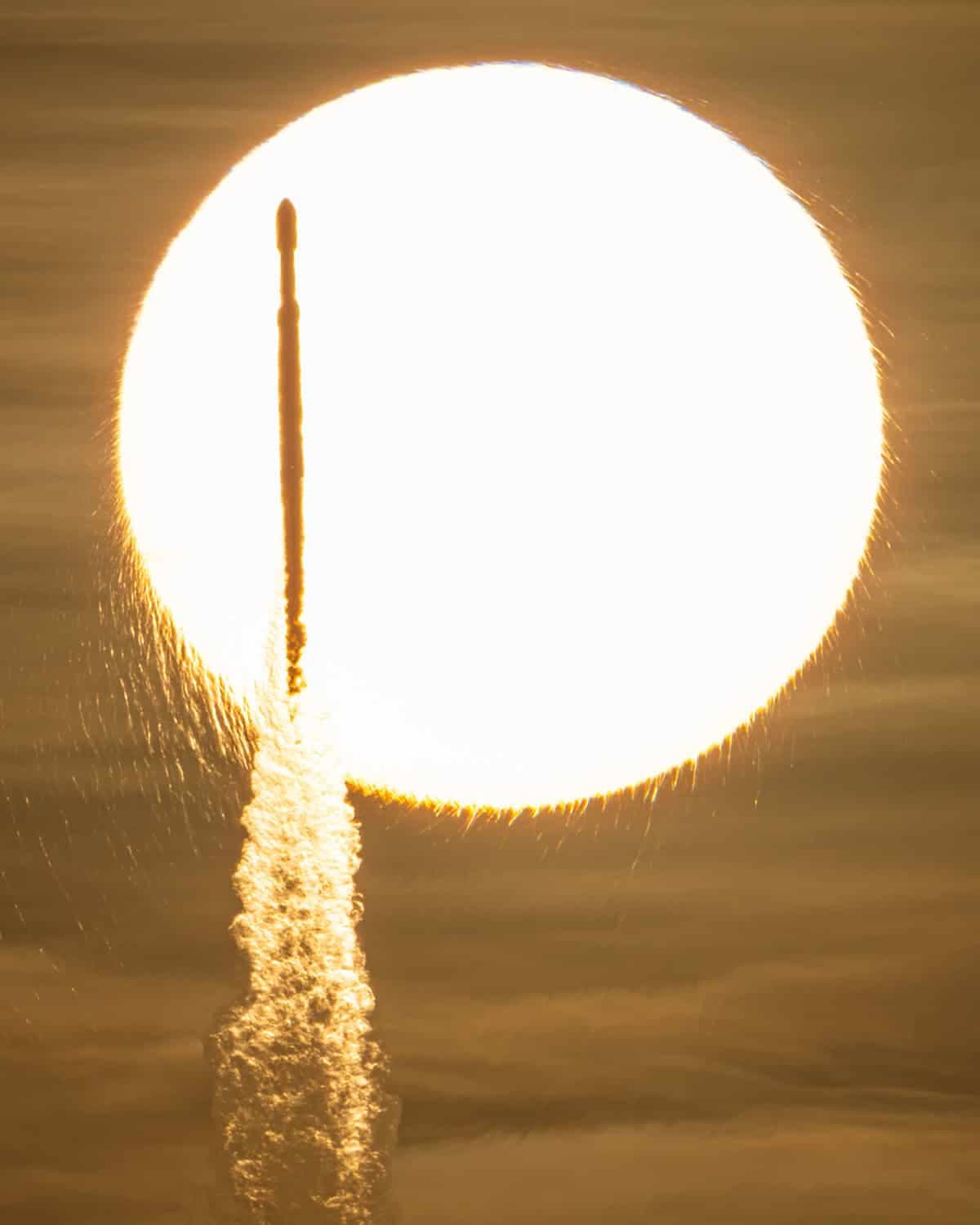
The successful launch of NASA’s Nancy Grace Roman Space Telescope from Kennedy Space Center marks more than just the deployment of a high-tech observatory; it signals a fundamental change in the methodology of astronomical research. By traveling 1.5 million kilometers to the second Sun–Earth Lagrange point (L2), the telescope is positioned to leverage gravitational stability and thermal isolation, allowing it to remain cold and shielded from the light of the Sun, Earth, and Moon. This vantage point is essential for its mission to peer into the deepest recesses of the infrared sky with extreme precision.
While the technical achievement of placing such a complex instrument at L2 is a triumph of aerospace engineering, the scientific community is most excited by its unique observational capability. Unlike its predecessors, which were designed primarily for targeted observations of specific celestial bodies, the Roman Space Telescope is designed to act as a wide-area survey machine. It is essentially turning the entire sky into an expansive dataset, shifting the focus of astronomy from isolated inquiries to the study of massive, interconnected cosmic populations.
The Power of the Wide Field Instrument
The core of the Roman telescope’s revolutionary capability lies in its Wide Field Instrument (WFI). With a 2.4-meter-diameter primary mirror, the telescope achieves the same sharp, crisp imagery that the Hubble Space Telescope has provided for decades. However, the WFI elevates this performance by capturing a field of view that is approximately 100 times larger than Hubble’s capabilities. This combination allows for a dual-purpose observation strategy: astronomers no longer have to choose between a high-resolution view of a specific galaxy and a low-resolution map of a vast cosmic region.
By recording fine detail within a massive, expansive framework, the Roman Space Telescope enables the study of the "ecology of the universe." It provides the context of large-scale galactic distribution while simultaneously revealing the intricate morphology of the individual objects within those populations. This capability is expected to provide critical insights into dark energy, the evolution of galaxies, and the demographics of exoplanets across the Milky Way.
Why It Matters: The Shift Toward Data-Driven Discovery
- Beyond Targeted Observations: Historically, astronomers operated on a proposal-and-target basis. Roman changes this by providing a continuous, high-volume stream of data that can be interrogated for years after collection.
- Cosmic Ecosystems: By capturing entire environments rather than just single targets, researchers can better understand how environmental factors influence the evolution of individual celestial objects.
- Exoplanet Hunting: The inclusion of an advanced coronagraph allows the mission to suppress starlight, making it possible to directly image giant planets. This tech acts as a crucial stepping stone toward the eventual direct observation of Earth-like planets.
- Accessible Datasets: As the volume of data grows, the mission accelerates the move toward machine-assisted discovery, where algorithms and data science tools parse the sky for patterns invisible to the human eye.
An Outlook on Future Implications
The Roman Space Telescope is set to be the primary engine for cosmic discovery in the late 2020s and beyond. As its first images and data packets hit ground stations in early 2027, the astronomical community will likely enter a phase of "big data" exploration. Rather than simply confirming theories about select stars or nebulae, scientists will have a broad, panoramic view of the history and structure of the universe. This mission effectively bridges the gap between the targeted precision of the Hubble and James Webb telescopes and the next generation of automated, survey-based deep-space exploration.