1. Redefining Depression Through Brain Connectivity
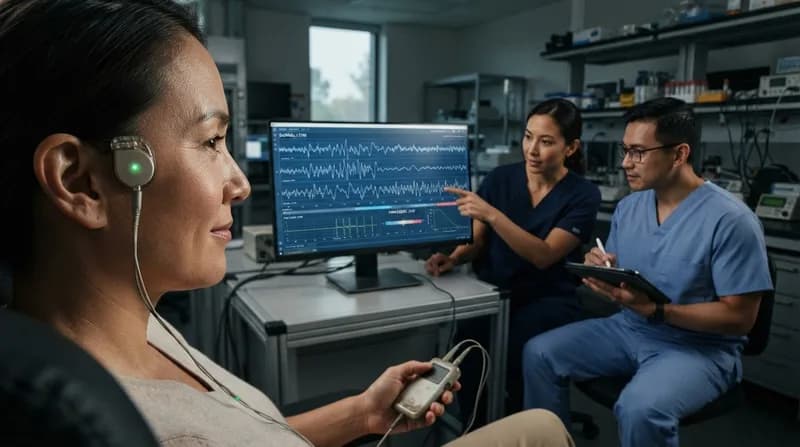
For decades, the medical community has treated Major Depressive Disorder (MDD) as a relatively uniform clinical entity. However, a groundbreaking study from the University of Helsinki, published in Nature Mental Health, suggests that the current diagnostic framework may be obscuring deep-seated biological differences. By utilizing advanced Magnetoencephalography (MEG) to capture brain activity at millisecond precision, researchers have identified five distinct biological 'phenotypes' of depression, each defined by unique patterns of functional connectivity between brain regions.
The study, which examined 263 patients with MDD alongside 75 healthy controls, found that depression is not a single, monolithic condition. In some patients, communication between brain regions was abnormally strong, while in others, it was noticeably weak. This discovery helps explain why current treatments—often based on trial-and-error—frequently fail to yield consistent results across the patient population, as the underlying neurological mechanics driving the symptoms vary drastically from person to person.
2. The Five Phenotypes of Depression
The research team categorized patients into five groups based on the strength and frequency of their neural connectivity, noting that these clusters often correlated with specific clinical symptoms:
- Group 1: Characterized by fairly strong connectivity. These patients typically exhibit a broad range of severe symptoms, including pervasive anxiety, constant rumination, and significantly reduced functional capacity.
- Group 2: Defined by weak connectivity across the brain. This group presents with generally milder symptoms compared to the other identified profiles.
- Group 3: Marked by widespread weak connectivity across a large portion of the cortex. This profile is strongly associated with pronounced symptoms of post-traumatic stress disorder (PTSD).
- Group 4: Displays a mixed-connectivity pattern, where some neural pathways are weakened while others remain hyper-active. This profile is frequently linked to high levels of depression severity, poor well-being, and substance abuse issues.
- Group 5: Exhibits the strongest overall connectivity among the groups. Interestingly, this group shows a high correlation with substance abuse but features fewer trauma-related symptoms than the other profiles.
3. Why It Matters: Toward Precision Psychiatry
This study marks a significant shift toward precision medicine in mental health. Historically, psychiatric diagnoses have relied almost exclusively on self-reported symptom clusters, which can be subjective and overlapping. By introducing objective, measurable biological markers—specifically functional connectivity biomarkers—researchers are laying the groundwork for a future where neuroimaging could help clinicians skip the trial-and-error phase of medication selection.
While the authors caution that we are not yet at the stage where a brain scan can be used as a routine clinical diagnostic tool to prescribe specific medications, the proof of concept is undeniable. The ability to monitor electrical activity with millisecond precision offers a window into the dynamic, shifting nature of the human brain that slower imaging methods have previously missed. Moving forward, the goal is to integrate these connectivity profiles into clinical workflows to ensure that therapies—whether pharmacological or psychotherapeutic—are tailored to the patient's actual neurological state.