1. Lunar Environment Monitoring Station (LEMS-SP)
The LEMS-SP project acts as the Moon’s first dedicated long-term environmental watchdog. By establishing an autonomous station at the lunar South Pole, researchers aim to track the harsh realities of life on the lunar surface. A primary objective is the detection of micrometeoroids—high-velocity space debris that poses a constant threat to delicate equipment and potential human habitats. Because the Moon lacks an atmosphere, these objects strike the surface with full force, necessitating precise data for engineers designing impact-resistant structures.
Beyond monitoring debris, the station will feature a sensitive seismometer to track moonquakes and vibrations. Understanding the tectonic stability of the region is essential for laying the foundation of a permanent base. Furthermore, the unit will measure volatile substances within the lunar exosphere to provide a comprehensive profile of environmental shifts. Led by Dr. Mehdi Benna of the University of Maryland, Baltimore County, this project is fundamental to drafting an interplanetary survival guide that prioritizes safety for future crews.
2. Geophysical Instruments for Marius Lunar Pit Investigation (GIMLI)
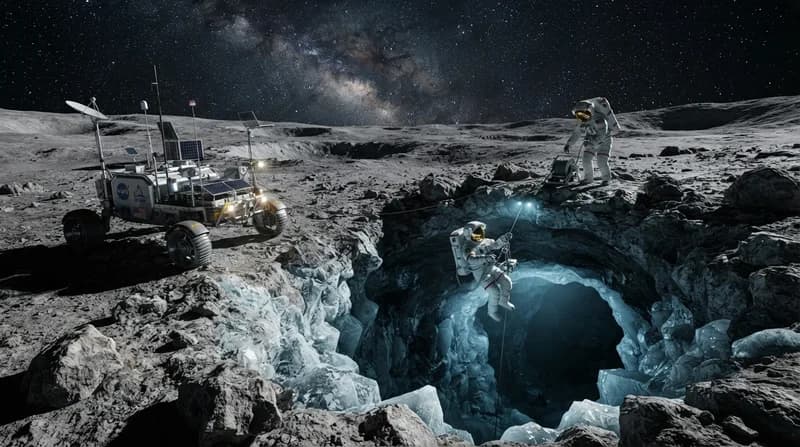
Perhaps the most cinematic of the new missions, GIMLI seeks to determine if the mysterious Marius Hills Pit is actually an entrance to a massive underground lava tube. These geological features were formed billions of years ago when cooling lava created hollow tunnels beneath the lunar surface. If confirmed, these subterranean passages would offer natural, near-perfect shielding from the Moon's extreme temperature swings, cosmic radiation, and micrometeoroid impacts.
By deploying advanced geophysical sensing equipment, the mission will probe the depths of the pit, mapping the potential scale of the underlying cavern. If these natural bunkers prove viable, they could drastically reduce the complexity and weight of surface-level habitat construction. Principal Investigator Dr. Nathaniel Putzig of the Planetary Science Institute believes that identifying these safe havens is a critical step in transitioning from short-term expeditions to sustained, long-term human habitation.
3. Depth Imager with Spectral and Color Optics (DISCO)
The DISCO mission focuses on one of the most vital commodities for deep-space exploration: water. This payload is tasked with conducting the first direct, high-resolution measurements of lunar ice trapped within micro-cold traps—permanently shadowed regions where solar radiation cannot penetrate. By pinpointing the location and density of this water ice, scientists hope to determine the feasibility of on-site resource utilization, which could eventually be processed into oxygen and hydrogen for life support and rocket propellant.
Led by Dr. Ariel Deutsch of NASA’s Ames Research Center, the project also assesses the interaction between spacecraft landings and the lunar regolith. Rocket exhaust can blast lunar dust into dangerous clouds that damage gear; understanding these dynamics is vital for safe site operations. By evaluating the stability of the terrain and the accessibility of water, DISCO provides the logistical data required to build a self-sustaining lunar outpost, serving as a vital training ground for humanity’s eventual journey to Mars.
Why It Matters
Establishing a permanent Moon base requires more than just rockets; it requires a deep understanding of the local environment. These three missions under the PRISM program are designed to turn the lunar environment from a hostile vacuum into a manageable, resource-rich staging ground. By identifying natural shelters, detecting volatile resources, and mapping environmental hazards, NASA is effectively building the foundation for a permanent, scalable human presence in the solar system.