The Physics of the Perfect Touchdown
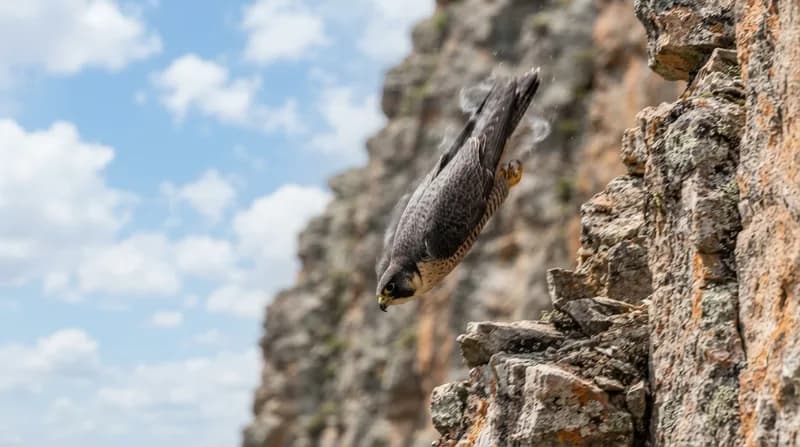
For a bird, coming to a rest on a branch or fence is an act of aerodynamic mastery that we often overlook. While it appears effortless, the transition from high-speed flight to a static perch is a complex challenge of energy management and control. Researchers at the University of Manchester and the University of Toronto have recently employed optimal control theory to model how a bird might theoretically execute a perfectly unpowered, zero-speed landing. Their findings reveal that while such a feat is physically possible, it requires an environment and a flight path that far exceed the capabilities—and the needs—of the average avian.
The core of the problem lies in the relationship between lift and control. A bird’s wing requires airflow to generate both the lift necessary to stay airborne and the force needed to steer. As a bird slows down, it loses its ability to maneuver effectively. To reach a velocity of zero, the bird must tilt its wings into a 90-degree configuration, effectively acting as an air brake. However, to execute this without crashing, the bird must be climbing vertically at the exact moment of touchdown, requiring a massive, sweeping approach that forces the bird to sacrifice precious control authority for a gentler finish.
The Cost of a Zero-Speed Arrival
The mathematical model suggests that the trajectory required for this perfect landing is far more dramatic than anything observed in nature. To bring a 400-gram pigeon to a complete stop at the moment of contact, the bird would need to start from a speed of 36 meters per second—more than double its normal cruising velocity. The resulting maneuver would involve a sweeping, 60-meter horizontal approach while climbing 20 meters into the air. This expansive trajectory is likely the primary reason birds rarely attempt true zero-speed arrivals; they simply lack the open space required to burn off that much kinetic energy in a controlled manner.
Instead, real-world birds opt for a compromise. By carrying a small amount of residual airspeed into their landing, they maintain control and maneuverability, relying on their legs to absorb the remaining energy upon impact. This approach allows them to navigate dense forest environments and cluttered urban spaces where a 60-meter swoop would be impossible. The model suggests that the bird’s decision to flap its wings before landing isn't just about slowing down, but about precisely managing this energy trade-off to fit within tight spatial constraints.
Evolutionary Trade-offs and Landing Mechanics
The study also highlights an intriguing evolutionary link between landing behavior and skeletal structure. If a bird consistently lands with significant residual energy, its legs must be robust enough to absorb the shock. However, heavy, strong legs represent "extra baggage" that reduces overall flight efficiency. The research team posits that the development of specialized landing techniques—such as swooping to bleed off energy—has likely helped shape the evolution of avian morphology, allowing birds to maintain lighter frames without sacrificing the ability to survive their daily landings.
This research offers a new perspective on why various species utilize different landing strategies. For instance, ground-dwelling birds are at a distinct disadvantage compared to those landing on elevated perches, as they cannot perform the upward swoop necessary to kill their velocity. This explains why many water-bound birds, like ducks and geese, prefer the water for their arrivals; the fluid dynamics of the water surface provide a natural mechanism to absorb kinetic energy that a solid, unforgiving ground surface cannot. Ultimately, the way a bird lands is not merely a choice of convenience, but a deep-seated optimization of physics, biology, and environment.