Expanding the Intelligence Frontier
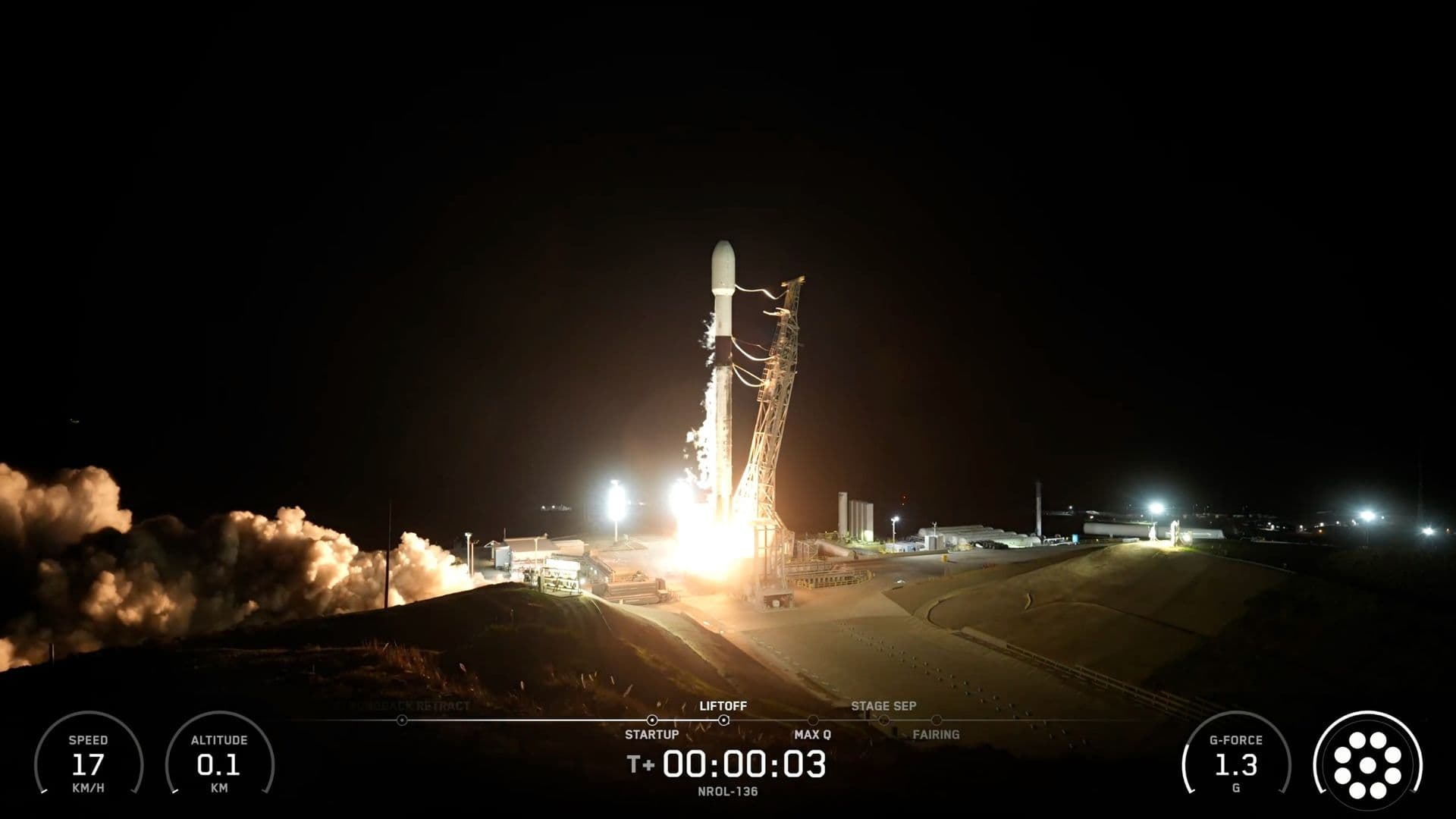
In the early hours of November 22, 2026, the California coast was illuminated by the familiar roar of a SpaceX Falcon 9 rocket. Lifting off from Vandenberg Space Force Base’s Launch Complex-4E at 7:23 a.m. ET, the mission—designated NROL-136—successfully carried a payload of classified satellites into low Earth orbit for the U.S. National Reconnaissance Office (NRO). This launch represents the sixth NRO mission of the year, underscoring the growing reliance on commercial partnerships to bolster American space-based surveillance.
The NROL-136 mission is a vital component of the NRO's “proliferated architecture,” an expansive network of spacecraft designed to provide unprecedented levels of global coverage. By utilizing a high volume of satellites rather than a few massive, singular observatories, the agency aims to achieve greater resilience and constant, real-time intelligence monitoring. Developed in close collaboration with industry giants SpaceX and Northrop Grumman, this architecture ensures that if one node in the constellation faces interference or technical failure, the overall mission remains unaffected, significantly hardening U.S. space capabilities.
Refining Rapid Deployment and Reusability
The efficiency of the NROL-136 mission was bolstered by the impressive reusability of SpaceX’s launch hardware. The Falcon 9 booster, identified as B1097, completed its 14th flight during this launch. Following the separation of the upper stage just two minutes after liftoff, the booster performed a precise maneuver, returning to Vandenberg’s Landing Zone 4. This rapid turnaround—a feat that was once unthinkable in the aerospace industry—continues to demonstrate how frequent, cost-effective access to orbit is becoming a standard operational reality for national security missions.
While the NRO remains characteristically tight-lipped regarding the specific technical capabilities or the exact quantity of satellites deployed during this launch, the mission follows a well-established pattern of regular deployments. Having started this initiative in May 2024 with the NROL-146 mission, the NRO has rapidly accelerated its cadence to complete this proliferated network. For the national security community, this strategy represents a shift toward a more dynamic, agile space posture, moving away from vulnerable, monolithic orbital assets toward a robust, distributed infrastructure that can monitor the globe with enhanced frequency and accuracy.
Why It Matters
- Strategic Resilience: The shift toward a proliferated architecture minimizes the risk of total mission failure if individual satellites are disabled or malfunction.
- Frequency of Surveillance: By deploying a high number of units into low Earth orbit, the NRO significantly reduces the revisit time over critical regions of interest.
- Commercial Integration: The continued reliance on the Falcon 9 highlights how the U.S. military is fully embedding private-sector innovation into its foundational intelligence infrastructure.
- Hardware Longevity: The 14th flight of the B1097 booster highlights the maturity of rocket reusability, enabling more frequent and sustainable launch schedules for critical payloads.