ScienceTechnical Deep Dive

Consistency Is King: Why Exercise Frequency Trumps Intensity for Mental Well-being

Published
EElectricBuzz Editorial Team
Consistency Is King: Why Exercise Frequency Trumps Intensity for Mental Well-being
3 min read453 wordsElectricBuzz Editorial Team

The Gist

“A massive study of over 10,000 college students suggests that your workout schedule matters far more for your mental health than the intensity of your gym sessions.”

The Frequency Factor

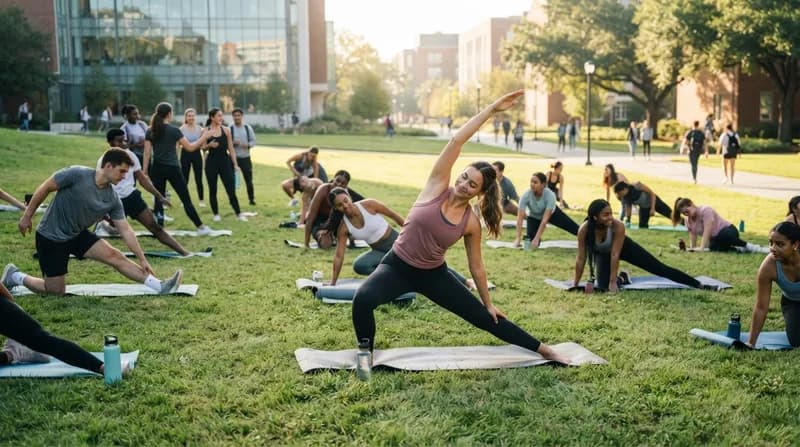
For decades, the fitness industry has emphasized high-intensity interval training, heavy lifting, and pushing one’s physiological limits. However, new research published in the journal PLOS One suggests that when it comes to long-term mental health, we might be focusing on the wrong metrics. A comprehensive study involving over 10,000 college students indicates that the sheer regularity of exercise—how often you get moving—is a far more significant predictor of mental well-being than the sweat-drenched intensity of any single session.

Led by Michael Grasdalsmoen and his colleagues at the Western Norway University of Applied Sciences, the study tracked students aged 18 to 35. By comparing baseline physical activity reports against diagnostic assessments conducted one year later, researchers were able to draw a clear link between exercise habits and the prevalence of anxiety and depression. The data suggests that consistency serves as a protective buffer against the pressures of academic and social life, far outperforming sporadic, high-intensity workouts in efficacy.

Understanding the Data

The study highlights a distinct nuance in how physical activity impacts different demographics. While exercise frequency was the most consistent factor across the board, the researchers identified interesting variations. For women, lower exercise intensity was more strongly correlated with higher anxiety and depression scores. Conversely, for men, the total duration of activity—or the number of hours spent moving each week—played a more critical role in mental outcomes. Overall, the protective benefits increased with activity levels, plateauing at approximately 10 hours of exercise per week, which aligns well with established global health guidelines.

Why It Matters

  • Mental Health Resilience: Establishing a routine provides stability for students facing high-stress transitions, potentially acting as a buffer against clinical mental health issues.
  • Accessible Health Policy: The findings suggest that universities should focus on making exercise a natural, accessible part of daily student life rather than emphasizing specialized, high-intensity athletic programs.
  • Redefining Success: This research challenges the 'no pain, no gain' mantra, suggesting that a low-intensity, frequent walking or light activity routine may be superior for emotional regulation.

Implications for Daily Life

While this research is observational—meaning it cannot definitively prove that exercise causes a reduction in mental disorders—it provides a compelling argument for lifestyle modification as a public health tool. The researchers emphasized that the college years are a uniquely vulnerable period, and fostering environments that encourage frequent, accessible movement could be an essential strategy for educational institutions.

Ultimately, the study serves as a reminder that health is often found in the habits we maintain over months and years, not just the milestones we hit in a single hour at the gym. For those feeling the weight of stress, the simplest advice—just showing up to move more often—may be the most effective intervention available.

SPONSORED
The 5 Best Over-Ear ANC Headphones of 2026, Tested & Ranked
Editor's Pick Guide
92/100
Tech & Gadgets•12 min read

The 5 Best Over-Ear ANC Headphones of 2026, Tested & Ranked

We locked five over-ear ANC picks for 2026 — Sony WH-1000XM6, Bose QuietComfort Ultra 2, Soundcore Space One, Sennheiser Momentum 5, and Apple AirPods Max 2 — then stress-tested them on lab metrics, long-term owner truth, and live street prices.

Related Stories

Semantically matched articles, ranked by topic overlap and freshness.

Cosmic Vanishing Acts: Gravitational Waves Reveal Secretive Black Hole Origins
Science

Cosmic Vanishing Acts: Gravitational Waves Reveal Secretive Black Hole Origins

A groundbreaking study of gravitational wave data suggests that many black holes may be born from silent stellar collapses rather than violent supernova explosions.

Amazon Resumes Satellite Deployment Following Recent Launch Setback
Science

Amazon Resumes Satellite Deployment Following Recent Launch Setback

Just over a week after a failed mission, Amazon prepares to launch another batch of Project Kuiper internet satellites via the Arianespace Ariane 6 rocket.

Decoding the Fountain of Youth: What a 194-Year-Old Tortoise Can Teach Us About Human Aging
Science

Decoding the Fountain of Youth: What a 194-Year-Old Tortoise Can Teach Us About Human Aging

Scientists have unlocked the genetic secrets of Jonathan, the world's oldest land animal, revealing a blueprint for cellular resilience that could reshape longevity science.

SpaceX Executes Pre-Dawn Launch for NRO Classified Intelligence Mission
Science

SpaceX Executes Pre-Dawn Launch for NRO Classified Intelligence Mission

A SpaceX Falcon 9 rocket successfully deployed a new batch of classified satellites for the National Reconnaissance Office, further expanding a critical intelligence-gathering network.

BCR-MERFISH: A New Frontier in Visualizing the Immune System
Science

BCR-MERFISH: A New Frontier in Visualizing the Immune System

Researchers at Boston Children's Hospital have unveiled a groundbreaking imaging technology that maps the spatial organization of antibody-producing immune cells at an unprecedented resolution.

The Physics of the Perfect Landing: Why Birds Cannot Simply Glide to a Halt
Science

The Physics of the Perfect Landing: Why Birds Cannot Simply Glide to a Halt

New research using optimal control theory reveals the extraordinary physical requirements for a bird to achieve a zero-speed landing.

The Growing Divide: Why GLP-1 Access Remains Stuck Behind Socioeconomic Barriers
Science

The Growing Divide: Why GLP-1 Access Remains Stuck Behind Socioeconomic Barriers

New research from Boston University highlights a widening chasm in access to life-changing weight loss medications, revealing that despite surging demand, structural inequities are leaving vulnerable populations behind.

Alcohol Consumption May Compromise Cancer Immunotherapy Efficacy
Science

Alcohol Consumption May Compromise Cancer Immunotherapy Efficacy

New research suggests that even moderate alcohol consumption can significantly hinder the effectiveness of life-saving cancer immunotherapy treatments by suppressing immune cell function.