ScienceTechnical Deep Dive

Amazon Resumes Satellite Deployment Following Recent Launch Setback

Published
EElectricBuzz Editorial Team
Amazon Resumes Satellite Deployment Following Recent Launch Setback
3 min read493 wordsElectricBuzz Editorial Team

The Gist

“Just over a week after a failed mission, Amazon prepares to launch another batch of Project Kuiper internet satellites via the Arianespace Ariane 6 rocket.”

A Swift Return to Orbit

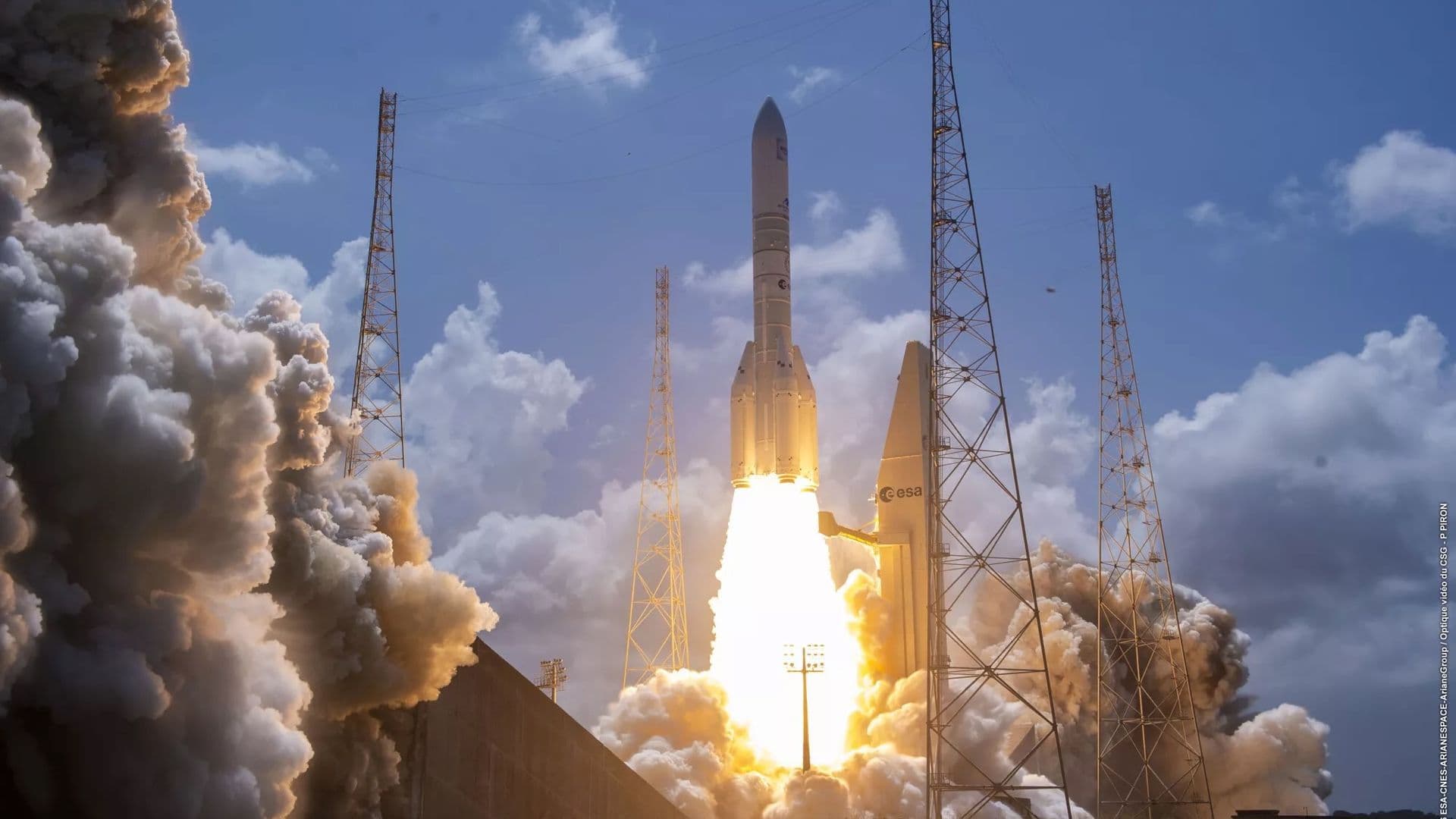
In a critical move for its ambitious low Earth orbit (LEO) broadband initiative, Amazon is set to launch a new batch of 36 internet satellites on Monday, November 23. The mission, designated as flight VA271, is scheduled to lift off from Europe's Spaceport in Kourou, French Guiana. This rapid turnaround comes only eight days after the company faced a significant setback when a United Launch Alliance (ULA) Vulcan Centaur rocket failed, resulting in the loss of 40 satellites.

The upcoming mission utilizes the Arianespace Ariane 6, a heavy-lift launch vehicle that has become a cornerstone of Amazon’s deployment strategy. The launch window is slated to open at 6:09 a.m. EST, with Arianespace providing live coverage of the proceedings beginning approximately 30 minutes prior to liftoff. Successful deployment of these 36 units will be a welcome stabilization for the Project Kuiper constellation, which aims to eventually populate orbit with more than 3,200 spacecraft to provide global internet coverage.

The Growing Satellite Constellation

Amazon Leo is designed to operate in low Earth orbit, positioning the company as a direct competitor to SpaceX’s Starlink network. While SpaceX has already successfully deployed over 11,000 satellites, Amazon is still in the early stages of its infrastructure development, with approximately 400 satellites currently operational in orbit. The loss of the 40 units aboard the Vulcan Centaur was a substantial blow to this expansion schedule, making the success of the current Ariane 6 flight vital for maintaining project momentum.

The company is intentionally diversifying its launch providers to mitigate risk, relying on a mix of platforms including the ULA Atlas V, Blue Origin’s New Glenn, and the SpaceX Falcon 9. However, the path to orbit has been anything but smooth. The Vulcan Centaur is currently grounded pending an investigation into the fuel supply issues that triggered its recent failure, and Blue Origin’s New Glenn continues to navigate its own series of development and operational hurdles, including a failed payload delivery earlier this year and a ground-test explosion in May.

Context: Why Reliability Matters

Building a global satellite internet network is an exercise in extreme logistical coordination, where launch cadence is the most significant bottleneck. Amazon's strategy relies on consistent access to orbital delivery, and the recent loss of hardware highlights the inherent risks of the space industry. Because the company requires thousands of satellites to achieve full coverage, the inability to rely on a single launch vehicle has forced Amazon to spread its load across different manufacturers. The Ariane 6, which debuted in July 2024, is proving to be a reliable workhorse for this effort. Monday’s mission marks the fourth time the Ariane 6 has carried Amazon’s hardware, providing a much-needed steady hand as the company recovers from the recent ULA incident. As the space sector continues to mature, the ability to rapidly swap providers and maintain deployment schedules will remain the primary differentiator between successful constellations and those that struggle to reach critical mass.

SPONSORED
The 5 Best Over-Ear ANC Headphones of 2026, Tested & Ranked
Editor's Pick Guide
92/100
Tech & Gadgets•12 min read

The 5 Best Over-Ear ANC Headphones of 2026, Tested & Ranked

We locked five over-ear ANC picks for 2026 — Sony WH-1000XM6, Bose QuietComfort Ultra 2, Soundcore Space One, Sennheiser Momentum 5, and Apple AirPods Max 2 — then stress-tested them on lab metrics, long-term owner truth, and live street prices.

Related Stories

Semantically matched articles, ranked by topic overlap and freshness.

Cosmic Vanishing Acts: Gravitational Waves Reveal Secretive Black Hole Origins
Science

Cosmic Vanishing Acts: Gravitational Waves Reveal Secretive Black Hole Origins

A groundbreaking study of gravitational wave data suggests that many black holes may be born from silent stellar collapses rather than violent supernova explosions.

Decoding the Fountain of Youth: What a 194-Year-Old Tortoise Can Teach Us About Human Aging
Science

Decoding the Fountain of Youth: What a 194-Year-Old Tortoise Can Teach Us About Human Aging

Scientists have unlocked the genetic secrets of Jonathan, the world's oldest land animal, revealing a blueprint for cellular resilience that could reshape longevity science.

Consistency Is King: Why Exercise Frequency Trumps Intensity for Mental Well-being
Science

Consistency Is King: Why Exercise Frequency Trumps Intensity for Mental Well-being

A massive study of over 10,000 college students suggests that your workout schedule matters far more for your mental health than the intensity of your gym sessions.

SpaceX Executes Pre-Dawn Launch for NRO Classified Intelligence Mission
Science

SpaceX Executes Pre-Dawn Launch for NRO Classified Intelligence Mission

A SpaceX Falcon 9 rocket successfully deployed a new batch of classified satellites for the National Reconnaissance Office, further expanding a critical intelligence-gathering network.

BCR-MERFISH: A New Frontier in Visualizing the Immune System
Science

BCR-MERFISH: A New Frontier in Visualizing the Immune System

Researchers at Boston Children's Hospital have unveiled a groundbreaking imaging technology that maps the spatial organization of antibody-producing immune cells at an unprecedented resolution.

The Physics of the Perfect Landing: Why Birds Cannot Simply Glide to a Halt
Science

The Physics of the Perfect Landing: Why Birds Cannot Simply Glide to a Halt

New research using optimal control theory reveals the extraordinary physical requirements for a bird to achieve a zero-speed landing.

The Growing Divide: Why GLP-1 Access Remains Stuck Behind Socioeconomic Barriers
Science

The Growing Divide: Why GLP-1 Access Remains Stuck Behind Socioeconomic Barriers

New research from Boston University highlights a widening chasm in access to life-changing weight loss medications, revealing that despite surging demand, structural inequities are leaving vulnerable populations behind.

Alcohol Consumption May Compromise Cancer Immunotherapy Efficacy
Science

Alcohol Consumption May Compromise Cancer Immunotherapy Efficacy

New research suggests that even moderate alcohol consumption can significantly hinder the effectiveness of life-saving cancer immunotherapy treatments by suppressing immune cell function.