The Blueprint for Extreme Longevity
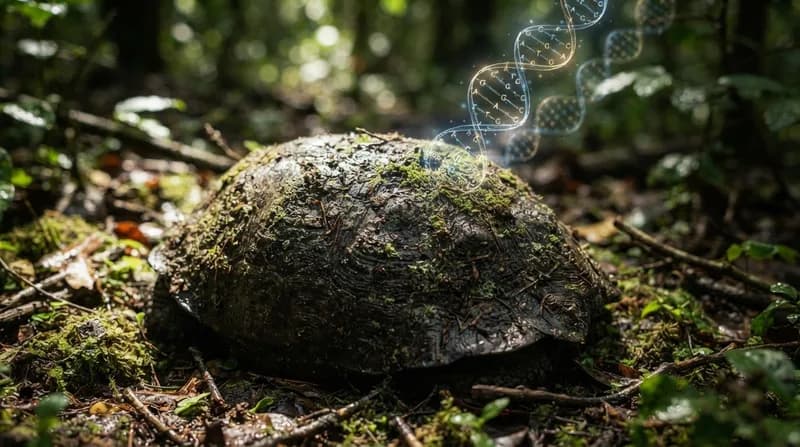
At an astonishing 194 years old, Jonathan the giant tortoise holds the title of the world’s oldest living land animal. Hatched around 1832—long before the invention of the lightbulb or the modern telephone—this Aldabra giant tortoise has outlived generations of humans. Recently, a landmark study published in Science Advances has finally peered into his DNA to understand how his body has managed to defy the typical constraints of biological aging for nearly two centuries.
Researchers identified 287 unique genetic variants in Jonathan that appear to act as a shield against the wear and tear of time. These specific variants are linked to critical biological processes, including robust DNA repair, the suppression of cancer, precise control of inflammation, and the regulation of insulin activity. Unlike most animals, whose gene expression becomes erratic as they age, Jonathan’s genetic mechanisms have maintained a high degree of stability, protecting him from the cellular decay that usually accompanies such an advanced age.
The Secret of Stable Epigenetics
One of the most profound findings of the study involves Jonathan’s epigenome—the complex system of chemical markers that acts as a switchboard for genes. In almost all species, these markers shift as an organism ages, often leading to the degradation of essential cellular functions. However, when researchers compared Jonathan’s epigenetic markers with those of much younger tortoises of the same species, they found a startling lack of change.
This "epigenetic stability" is likely the key to Jonathan’s longevity. By keeping his gene regulatory systems in a "youthful" state, his body is able to continue repairing damaged DNA and managing metabolic energy with the efficiency of a much younger animal. This preservation of biological function suggests that aging is not just about the accumulation of damage, but about the body's ability to maintain the regulatory integrity required to address that damage as it occurs.
Why It Matters
- Translational Medicine: Identifying these 287 genetic variants provides a potential roadmap for developing future human therapies aimed at slowing age-related diseases.
- Redefining Aging: The study shifts the focus from simply "living longer" to understanding how to maintain the quality of cellular regulation that keeps an organism healthy into its sunset years.
- Biological Resilience: By treating Jonathan as a collaborator rather than a study subject, researchers have opened a window into the evolutionary mechanisms that allow some species to thrive for centuries.
From St. Helena to Human Health
Jonathan currently resides at Plantation House on St. Helena, a British Overseas Territory in the South Atlantic, where he has lived since arriving as a gift from the Seychelles 144 years ago. While his life on the remote island has been quiet, his impact on the future of medical science could be immense. The team at Kallel, the nonprofit behind the research, believes that the evolutionary solutions developed by giant tortoises could be the missing link in modern gerontology.
The goal now is to translate these evolutionary insights into practical and accessible human treatments. Researchers are hopeful that by mimicking the protective mechanisms identified in Jonathan—such as enhanced DNA repair and stable insulin regulation—they can eventually address the primary risk factors for chronic illnesses in aging human populations. While we are still far from discovering a literal fountain of youth, the genetic blueprint revealed by this 194-year-old survivor provides a compelling new direction for the field of longevity research.