A Chance Encounter with Biological Novelty
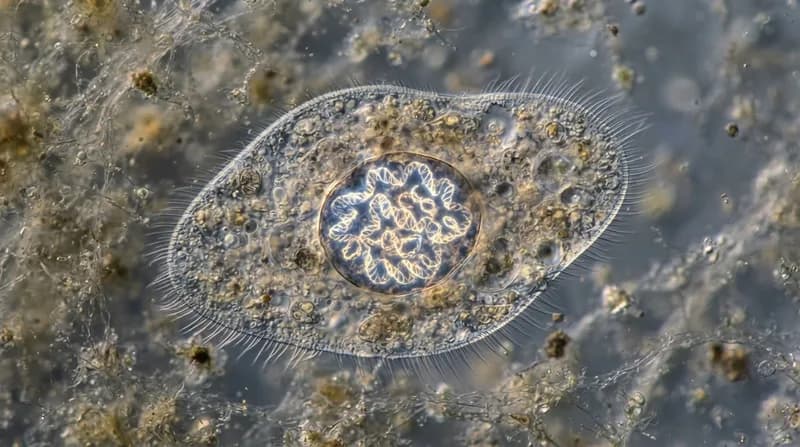
In a remarkable demonstration of scientific serendipity, researchers from the Earlham Institute and the University of Oxford have stumbled upon a biological outlier that challenges one of the most fundamental rules of genetics. While testing a cutting-edge DNA sequencing pipeline on a previously uncatalogued protist collected from a tranquil pond at Oxford University, scientists discovered a genetic architecture that operates in defiance of standard evolutionary constraints.
The organism, identified as Oligohymenophorea sp. PL0344, is a type of ciliate—a group of single-celled organisms known for using hair-like cilia for movement. While ciliates are already recognized by geneticists for their peculiar DNA interpretations, this specific specimen displayed a modification so distinct that it forces a reevaluation of how protein-coding signals evolve across the tree of life.
Rewriting the Universal Stop Signal
To understand the magnitude of this discovery, one must look at the standard language of life. In nearly all living things, DNA serves as an instruction manual, with sections dedicated to building proteins punctuated by 'stop codons.' These three-letter sequences—TAA, TAG, and TGA—function like terminal periods in a sentence, signaling to the cell's ribosome that a protein chain is complete. For decades, biologists believed that these signals were inherently coupled; if an organism evolved to reassign one stop codon to an amino acid, the other typically followed suit to maintain evolutionary stability.
Oligohymenophorea sp. PL0344 shattered this paradigm. In its genome, the stop codons TAA and TAG do not signal the end of a protein synthesis line. Instead, they have been independently reassigned to encode two entirely different amino acids: lysine and glutamic acid, respectively. Meanwhile, the third codon, TGA, retains its traditional role as a stop signal. This marks the first time science has observed these specific stop signals functioning independently, effectively proving that the 'punctuation' of life is far more malleable than previously imagined.
Why It Matters
The discovery is significant because it provides a rare glimpse into the hidden complexity of the microscopic world. Protists—a diverse group of eukaryotes that are neither plants, animals, nor fungi—represent an enormous, largely untapped reservoir of biodiversity. By uncovering this unconventional genetic code, researchers have demonstrated that the machinery of life can adapt and diverge in ways that defy our traditional models of evolutionary biology.
- Increased Adaptability: The research proves that the protein-translation machinery is highly flexible and capable of radical, independent reassignment of genetic signals.
- Robust Backup Systems: The organism utilizes an abundance of the TGA stop codon in regions following protein sequences, suggesting a sophisticated 'failsafe' mechanism to prevent errors during translation.
- Expanded Horizons: The study validates new single-cell sequencing techniques, which allow scientists to decode the genomes of organisms that are notoriously difficult to culture or analyze in a laboratory setting.
Ongoing Discoveries in the Microscopic World
The investigation did not stop with a single pond-dwelling curiosity. Follow-up research published in 2024 and 2026 has revealed that this genetic flexibility is a broader phenomenon within the ciliate family. By analyzing genomic data from various marine environments, including samples from the Arctic and Southern Oceans, researchers identified multiple ciliate lineages that have independently repurposed the UAG codon to encode different amino acids like leucine or glutamine.
These findings suggest that we are only beginning to scratch the surface of microbial genetic diversity. As sequencing technologies improve, allowing for the analysis of single, uncultured cells, it is becoming increasingly clear that the 'rules of life' are more like suggestions, with nature frequently finding creative, bizarre, and highly efficient ways to bypass conventional evolutionary paths.