A New Chapter in Coevolutionary Science
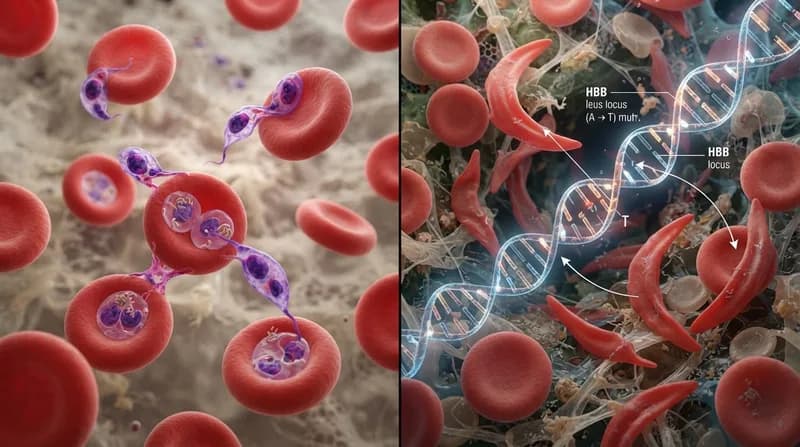
For decades, the protective relationship between the sickle cell trait and malaria has been a cornerstone of human evolutionary biology. While carrying a single copy of the sickle cell variant offers significant protection against severe malaria, the exact mechanisms behind this defense have remained elusive. Recent research published in Nature Microbiology has unveiled a startling development: the human sickle cell trait actually shapes the very evolution of the malaria parasite, acting as a filter for which genetic variants of the pathogen can thrive in a host.
By conducting a large-scale genetic analysis of over 2,000 individuals in Mfou, Cameroon, researchers successfully mapped the complex interactions between human hosts and the malaria parasites infecting them. The data suggests that humans and parasites are locked in an ongoing, reciprocal evolutionary dance. The sickle cell variant, often viewed merely as a human adaptation, also serves as an environmental pressure that forces the malaria parasite to evolve, effectively creating distinct "parasite populations" that preferentially infect carriers versus non-carriers.
Infection Without Illness: The Asymptomatic Puzzle
One of the most compelling aspects of the study is the focus on asymptomatic infections, which accounted for a massive three-quarters of the study group. Historically, medical research has been heavily skewed toward the small percentage of patients who present with severe, symptomatic disease. By shifting the focus to those who are infected but asymptomatic, scientists were able to observe the parasite in a more natural state, unmasked by the trauma of severe illness.
The study found that while individuals with the sickle cell trait are infected at rates similar to those without it, they are ten times less likely to develop harmful disease symptoms. The crucial discovery here is that the malaria strains circulating within the sickle cell-positive population are genetically distinct from those found in the wider population. This suggests that the parasite's inability to thrive in a host with the sickle cell variant may be due to the specific biological limitations of those parasite variants themselves, rather than just the host's own immune response.
Why It Matters
- Redefining Disease Protection: The research proves that the sickle cell trait protects the host not just by bolstering their biological defenses, but by limiting the types of parasites that can successfully establish an infection.
- New Targets for Therapeutics: By identifying these specific parasite strains that struggle in the presence of sickle cell traits, researchers can begin to target these vulnerabilities in the pathogen, potentially leading to more effective antimalarial drugs and vaccines.
- Evolutionary Insight: This work provides a masterclass in coevolution, demonstrating that humans are not just passive targets of disease; we are active participants in the genetic trajectory of our pathogens.
Ultimately, this discovery upends previous theories that viewed the malaria strains found in sickle cell carriers as "superbugs." Instead, it appears these strains may be less virulent precisely because they have adapted to a host environment that is inherently hostile to typical parasite development. As researchers look to the future, this paradigm shift—viewing malaria as a joint evolution between human genetics and parasite genomics—could prove essential in tracking and treating one of humanity's most persistent and deadly infectious diseases.