Reconnecting with Instincts
For decades, captive animal management has leaned toward standardized, predictable feeding schedules. However, new research from the University of Adelaide, conducted in partnership with Monarto Safari Park, suggests that this consistency might be stifling the natural instincts of African lions. By introducing a feast-and-fast regimen featuring whole animal carcasses, researchers have successfully encouraged lions to engage in behaviors that mirror their wild counterparts, marking a significant step forward in animal welfare science.
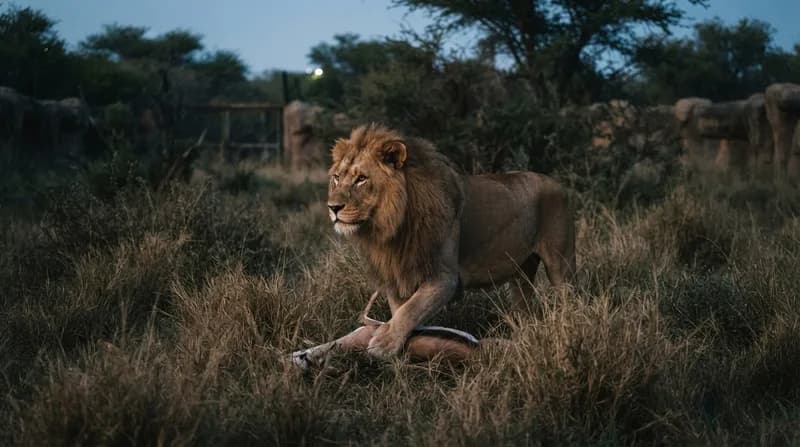
The study, published in Applied Animal Behaviour Science, focused on three adult male lions. Instead of receiving daily, processed meals, the lions were transitioned to a cycle that included whole carcasses provided every nine days. This experimental approach was monitored extensively using infrared camera technology, creating a high-resolution, 24-hour behavioral dataset that spanned three months of observation.
The Mechanics of the Feast-and-Fast Cycle
The impact of the new routine was immediate and profound. On days when whole carcasses were introduced, the lions spent nearly three times as long feeding compared to their traditional daily diet. The physical nature of the food required the lions to tear, pull, and manipulate the carcass—actions that are essential components of their natural feeding ecology. These behaviors not only provided physical enrichment but also forced the animals to interact with their environment in ways that standard, pre-portioned meat never could.
The physiological outcomes were equally telling. Following the intensive feeding sessions, the lions displayed a period of heavy, prolonged rest, effectively mimicking the lethargy associated with the digestion of a large kill in the wild. As the fasting period progressed, the lions showed a natural, gradual increase in activity levels. This rhythmic oscillation between intense, goal-oriented activity and deep recovery provides a blueprint for more dynamic and biologically appropriate captive care.
Understanding Pacing and Anticipation
One of the more nuanced findings of the research concerned the phenomenon of pacing—a repetitive behavior often associated with stress or anticipation in captive carnivores. While researchers observed a slight increase in pacing, they discovered that these movements were not driven by hunger or the length of the fasting period. Instead, the pacing was most intense during predictable human activities, such as keeper arrival times or scheduled habitat transfers.
This insight suggests that the animals’ stress levels are more tied to the artificial, rigid routines imposed by human management rather than the biological reality of fasting. Furthermore, the study noted that the introduction of whole carcasses caused no uptick in aggression or social instability among the pride, debunking concerns that irregular, high-intensity feeding events might disrupt social hierarchies.
Why It Matters
- Behavioral Enrichment: Providing whole carcasses allows lions to exercise natural mechanics like tearing and pulling, which are vital for physical and mental stimulation.
- Rhythmic Stability: Moving away from daily fixed meals helps captive animals develop natural circadian-like rhythms of activity and rest.
- Management Insight: The data confirms that animal welfare must be evaluated over the course of entire feeding cycles rather than isolated moments, as behavior is often influenced by events occurring days apart.
- Routine vs. Hunger: The observation that pacing is linked to human-imposed schedules highlights the importance of diversifying daily routines to prevent anticipatory stress.
As the scientific community moves toward more holistic approaches to animal management, this research provides a clear roadmap for integrating naturalistic ecological cycles into the zoo environment. By viewing feeding as a multi-day cycle rather than a single event, researchers hope to continue refining how we care for apex predators, ensuring that their time in human care remains as mentally and physically fulfilling as possible.