Solving a Fundamental Biological Mystery
For decades, a fundamental paradox has puzzled molecular biologists: if DNA molecules carry a negative electrical charge, why don't they simply repel each other into oblivion? Inside the dense, bustling environment of a living cell, DNA must frequently come into close contact to perform essential tasks like genetic recombination and gene silencing. A breakthrough study from the University of York, published in Nucleic Acids Research, has finally settled this mystery by capturing the moment two DNA molecules zip together with extreme precision.
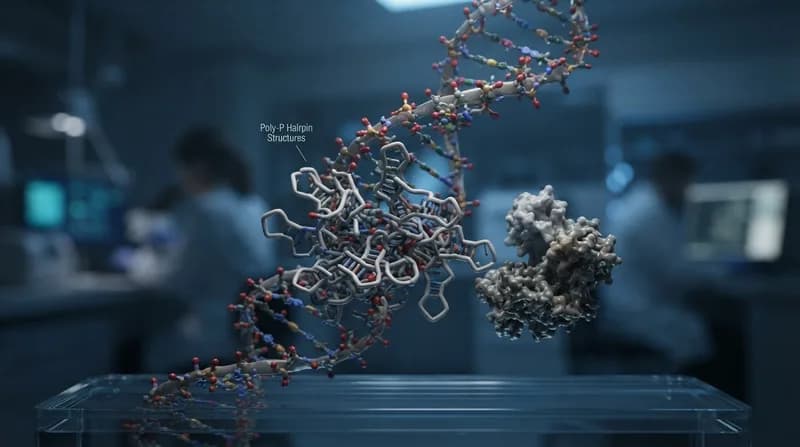
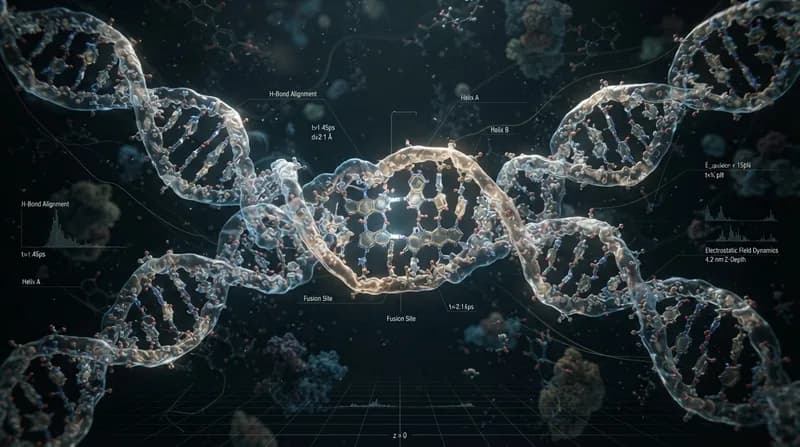
By combining high-resolution atomic force microscopy with sophisticated computer simulations, the research team successfully visualized how DNA helices align groove-for-groove. This interaction, often referred to as the 'DNA zipper' model, was first proposed twenty years ago but had remained largely theoretical until this recent experimental validation. The findings suggest that the process is not merely a random collision but a highly regulated mechanism facilitated by the surrounding cellular environment.
The Role of Molecular Bridges
The secret behind this 'molecular zipping' lies in the presence of positively charged metal ions. These ions act as critical intermediaries, effectively neutralizing the inherent repulsion between the negatively charged DNA strands. The research team found that these double-charged metal ions settle into the grooves of the DNA helices, serving as tiny, stable bridges that hold the two molecules in perfect alignment.
Sophisticated simulations performed during the study revealed that these ions function almost like biological armatures. By interacting with both DNA strands simultaneously, they create a bridge that stabilizes the structure, allowing the helices to interlock like two spiral staircases. This discovery provides the definitive proof needed to support the long-standing theory that salt ions surrounding DNA produce the specific electrical patterns necessary for this pairing to occur.
Why It Matters
- Medical Implications: Identifying regions of the genome prone to these specific pairings could help researchers detect where genetic mutations disrupt normal cellular processes, potentially offering new insights into cancer development.
- Biotechnology Frontiers: Because certain DNA sequences pair more strongly than others, this discovery paves the way for programmable DNA structures, allowing scientists to engineer custom molecular components for synthetic biology.
- Validating Theory: The study serves as a masterclass in modern scientific methodology, proving how the combination of atomic-scale imaging and computational modeling can bridge the gap between abstract theory and physical observation.
Predicting Genetic 'Hotspots'
Beyond the fundamental mechanism of the zipping process, the study uncovered that DNA recognition is not uniform across the genome. Certain sequences are far more efficient at pairing than others, creating specific 'hotspots' of interaction. This selectivity suggests that the cell has an innate ability to recognize and prioritize specific genetic sequences during recombination or repair.
The research team suggests that these hotspots are the primary areas where scientists should focus when studying diseases related to DNA repair or gene expression errors. By pinpointing these regions, medical researchers may eventually be able to develop more targeted diagnostic tools. Furthermore, the ability to predict which sequences will pair most strongly offers a new toolset for biotechnologists, who can now design DNA-based nanostructures with higher stability and accuracy, essentially treating DNA as a programmable material.