The Strategic Battery Pivot
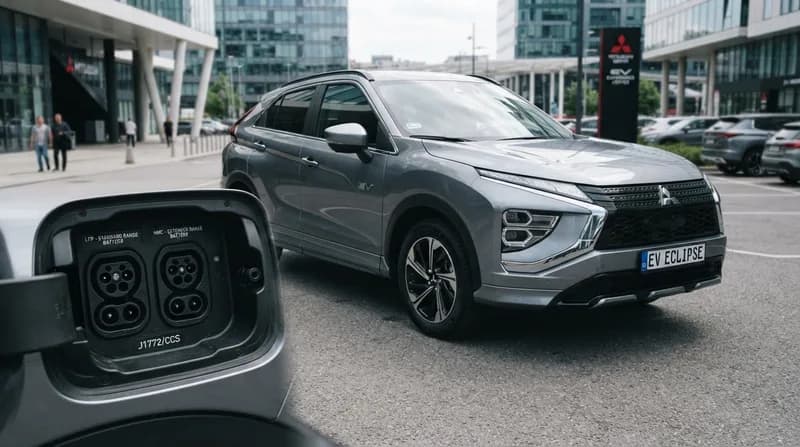
Mitsubishi Motors Europe has officially announced a significant powertrain upgrade for the second-generation Eclipse Cross BEV, signaling a move to diversify its electric portfolio. By introducing a dual-battery strategy, the manufacturer is tailoring the vehicle to cater to a broader range of consumer needs, balancing price-conscious entry points with high-end, long-distance performance. These updates are developed in lockstep with the Renault-Mitsubishi-Nissan Alliance, mirroring the recent mechanical enhancements seen in the Renault Scénic E-Tech.
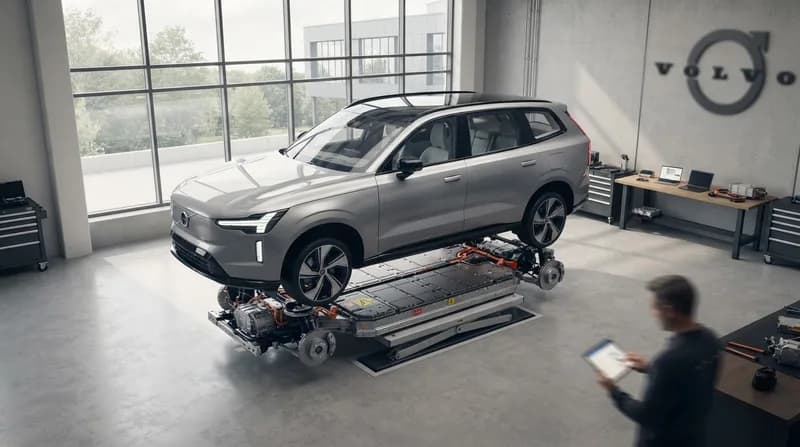
The updated lineup now centers on two distinct energy storage solutions: a new 67 kWh Lithium Iron Phosphate (LFP) battery and an upgraded 89 kWh Nickel Manganese Cobalt (NMC) pack. Both systems are housed within the robust AmpR Medium architecture, ensuring that the Eclipse Cross remains competitive in the crowded European compact SUV market while providing users with clear distinctions in range and charging capabilities.
The 67 kWh LFP Mid-Range Option
Designed for those who prioritize efficiency and value, the new 67 kWh LFP battery features an innovative cell-to-pack (C2P) architecture. By utilizing 232 tightly integrated pouch cells, Mitsubishi has achieved a space utilization rate of 53 percent, which helps maintain the vehicle's compact footprint while optimizing energy density. This configuration offers a respectable WLTP-rated range of up to 472 km.
Charging performance is a key highlight for this variant. The LFP pack supports DC fast charging up to 165 kW, enabling a 15% to 80% charge in just 24 minutes. For owners who frequently rely on public infrastructure, this quick turnaround significantly improves the utility of the mid-range model, making it a viable candidate for both daily commuting and longer regional trips.
The Enhanced 89 kWh Long-Range Option
For drivers focused on maximum range, Mitsubishi has replaced the previous 87 kWh pack with a refined 89 kWh NMC battery. This upgrade pushes the vehicle’s maximum WLTP range to an impressive 650 km, a notable improvement over the previous 635 km limit. Despite the increase in energy capacity, the engineering team has managed to optimize the power delivery, ensuring that the vehicle’s 160 kW front-wheel-drive motor remains highly efficient.
The charging profile for the long-range model has also seen a marked improvement. Mitsubishi reports that the 89 kWh variant can reach 80% capacity from a 15% starting point in approximately 28 minutes at 150 kW DC. This represents a nine-minute reduction in charging time compared to the previous model, proving that the update provides meaningful real-world benefits for long-distance travel. Both battery options come standard with an 11 kW AC charger, though buyers can opt for a 22 kW onboard charger for faster destination charging.
Why It Matters
The introduction of these two battery chemistries highlights a shift in EV strategy toward modularity. By offering both LFP (known for longevity and cost-effectiveness) and NMC (known for high energy density and range), Mitsubishi is giving buyers the power to choose based on their specific driving lifestyle. Furthermore, the shared development with Renault ensures that the Eclipse Cross benefits from economies of scale and the latest refinements in the AmpR Medium platform, keeping the vehicle relevant as competition in the EV segment intensifies.