Revisiting the Smallest Planet's Volcanic Legacy
Mercury has long been viewed as a world that cooled rapidly and locked its geological history into a static, frozen crust shortly after its formation. Unlike Earth, which remains a dynamic, shifting mosaic of tectonic plates and active volcanism, Mercury appeared to have ceased its most violent geologic processes billions of years ago. However, a new study from the Max Planck Institute for Solar System Research is challenging this perspective, suggesting that the planet's internal activity was far more intense and deeper-seated than current models allow.
By analyzing the chemical signatures of the planet's surface, scientists have determined that Mercury’s crust contains significantly less silicon dioxide than historical estimates suggested. This finding is not merely a statistical adjustment; it acts as a diagnostic tool that reveals the high-temperature conditions under which the planet's original lava flowed. The discovery points toward a fiery history where deep mantle material underwent extensive melting, fundamentally changing our understanding of Mercury's evolution.
The Silicon Dioxide Calibration Breakthrough
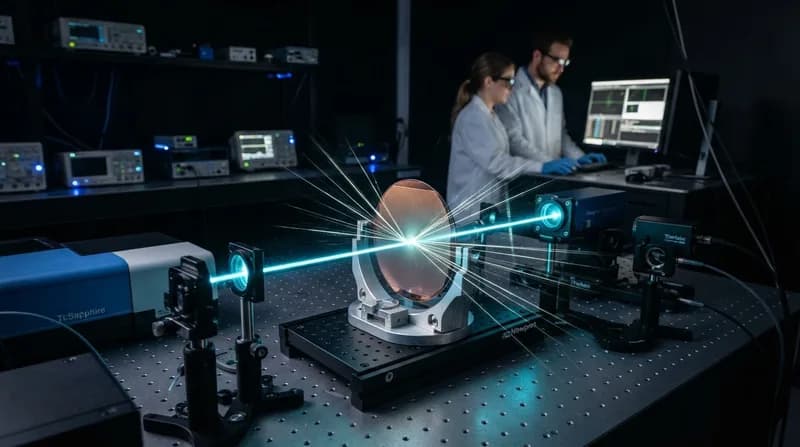
The research team, comprised of experts from the Max Planck Institute and the universities of Münster and Göttingen, achieved these results by creating a highly accurate calibration method for remote sensing data. Because Mercury remains one of the most challenging bodies to sample, scientists have historically relied on infrared observations from Earth-based telescopes and passing spacecraft. Interpreting this infrared light requires a precise baseline, which the team created by synthesizing specialized glass beads.
These tiny, half-millimeter-wide glass beads were engineered with exact, known concentrations of silicon dioxide. By measuring the infrared properties of these beads in the laboratory, the team essentially created a set of "calibration weights." This allowed them to cross-reference their laboratory data with the infrared signals collected from planetary surfaces, ensuring their estimates of mineral composition were as precise as modern technology allows.
Validating the Method: The Moon as a Touchstone
Before applying this complex calibration process to Mercury, the researchers rigorously tested their methodology on the Moon. The Moon serves as an ideal "ground truth" for planetary science because it is the only celestial body for which scientists possess both extensive orbital remote sensing data and physical, human-retrieved rock samples. By mapping the lunar surface with their new infrared technique and comparing the findings against actual lunar rock composition, the team successfully validated their approach.
Having cleared this hurdle, the scientists turned their focus to Mercury using data from the Bok Telescope. The final results indicated that silicon dioxide accounts for approximately 37 percent of Mercury’s surface—a decrease of up to 25 percent from previous estimates. This low concentration suggests that the volcanic material on the surface likely originated from extreme depths within the mantle, where higher temperatures facilitated a unique melting process that favored lower-silica mineralogy.
The Next Frontier: BepiColombo
The scientific community is now looking toward the upcoming observations from the BepiColombo mission. With the recent separation of its modules in September 2026, the mission is poised to enter orbit around Mercury in November, carrying the MERTIS instrument. This specialized hardware will provide unprecedented spatial resolution for infrared measurements, allowing researchers to refine their surface maps and potentially confirm these findings with absolute certainty.
Why It Matters
- Deep-Mantle Insight: Low silica levels indicate that Mercury's volcanic past involved deeper, hotter reservoirs than we previously assumed.
- Methodological Advancement: The use of calibrated laboratory glass beads creates a new standard for non-invasive planetary chemical analysis.
- Mission Synergy: This research provides a direct framework for interpreting the high-resolution data that will soon flow from the BepiColombo mission.